Beauty Brand Cafés: Could Retail Become Hospitality?
What If You Didn’t Want to Leave the Beauty Store?
Beauty brand cafés could represent a fascinating next step for personal care retail. Luxury fashion has already explored the idea of extending a brand into hospitality, and that made me wonder why beauty could not push the concept even further.
Most beauty stores still operate around a familiar mission: enter, browse, test, buy, leave.
However, personal care already revolves around pleasure, ritual, scent, conversation, and discovery.
So why should the store experience end at the cash register?
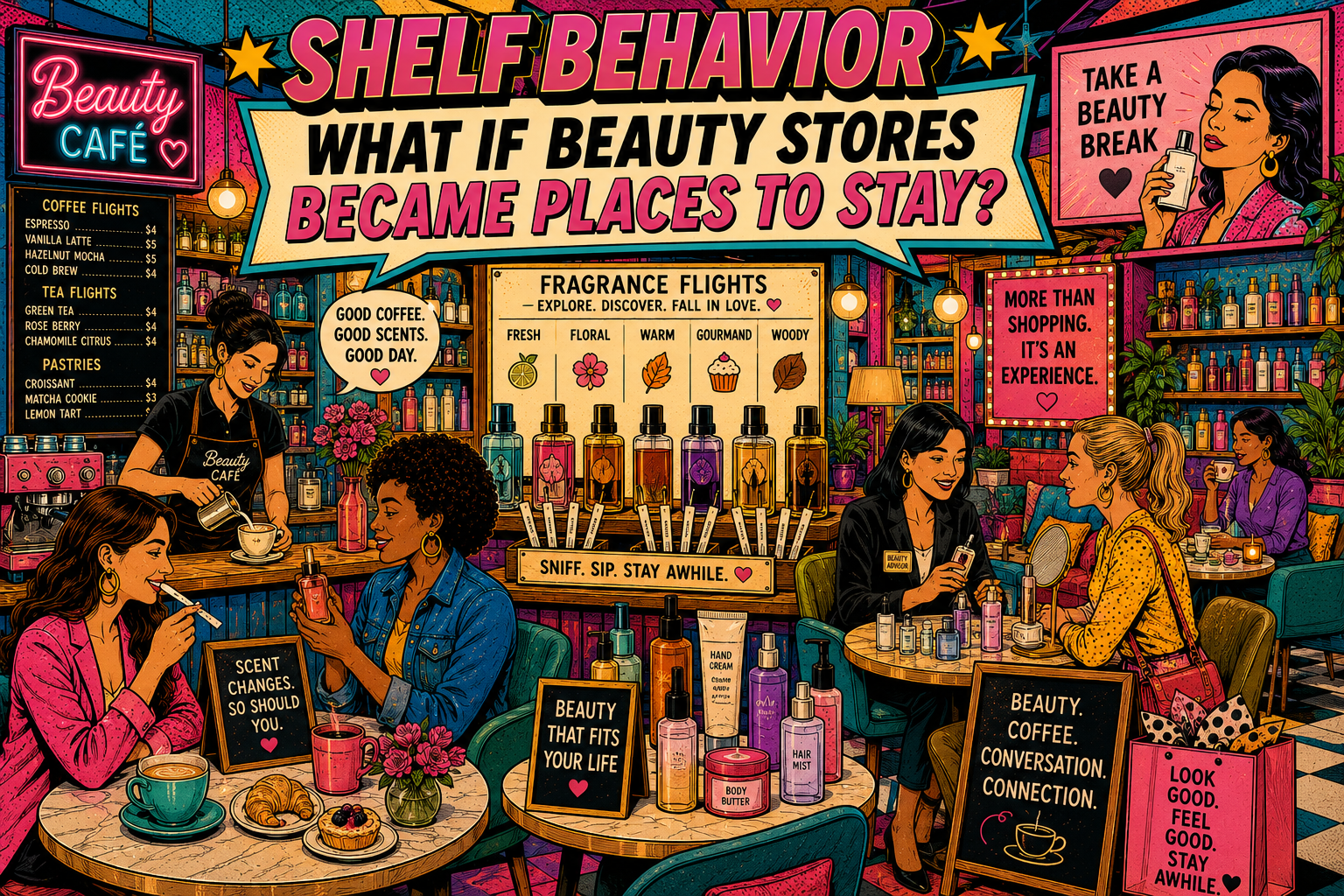
Imagine buying a body mist and then sitting down for coffee while you compare fragrance notes with a friend. Suddenly, the beauty store becomes less like an errand and more like somewhere you actually planned to spend the afternoon.
That feels like a very different relationship with retail.
Beauty and Cafés Already Speak the Same Emotional Language
Beauty and cafés have more in common than they first appear to.
Both rely heavily on atmosphere.
Lighting matters.
Scent matters.
Music matters.
Presentation matters.
Moreover, both categories can turn simple everyday routines into small rituals.
Coffee is rarely just caffeine. Likewise, applying fragrance is rarely just making yourself smell different.
People attach memories, moods, social experiences, and identity to both.
Therefore, a beauty brand café could connect two forms of everyday pleasure in a way that feels surprisingly natural.
The café would not need to become an unrelated food business sitting beside some shampoo. Instead, the hospitality experience could reflect the beauty brand itself.
A bright, playful body-care brand might create colorful drinks and desserts. Meanwhile, a minimalist skincare company could offer a quieter tea bar with simple ingredients and understated design.
Fragrance brands could become especially creative. A café menu might echo scent families without asking customers to consume anything that resembles perfume.
A citrus fragrance could inspire a lemon pastry.
A coffee fragrance might pair with espresso.
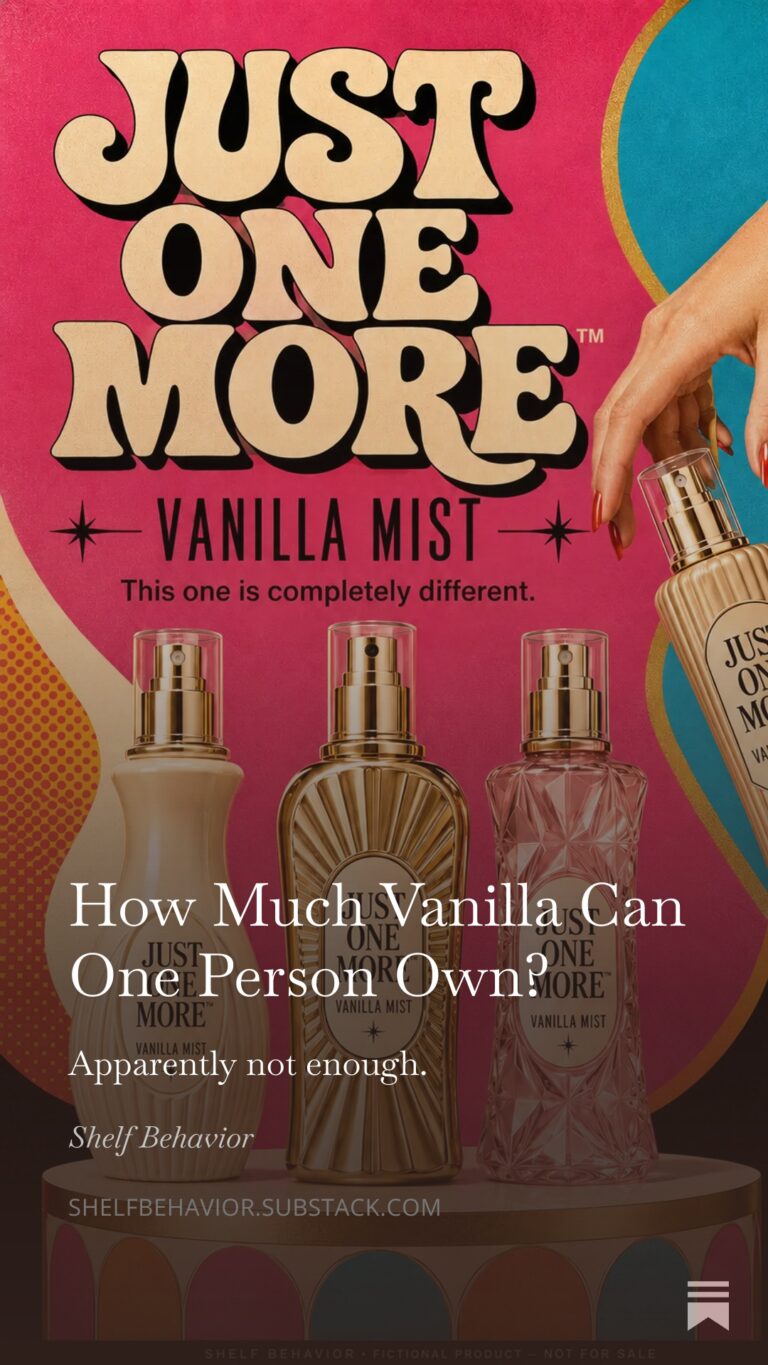
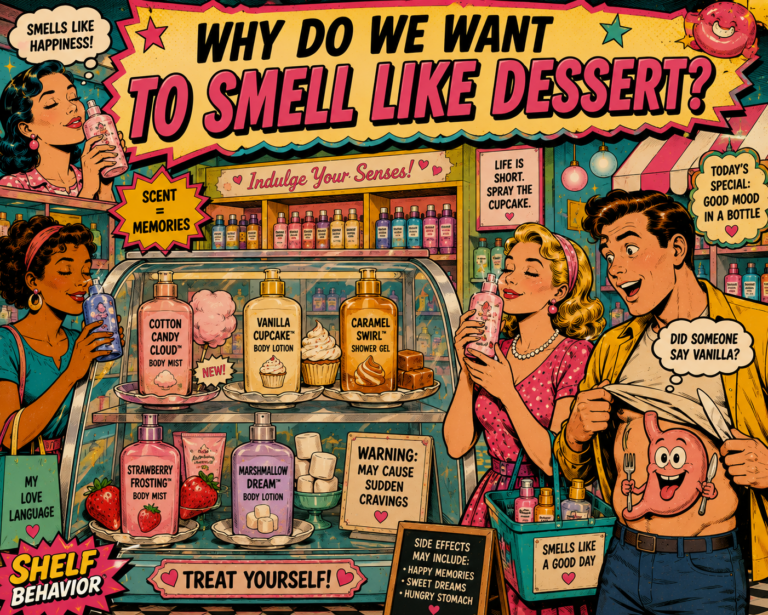
Meanwhile, a warm vanilla scent could coordinate with a dessert without forcing the vanilla bottle to become a cupcake mascot.
The connection should feel thoughtful rather than gimmicky.
Consumer Psychology Likes Places Where We Can Linger
From a consumer psychology perspective, time changes the shopping experience.
When people feel rushed, they often focus on completing a task. However, when an environment encourages them to slow down, they have more opportunities to explore, compare, ask questions, and interact.
A café naturally creates permission to stay.
Consequently, adding hospitality could reduce some of the pressure that traditional retail creates.
Instead of walking through fifteen fragrance displays while trying to remember which blotter strip was which, you could sit down.
You could smell three fragrances.
Then you could drink something, talk about them, and return ten minutes later.
That matters because fragrances develop over time.
Similarly, skincare and hair-care consultations benefit from conversation. A customer may need a few minutes to explain what they actually want rather than choosing whichever bottle uses the largest font.
Hospitality could also strengthen social connection.
Beauty shopping often happens with friends, partners, or family members. A café gives everyone somewhere to gather—even the person who has reached their emotional limit after the seventh moisturizer.
Beauty Brand Cafés Could Do More Than Serve Coffee
The most innovative version would integrate hospitality into discovery rather than treating the café as decoration.
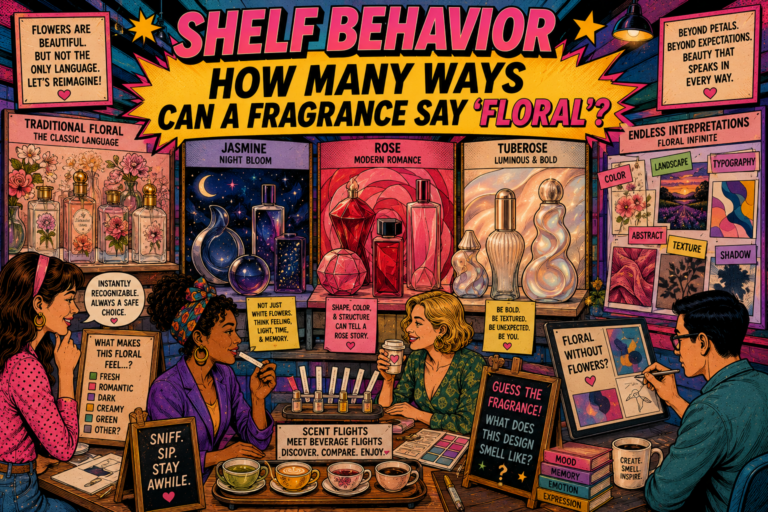
Create Fragrance Flights
A brand could offer three or four fragrance blotters arranged like a tasting flight.
Customers might compare scents from fresh to warm or light to intense. Meanwhile, a beverage or pastry pairing could reinforce the mood of each fragrance.
Importantly, staff should make clear that fragrance products are for smelling, not tasting.
We have standards.
Build Beauty Breaks
Retailers could create short experiences around common routines.
A Morning Reset might include coffee, hand cream, and a fresh fragrance discovery.
An Afternoon Recharge could pair tea with body mist and lip care.
Meanwhile, an Evening Wind Down event might explore lotions, candles, and comforting scents.
Therefore, the café becomes a way to organize products around moments instead of shelves.
Host Small Community Events
Beauty cafés could become natural venues for workshops and conversations.
Brands might host fragrance education, ingredient discussions, hair-care sessions, packaging-design talks, or conversations with founders and creators.
Micro-influencers could also host small product-discovery events.
As a result, the café becomes part store, part classroom, and part community space.
Let Customers Stay Without Buying Beauty
This might be one of the most important ideas.
Someone should be able to visit the café without purchasing a $75 serum first.
That openness could introduce new people to the brand in a lower-pressure way.
Perhaps a customer comes for coffee three times before ever buying personal care.
That is not necessarily a failure.
It may be relationship building.
Connect the Menu to the Brand Carefully
The food and drink should reflect the brand without making unsupported health claims.
A skincare company should not suggest that one smoothie will “clear your skin.” Likewise, a collagen-themed latte should not promise miraculous transformation without appropriate evidence.
Instead, menus can focus on flavor, experience, design, and storytelling.
Beauty already has enough products promising eternal radiance.
The croissant can relax.
Welcome to the Body Mist Café
Imagine entering a beauty store and seeing a host ask:
“Table for two, or are you here for fragrance?”
You answer:
“Both.”
Naturally.
You sit down with a coffee while a fragrance specialist brings three scent blotters on a small tray.
One is bright and citrusy.
Another feels warm and woody.
The third smells like vanilla, coffee, and the financial consequences of entering a beauty store without a plan.
You discuss them with your friend.
Ten minutes later, you return to the fragrance counter because the scent has changed on your skin.
Meanwhile, someone at the next table attends a twenty-minute hair-care workshop over tea.
Across the room, another customer came only for a cappuccino and has somehow become deeply invested in hand cream.
Nobody appears rushed.
Nobody is balancing six tester strips and a tote bag while standing beside the checkout line.
For once, beauty shopping has a chair.
The Future Beauty Store Might Feel More Like a Destination
Ultimately, beauty brand cafés could help retailers rethink what a store is supposed to accomplish.
The goal would not simply involve increasing dwell time or selling another product. Instead, the space could create discovery, hospitality, education, conversation, and community.
Traditional beauty stores will still matter. However, brands could also build places where customers want to spend time even when they do not arrive with a shopping list.
That shift could be particularly valuable as online shopping makes simple transactions easier.
If consumers can order moisturizer from the couch, physical retail needs to offer something the couch cannot.
A beautiful café.
A knowledgeable person.
A fragrance discovery.
A conversation with a friend.
Perhaps the beauty store of the future will not ask only:
“What would you like to buy?”
Maybe it will also ask:
“Would you like to stay awhile?”
If you enjoyed this, you might also like this article about making premium beauty more accessible.
Follow us here for videos on the psychology & culture of personal care: Shelf Behavior on TikTok and Shelf Behavior on Instagram