Mall Beauty Counters Could Become Discovery Hubs
Maybe the Beauty Counter Wasn’t Old-Fashioned After All
Mall beauty counters may be getting another moment, and I can understand why. For years, beauty retail moved increasingly toward websites, apps, social media, and endless online reviews. Those tools made shopping faster and more convenient. However, they also removed something remarkably useful: an actual human being standing nearby who can answer, “Does this fragrance smell good on me, or have I simply been smelling too many things?”
The traditional makeup counter offered something online shopping still struggles to reproduce. You could sit down, ask questions, test products, compare options, and get immediate feedback. Therefore, rather than viewing the return of mall beauty counters as nostalgia, retailers could treat it as a chance to reinvent the format.
The counter of the future does not have to be only about makeup.
It could become a personal care discovery hub.
Beauty Counters Can Offer What Algorithms Cannot
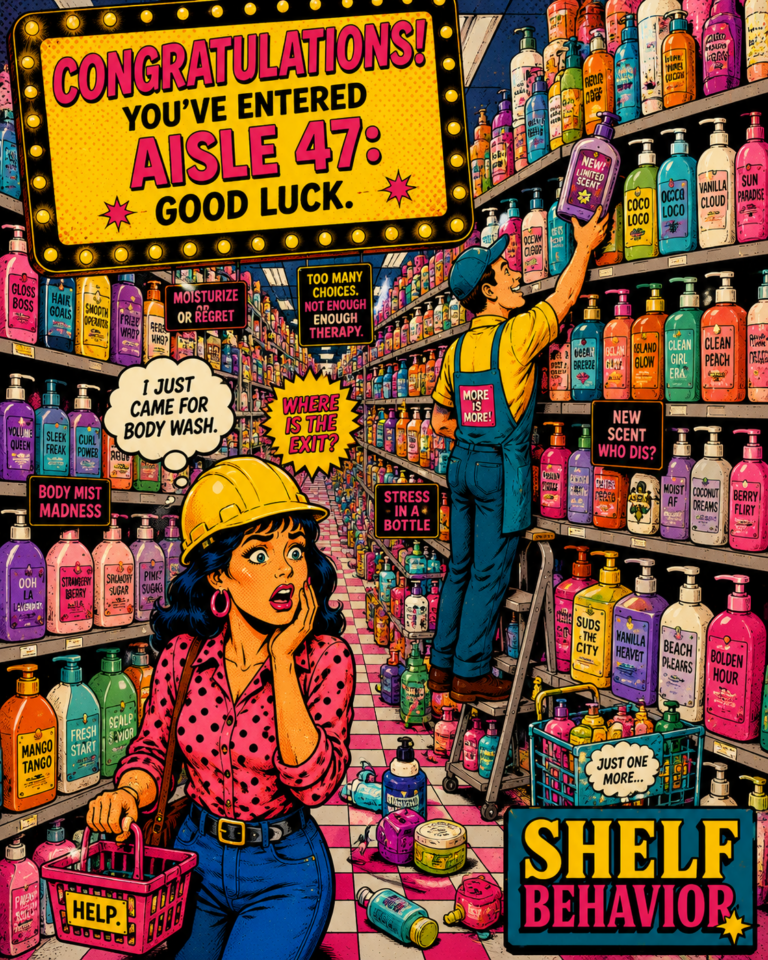
Online beauty shopping excels at assortment. A website can show thousands of products in seconds. However, enormous choice does not automatically make choosing easier.
Mall beauty counters can provide something very different: curation.
Instead of showing someone 147 moisturizers, an expert might ask a few questions and suggest four. Likewise, a fragrance specialist could help a shopper compare warm, fresh, floral, woody, or gourmand scents without requiring them to open twenty browser tabs.
Consequently, the value of the counter shifts from selling products to helping people make sense of products.
That could expand well beyond cosmetics.
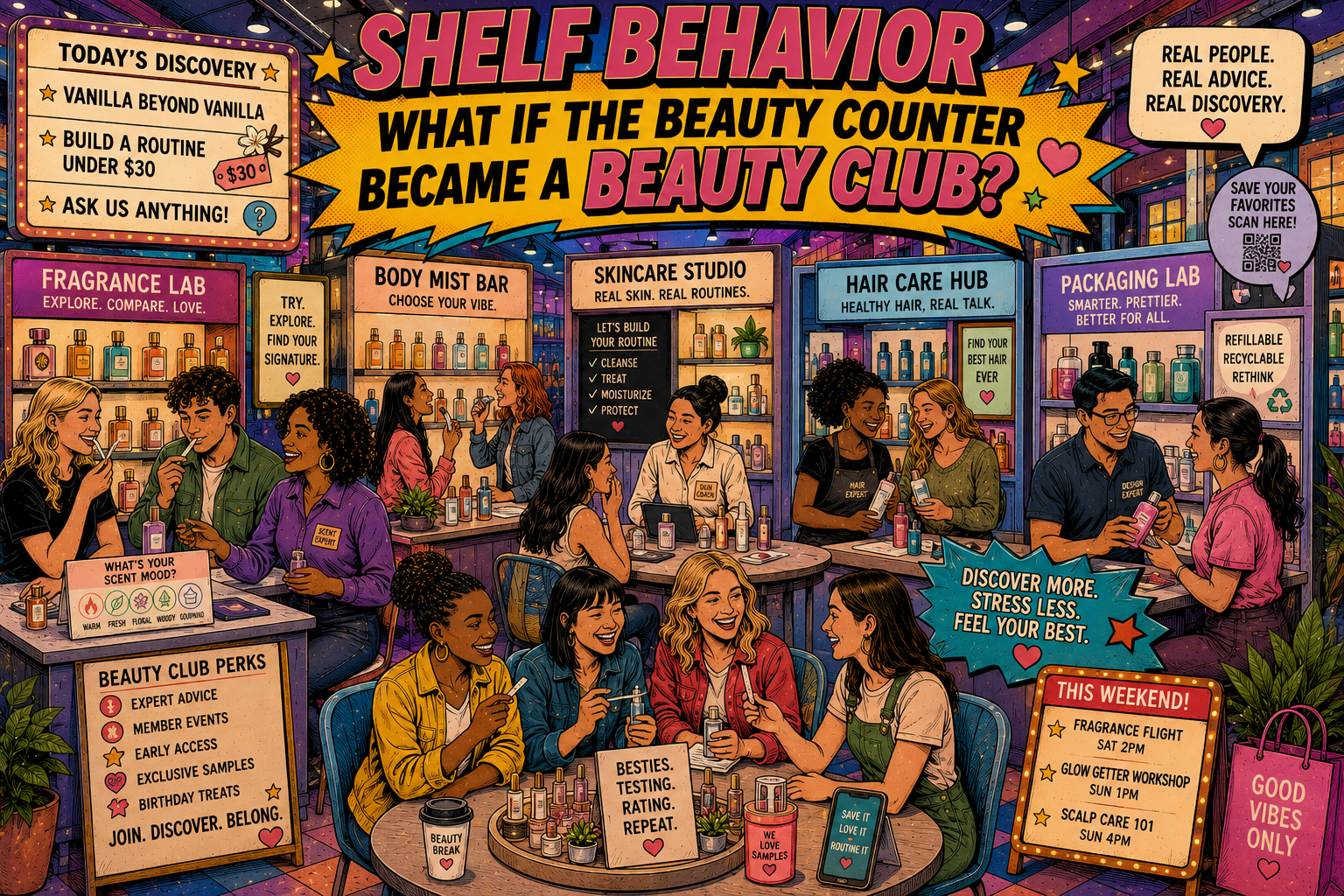
Imagine a body-mist counter organized around mood rather than brand. One section might feature comforting scents. Another could focus on fresh fragrances, while a third highlights unusual combinations.
Nearby, a hair-care counter could help customers build simple routines based on their preferences, budget, and daily habits.
Meanwhile, a body-care specialist might let shoppers compare lotion textures side by side.
Even packaging could become part of the conversation. Employees could demonstrate refill systems, pumps, travel containers, and new formats.
Suddenly, the counter becomes less like a checkout obstacle and more like a place where somebody helps you understand the category.
Consumer Psychology Likes Guided Choice
From a consumer psychology perspective, mall beauty counters solve an important problem: decision overload.
Choice can be enjoyable. Yet when options become difficult to compare, consumers may feel less confident about what to select.
Human guidance can reduce that effort.
A knowledgeable beauty associate can ask questions, explain differences, and reassure someone that they do not need twelve products simply because twelve products exist.
Moreover, physical testing reduces uncertainty.
A shopper can feel whether a lotion absorbs quickly.
They can smell how a fragrance changes on skin.
Similarly, they can compare textures or watch a hair product demonstration.
That sensory information matters because personal care products do not exist only as ingredient lists and star ratings.
They exist on actual bodies, in actual bathrooms, during actual mornings when nobody has forty-five minutes to complete a skincare ceremony.
Social interaction also adds value. Customers may enjoy discussing products with someone who knows the category. In addition, friends shopping together can turn the experience into entertainment.
Therefore, the new beauty counter can become part consultation, part education, and part social activity.
The Counter Could Become Much More Interactive
One of the easiest ways to modernize mall beauty counters would be to replace the idea of a permanent static display with rotating programming.
A counter might feature one theme every week.
Vanilla Beyond Vanilla could compare smoky, fresh, creamy, woody, and gourmand interpretations.
Build a Routine Under $30 could help shoppers assemble affordable personal care combinations.
Five Products We Think Are Underrated could give staff members room to curate.
Meanwhile, What’s New and Actually Interesting? might introduce emerging brands without requiring shoppers to wander through the entire floor.
Because the programming changes, people gain reasons to return.
The counter could also offer short appointments that feel manageable.
Not everyone wants a 60-minute consultation.
However, a 10-Minute Fragrance Match, Five-Minute Lotion Comparison, or Quick Hair Routine Check sounds much easier to fit into a mall visit.
Additionally, retailers could invite local creators, micro-influencers, fragrance enthusiasts, hairstylists, or package designers to serve as temporary guest experts.
One Saturday, a creator might curate five body mists.
The following week, a fragrance developer could explain how scent notes work.
After that, a package designer could demonstrate why one pump works beautifully while another seems personally committed to keeping 20% of your lotion hostage.
The counter becomes alive because different people bring different expertise.
Let Technology Support the Human Experience
Technology could modernize the counter without turning it into another website.
For example, customers could save products they tested to their phones. A shopper might leave with a digital list showing three fragrances, two lotions, and the notes they preferred.
Consequently, nobody has to make an immediate purchase simply because they fear forgetting which bottle they liked.
QR codes could also provide ingredient information, longer demonstrations, or creator reviews.
However, the employee remains available.
That balance matters.
A screen is excellent at storing information.
A screen is considerably less good at noticing your expression after you smell a fragrance and saying, “I’m guessing that’s a no.”
Retailers could also allow customers to create simple personal profiles. Someone might save preferences such as warm fragrance, lightweight lotion, under $25, no complicated routines.
During the next visit, staff could use those preferences as a starting point.
Personalization then becomes genuinely useful instead of simply producing another promotional email.
The Beauty Counter Should Feel Less Like a Counter
Perhaps the biggest physical change should involve the counter itself.
Traditional counters can create a subtle barrier: employee on one side, customer on the other.
The next generation could use shared tables, stools, mirrors, testing surfaces, and small seating areas.
Instead of approaching someone behind a wall of products, customers could sit beside an expert.
That small design change could make the experience feel more collaborative.
Moreover, beauty stores could create counters specifically for groups.
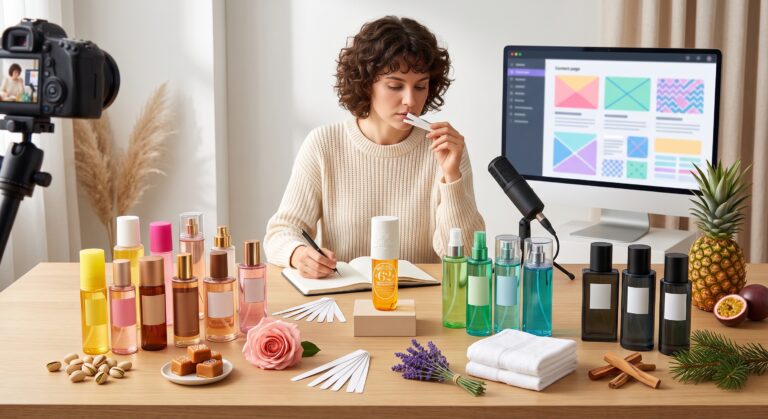
Imagine four friends sitting around a Fragrance Flight Table. Everyone receives scent strips and compares reactions.
One person says:
“Elegant.”
Another says:
“Comforting.”
A third says:
“Hotel lobby.”
The fourth says:
“My dentist wears this.”
At that point, the counter has supplied something online shopping cannot easily provide: collective consumer research conducted with absolutely no scientific rigor.
Welcome Back to the Beauty Counter
Imagine walking through the mall and seeing a sign:
TODAY: FIND YOUR BODY MIST IN 10 MINUTES
You sit down.
The employee asks whether you prefer fresh, warm, fruity, floral, or gourmand scents.
“Warm.”
Sweet or not too sweet?
“Somewhere between sophisticated vanilla and actual cupcake.”
Excellent.
Three fragrances appear.
You smell them slowly instead of attacking your nose with sixteen sprays in ninety seconds.
One becomes the clear favorite.
The employee saves it to your phone and says you can think about it.
No pressure.
Next week, the counter hosts a hair-care workshop.
The week after that, a local creator presents five personal care products under twenty dollars.
Suddenly, you are not returning because you desperately need something.
You are returning because something interesting is happening.
That may be the biggest opportunity of all.
Mall Beauty Counters Could Become Places to Return To
The future of mall beauty counters does not need to recreate the department-store experience of decades past.
Instead, retailers can preserve what the counter did well—human expertise, product testing, conversation, and personalized guidance—while updating everything around it.
Counters can become smaller.
More flexible.
More social.
More educational.
Additionally, they can expand beyond makeup into fragrance, body care, hair care, skincare, packaging, and emerging brands.
Online shopping will remain better at convenience. Therefore, physical beauty retail should not try to compete by becoming a slower website.
It should compete with something online shopping cannot provide as easily:
a knowledgeable person, a table full of products, and ten enjoyable minutes figuring out what you actually like.
Perhaps the beauty counter is not making a comeback because consumers want to return to the past.
Maybe it is coming back because we finally remembered what was useful about it.