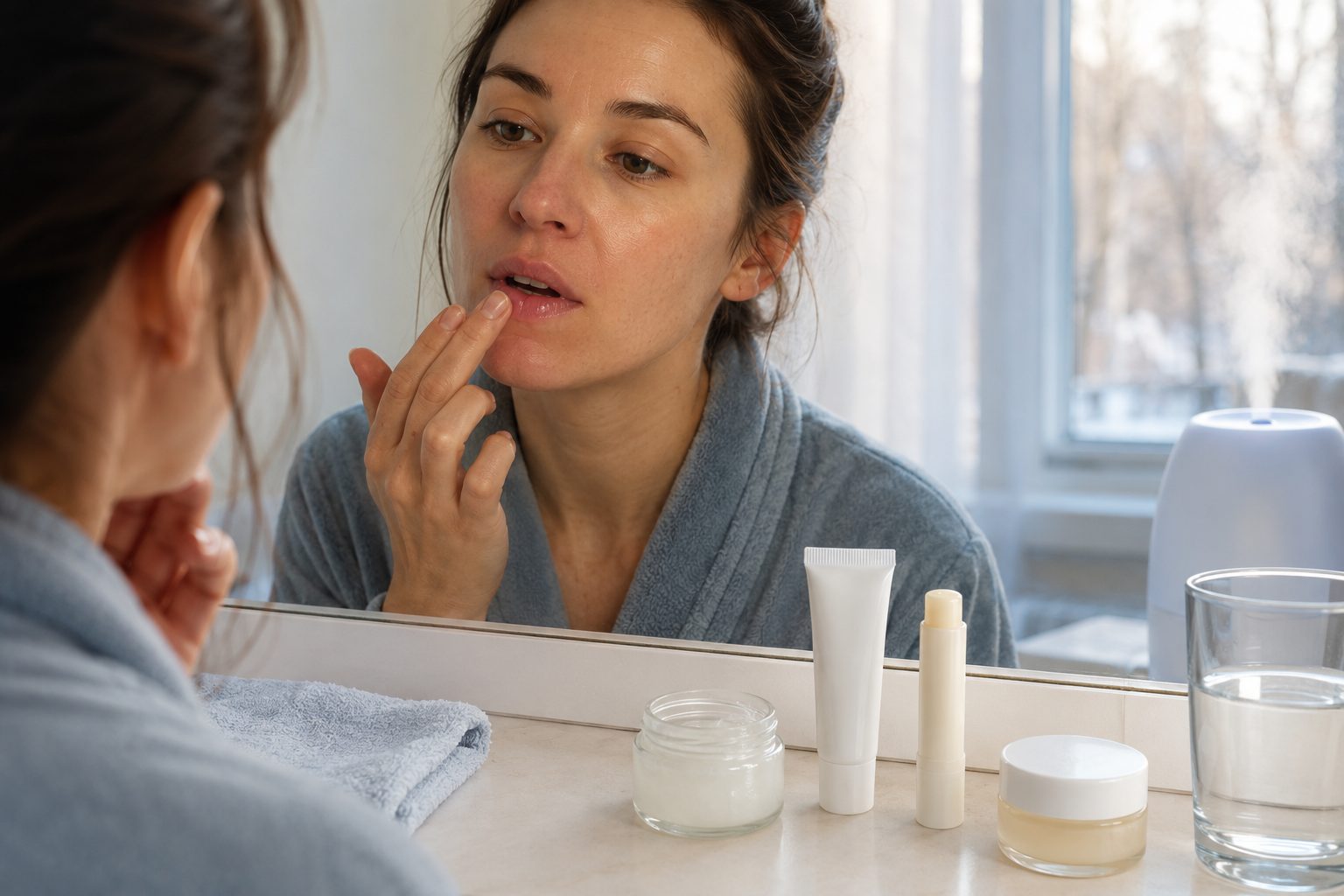
Best Lip Balm for Dry Lips: 17 Evidence-Based Picks
The best lip balm for dry lips is usually not the fanciest tube in the beauty aisle. For most people with painful, flaky, or cracked lips, a bland ointment that seals in water works better than a highly flavored balm packed with trendy actives. Our best overall pick is Vaseline Original Healing Jelly, while CeraVe Healing Lip Balm offers a more advanced, lip-specific formula with 49.5% petrolatum, ceramides, glycerin, and hyaluronic acid. However, the right choice also depends on whether you need sun protection, color, a vegan formula, or relief from a possible contact allergy.
This guide compares 17 widely available options through a dermatology-first lens. It draws on guidance from the American Academy of Dermatology, FDA labeling, peer-reviewed research, official ingredient lists, independent editorial tests, and real-user discussions. Therefore, you will learn not only what to buy, but also why your current balm may be making the problem worse.
Medical note: This article offers general education, not a diagnosis. Persistent swelling, bleeding, sores, severe pain, crusting, or a spot that does not heal deserves medical evaluation.
Table of Contents
- Quick answer
- How we chose
- Why lips get dry
- Detailed reviews
- Ingredient guide
- How to choose
- Healing routine
- Causes a balm cannot fix
- Data and facts
- Frequently asked questions
Best Lip Balm for Dry Lips: The Quick Answer
Choose 100% white petrolatum when your lips feel raw, split, or irritated and you want the shortest possible ingredient list. The American Academy of Dermatology specifically lists petrolatum and white petroleum jelly among the ingredients that can help chapped lips. Moreover, the FDA permits petrolatum at concentrations from 30% to 100% as an over-the-counter skin protectant under 21 CFR 347.10.
For daytime, add a broad-spectrum lip sunscreen with SPF 30 or higher. The AAD notes that SPF 30 blocks about 97% of UVB radiation when people apply it correctly, although no sunscreen blocks 100%. In addition, both the AAD and the FDA tell consumers to protect the lips and reapply sunscreen about every two hours outdoors.
Our 17 Top Picks at a Glance
Price bands reflect typical US list prices at the time of review: $ under $10, $$ from $10 to $20, and $$$ above $20. Nevertheless, retailers change prices and formulas, so check the current package before buying.
| Category | Product | Formula highlights | Best for | Main caveat | Price |
|---|---|---|---|---|---|
| Best overall | Vaseline Original Healing Jelly | 100% white petrolatum | Raw, cracked, reactive lips | Glossy texture; no SPF | $ |
| Best lip-specific treatment | CeraVe Healing Lip Balm | 49.5% petrolatum, 3 ceramides, glycerin, hyaluronic acid | Dry or cracked lips that need barrier support | Newer product; no SPF | $ |
| Best rich ointment | Aquaphor Healing Ointment | 41% petrolatum, mineral oil, glycerin, panthenol | Severe winter dryness | Contains lanolin alcohol | $ |
| Best light sensitive-skin balm | La Roche-Posay Cicaplast Lips | Panthenol, shea butter, waxes | Daily comfort without a jelly feel | Less occlusive than petrolatum ointment | $$ |
| Best restorative cream | Avène Cicalfate+ Lips | Castor, shea, jojoba, glycerin, beeswax | Dry lips and nearby dry patches | Castor oil and beeswax can bother some users | $$ |
| Best petrolatum-free ointment | Vanicream Moisturizing Ointment | Hydrogenated polydecene, wax, dimethicone | People who dislike petrolatum | Not a dedicated lip product | $ |
| Best unscented stick | O’Keeffe’s Lip Repair Unscented | Beeswax, dimethicone, petrolatum | Pocket-friendly daytime use | Stick feels less rich than ointment | $ |
| Best minimalist stick | Dr. Dan’s Maintain | Petrolatum, beeswax, mineral oil, vitamin E | Simple maintenance | Contains beeswax; no SPF | $ |
| Best mineral SPF for reactive lips | Dr. Dan’s SPF 30 Lip Sunscreen | Zinc oxide, titanium dioxide, wax, vitamin E | Sensitive lips in the sun | Noticeable white cast | $ |
| Best water-resistant SPF | EltaMD UV Lip Balm SPF 36 | Zinc oxide, octinoxate, petrolatum | Beach, hiking, and sports | Contains flavor and octinoxate | $$$ |
| Best budget mineral SPF | Sun Bum Mineral SPF 30 Lip Balm | Zinc oxide | Affordable everyday sun care | Mineral taste and white cast | $ |
| Best tinted mineral SPF | Colorescience Color Balm SPF 50 | 12.5% zinc oxide, squalane, jojoba esters | Color plus high SPF | Expensive; shade-dependent ingredients | $$$ |
| Best vegan, petrolatum-free balm | The Ordinary Squalane + Amino Acids | Squalane, amino acids | Vegan daily moisture | May not seal deep fissures as well | $ |
| Best lanolin balm | Lanolips 101 Ointment | Lanolin, ceramides, murumuru butter | People who already tolerate lanolin | Avoid after a lanolin reaction | $$ |
| Best community favorite | Ole Henriksen Pout Preserve | Butters, oils, peptides | Plush gloss and comfort | Flavored versions may irritate | $$$ |
| Best tinted beauty balm | Summer Fridays Lip Butter Balm | Shea and murumuru butters, vegan waxes | Sheer color and a glossy finish | Flavor makes it a poor reset balm | $$$ |
| Best cosmetic lip mask | Laneige Lip Sleeping Mask | Waxes, butters, humectants | A cushiony overnight ritual | Contains fragrance | $$$ |
The Shortest Buying Advice
If your lips burn when almost anything touches them, start with plain white petrolatum for two weeks and remove flavored products. Conversely, choose CeraVe Healing Lip Balm when you want the protection of petrolatum plus ceramides and humectants in a small tube. For outdoor use, keep a separate SPF 30 or higher lip balm and reapply it after eating, drinking, swimming, or wiping your mouth.
How We Chose the Best Lip Balms for Dry Lips
We did not rank products by social-media popularity or packaging. Instead, we gave the most weight to dermatology guidance, regulatory labels, ingredient transparency, barrier function, fragrance exposure, sun protection, portability, and value. Additionally, we checked official US product pages because manufacturers sometimes change a familiar balm without changing its name.
Our Evidence Hierarchy
| Evidence level | What it contributed | Examples used in this guide |
| Clinical and regulatory guidance | Treatment principles, ingredient cautions, SPF advice, red flags | AAD, FDA, DailyMed, eCFR, DermNet |
| Peer-reviewed research | Barrier science, allergy data, cheilitis patterns | PubMed, PubMed Central, NCBI Bookshelf |
| Official product labels | Active percentages, full ingredient lists, directions, company test details | Brand sites and DailyMed labels |
| Independent editorial testing | Texture, wear, packaging, and practical comparisons | Health, Allure, Wirecutter, The Guardian |
| Community discussion | Long-term preferences and recurring complaints | Reddit and Quora |
Independent tests can answer practical questions that a label cannot. For example, Health reports testing more than 50 balms over 1,760 hours and roughly 1,500 applications. Similarly, The Guardian used a 29-person panel for its 2026 comparison. However, neither test proves that one formula treats a medical cause of cheilitis.
Community threads add another useful layer. In the supplied Reddit discussion, users repeatedly mention Ole Henriksen Pout Preserve, Aquaphor, Lanolips, Tatcha Kissu, Laneige, and La Roche-Posay Cicaplast. Still, those comments remain personal experiences, and a balm that thrills one person can trigger another person’s allergy.
What We Rewarded
First, we looked for an effective occlusive layer, especially petrolatum, dimethicone, mineral oil, or waxes. Next, we rewarded fragrance-free options and clearly labeled sunscreen actives. Finally, we considered whether a product offered a meaningful advantage over inexpensive petrolatum, such as ceramides, water resistance, tint, a vegan formula, or better portability.
Marketing language carried little weight. Terms such as “clean,” “natural,” “dermatologist tested,” and “hypoallergenic” do not guarantee that a formula will suit every person. Therefore, the ingredient list and your own response matter more than the front of the box.
Why Lips Get Dry Faster Than the Rest of Your Face
Lips face wind, sun, saliva, food, toothpaste, and frequent movement, yet the vermilion has a thinner, more vulnerable barrier than much of the surrounding facial skin. Consequently, water escapes easily once that barrier becomes disrupted. A study of people with chronic cheilitis found higher transepidermal water loss and lower water content than in healthy controls, which supports the link between cheilitis and impaired barrier function (International Journal of Cosmetic Science).
That water-loss cycle explains why a thin, pleasant balm may feel good for 15 minutes but fail overnight. Moreover, repeated licking briefly wets the surface before evaporation dries it again. DermNet describes this wet-dry cycle as a direct source of barrier breakdown, inflammation, scaling, and redness around the lips.
Humectants, Emollients, and Occlusives
The most useful lip formulas combine three jobs. According to the NCBI Bookshelf review on moisturizers, humectants attract water, emollients smooth gaps between skin cells, and occlusives slow evaporation. Therefore, a formula with glycerin plus an oil plus petrolatum can outperform a watery serum used alone.
| Ingredient role | What it does | Common examples | Best use |
| Humectant | Pulls and holds water in the outer layer | Glycerin, hyaluronic acid, panthenol | Apply under or within an occlusive balm |
| Emollient | Softens flakes and fills rough spaces | Squalane, shea butter, jojoba oil, mineral oil | Improves feel and flexibility |
| Occlusive | Slows water loss by forming a surface film | Petrolatum, dimethicone, waxes, hydrogenated polydecene | Essential for cracked or windburned lips |
| Barrier-supporting lipid | Adds components similar to natural barrier lipids | Ceramides, cholesterol, fatty acids | Helpful in a complete formula |
| Sunscreen active | Reduces ultraviolet exposure | Zinc oxide, titanium dioxide, approved organic filters | Daytime outdoor protection |
Humectants alone can sometimes leave very dry skin feeling tighter when the surrounding air stays dry and no occlusive layer traps the water. For that reason, apply a humectant-rich product to slightly damp lips, then add an ointment if the formula does not already contain a strong occlusive. By contrast, plain petrolatum has no water to donate, so it works best when it seals water already present in the skin.
Why Petrolatum Remains the Benchmark
Petrolatum earns its reputation because it forms a stable, low-reactivity film. An older controlled study found that petrolatum penetrated the superficial stratum corneum and helped barrier recovery rather than acting only as an inert top coat (Journal of the American Academy of Dermatology). In addition, a later review describes petrolatum as a standard occlusive with broad dermatologic use (Journal of Drugs in Dermatology).
Some reviews estimate that petrolatum can reduce water loss by close to 99% under ideal conditions. However, exact values vary with the test method, skin site, amount, and formula. The safer conclusion is simple: petrolatum ranks among the most effective common occlusives, but no balm fixes every cause of dry lips.
Detailed Reviews: Best Lip Balm for Dry Lips by Category
1. Vaseline Original Healing Jelly: Best Overall
Vaseline Original Healing Jelly wins because its official formula contains one ingredient: 100% white petrolatum. That simplicity matters when lips feel inflamed, because every extra flavor, botanical, preservative, or sunscreen filter creates another possible point of irritation. Moreover, the product costs less per ounce than most dedicated lip treatments.
Apply a rice-grain amount to slightly damp lips several times daily and a thicker coat before bed. Consequently, the ointment traps water while shielding fissures from wind, saliva, and friction. Choose the Original Healing Jelly rather than assuming every Vaseline-branded lip product has the same formula, since tinted and flavored variants contain additional ingredients.
Best for: severe dryness, product “reset” periods, windburn, bedtime, and people who prefer the shortest ingredient list.
Skip it if: you cannot tolerate the glossy feel or you need SPF in the same product.
Bottom line: It offers the strongest mix of evidence, simplicity, accessibility, and value.
2. CeraVe Healing Lip Balm: Best Lip-Specific Treatment
CeraVe’s newer Healing Lip Balm combines 49.5% petrolatum with mineral oil, glycerin, three ceramides, hyaluronic acid, cholesterol, and panthenol. The current DailyMed drug label lists no fragrance or lanolin, while the brand page prices the 9-gram tube at $7.99. Therefore, it delivers a rare combination of a regulated lip-protectant concentration and modern barrier-supporting ingredients.
The brand claims 24-hour hydration, but that company claim should not be read as a promise that one application lasts through meals, wiping, or swimming. Instead, reapply whenever the film wears away. Although the website’s cosmetic ingredient block omits petrolatum, the May 2026 official OTC label clearly identifies petrolatum as the active ingredient, so we prioritized the regulatory label.
Best for: users who want petrolatum, ceramides, and humectants in one portable tube.
Skip it if: you want an ultra-short one-ingredient formula or built-in SPF.
Bottom line: It is the most complete fragrance-free lip-specific formula in this ranking.
3. Aquaphor Healing Ointment: Best Rich Ointment
Aquaphor Healing Ointment uses 41% petrolatum alongside mineral oil, ceresin, glycerin, panthenol, bisabolol, and lanolin alcohol, according to its DailyMed label. Compared with plain petrolatum, it feels creamier and adds humectant and soothing components. As a result, many people prefer it for overnight use and cold-weather fissures.
Lanolin alcohol creates the key tradeoff. Most users tolerate it, yet people with allergic contact cheilitis may not. DermNet’s lanolin review estimates lanolin sensitization below 0.5% in the general population but higher rates among dermatitis patients who undergo patch testing. Therefore, switch to plain petrolatum if Aquaphor makes your lips itchier, redder, or more swollen.
Best for: intense dryness when you already know that lanolin suits you.
Skip it if: lanolin has caused a rash or your lips worsen after repeated use.
Bottom line: Rich, practical, and effective, but not as universally bland as Vaseline.
4. La Roche-Posay Cicaplast Lips: Best Light Balm for Sensitive Skin
Cicaplast Lips blends panthenol, shea butter, waxes, and emollients in a compact squeeze tube. It feels less greasy than a petrolatum jelly, so it works well under lipstick or during the day. Additionally, the fragrance-free positioning makes it more sensible for reactive lips than most flavored prestige balms.
The lighter texture also represents its limitation. Deep splits often need a stronger occlusive top coat, especially overnight. Thus, use Cicaplast as a comfortable daytime layer and add plain petrolatum before bed when cracking persists.
Best for: mild to moderate dryness, daytime use, and people who dislike thick ointments.
Skip it if: you need maximum occlusion from one product.
Bottom line: An elegant sensitive-skin option, although not the cheapest route to barrier protection.
5. Avène Cicalfate+ Lips: Best Restorative Cream
Avène Cicalfate+ Lips uses castor oil, shea oil, glycerin, jojoba oil, beeswax, shea butter, and a ferment filtrate. The official page identifies the formula as fragrance-free and water-resistant. Moreover, company testing reports 24-hour hydration in 21 participants after one standardized application and a reduction in tightness in a separate 60-person assessment.
Those small brand-sponsored studies support hydration and comfort, not superiority over petrolatum or treatment of a disease. Furthermore, castor oil and beeswax can act as allergens in a minority of users. A 2024 review of allergic contact cheilitis names castor oil, gallates, sunscreens, waxes, and colophony among recurring culprits (Contact Dermatitis).
Best for: people who want a nourishing cream for lips and small dry areas around the nose.
Skip it if: castor oil or beeswax has triggered you before.
Bottom line: A refined, fragrance-free repair cream with useful humectant and emollient support.
6. Vanicream Moisturizing Ointment: Best Petrolatum-Free Ointment
Vanicream Moisturizing Ointment creates an occlusive layer with hydrogenated polydecene, synthetic wax, and dimethicone. It avoids petrolatum, lanolin, fragrance, botanical extracts, and many common preservatives. Consequently, it gives people who dislike petrolatum a genuinely bland alternative rather than a highly scented “natural” balm.
This product targets skin rather than lips, but its formula and texture make it suitable as a lip occlusive when used as directed. However, the finish can feel slippery, and a squeeze tube lacks the one-handed convenience of a stick. Patch test anyway, because “free from” labels never eliminate every possible individual reaction.
Best for: petrolatum avoidance, vegan-leaning routines, and highly selective ingredient lists.
Skip it if: you specifically want flavor, tint, or SPF.
Bottom line: The best bland occlusive alternative when petrolatum is not an option.
7. O’Keeffe’s Lip Repair Unscented: Best Unscented Stick
O’Keeffe’s Lip Repair Unscented puts petrolatum and dimethicone into a wax-based stick. Therefore, it offers more barrier protection than many oil-heavy balms while staying pocket friendly. The official product page also avoids the cooling sensation that often comes from menthol or peppermint.
Any stick relies on enough wax to remain solid, and that structure can reduce the plushness that cracked lips need. For example, apply it during the day, then switch to an ointment at night. People with beeswax sensitivity should choose Vaseline, CeraVe, or Vanicream instead.
Best for: commuting, work, and frequent daytime touch-ups.
Skip it if: your lips have deep, bleeding fissures or beeswax bothers you.
Bottom line: A practical unscented stick with credible occlusive ingredients.
8. Dr. Dan’s Maintain: Best Minimalist Stick
Dr. Dan’s Maintain keeps its formula short with petroleum jelly, beeswax, mineral oil, and vitamin E. Unlike the brand’s CortiBalm, Maintain contains no hydrocortisone. Thus, it makes more sense for routine daily use.
Minimal does not mean allergy proof. Tocopherol and beeswax occasionally cause reactions, although they suit most people. Nevertheless, the absence of flavor and fragrance gives Maintain an advantage over minty drugstore sticks.
Best for: simple maintenance after a flare has settled.
Skip it if: you avoid beeswax or vitamin E.
Bottom line: A no-nonsense stick for people who want little beyond petrolatum and wax.
9. Dr. Dan’s SPF 30 Lip Sunscreen: Best Mineral SPF for Reactive Lips
Dr. Dan’s uses zinc oxide and titanium dioxide rather than organic sunscreen filters in its SPF 30 lip product. The short base also includes wax and vitamin E. Consequently, this product can suit users whose lips sting with flavored or filter-heavy SPF balms.
The mineral actives leave a visible pale cast, which the brand openly acknowledges. Additionally, the public page does not display the exact active percentages, so verify the Drug Facts panel on the package. Apply a generous, even layer before sun exposure and reapply at least every two hours.
Best for: reactive lips, skiing, hiking, and users who accept a white cast.
Skip it if: an invisible finish matters more than a minimalist mineral formula.
Bottom line: A sensible sensitive-lip sunscreen with an unavoidable cosmetic tradeoff.
10. EltaMD UV Lip Balm SPF 36: Best Water-Resistant SPF
EltaMD UV Lip Balm SPF 36 combines 7% zinc oxide with 7.5% octinoxate and a petrolatum-rich base. It also carries an 80-minute water-resistance claim, making it more practical for swimming or sweaty outdoor activity than a non-water-resistant balm. Moreover, the squeeze tube supports a thicker, more even coat than a narrow stick.
Reactive users should read the full label first. The formula includes flavor, and the AAD lists octinoxate among ingredients that can irritate already chapped lips. Therefore, use it for its strong sun-performance features, not because it has the blandest formula.
Best for: beach days, sports, and long outdoor sessions.
Skip it if: flavor or octinoxate has caused stinging.
Bottom line: Strong practical protection, but sensitive lips may prefer a simpler mineral option.
11. Sun Bum Mineral SPF 30 Lip Balm: Best Budget Mineral SPF
Sun Bum Mineral SPF 30 Lip Balm uses zinc oxide in an affordable stick. It is easy to keep in a coat pocket, beach bag, or car-side travel kit, although sunscreen should not sit in a hot parked car. In addition, the mineral format avoids several filters that commonly sting compromised lips.
Expect a pale finish and a distinct mineral taste. More importantly, apply enough product to cover the whole lip surface, including the often-missed lower lip border. A quick swipe may feel comfortable but may not create the labeled level of protection.
Best for: budget-conscious daily sun protection.
Skip it if: you need a completely invisible or taste-free finish.
Bottom line: Affordable mineral protection that works best when cosmetic elegance is not the top priority.
12. Colorescience Color Balm SPF 50: Best Tinted Mineral SPF
Colorescience Sunforgettable Color Balm SPF 50 uses 12.5% zinc oxide and comes in multiple tints for lips, cheeks, and eyes. The formula also includes jojoba esters and squalane. Furthermore, the company lists 40 minutes of water resistance and tells users to reapply at least every two hours.
Tint can encourage generous reapplication because the product replaces a color step. On the other hand, the price is high, and the shades have slightly different pigment and supporting ingredients. Review the exact shade list when you have known allergies to carmine, mica, bismuth oxychloride, or botanical components.
Best for: makeup wearers who want tint and mineral SPF in one product.
Skip it if: you want a clear, low-cost, or ultra-minimal balm.
Bottom line: The most polished color-plus-protection option, but it is a luxury rather than a necessity.
13. The Ordinary Squalane + Amino Acids: Best Vegan, Petrolatum-Free Balm
The Ordinary Squalane + Amino Acids Lip Balm combines squalane with amino acids in a vegan, 15-milliliter formula. It feels lighter and less sticky than petrolatum. Therefore, it suits people who want a cruelty-conscious everyday emollient without beeswax or lanolin.
Lightness comes with less brute-force occlusion. When lips split or bleed, layer Vanicream ointment over it or temporarily use a more protective formula. Still, the accessible price makes it a strong entry point for vegan lip care.
Best for: vegan shoppers, mild dryness, and daytime use.
Skip it if: you need one product for severe fissures.
Bottom line: A well-priced, elegant emollient with a clear ethical and texture advantage.
14. Lanolips 101 Ointment: Best Lanolin Balm
Lanolips 101 Ointment centers its formula on lanolin and adds ceramides and murumuru butter in the current version. Lanolin forms a substantial, flexible coating that many users love for overnight softness. Indeed, it can feel more cushiony than plain petroleum jelly.
That same hero ingredient excludes anyone with a lanolin allergy. Because damaged skin can show reactions more readily, do not use Lanolips as your diagnostic “reset” product. Instead, choose it only when you have already tolerated lanolin on your lips or skin.
Best for: confirmed lanolin fans who want a dense, glossy ointment.
Skip it if: you have eczema, wool-alcohol allergy, or unexplained lip swelling.
Bottom line: Excellent within its lane, but less universal than petrolatum.
15. Ole Henriksen Pout Preserve: Best Community Favorite
Ole Henriksen Pout Preserve blends butters, oils, sterols, and peptides into a glossy treatment. It receives unusually frequent praise in the supplied Reddit thread, and the texture appeals to users who dislike plain ointment. Moreover, the brand reports eight-hour hydration and positive feedback from a 39-person, four-week consumer study.
Company questionnaires cannot establish that peptides heal cheilitis or outperform petrolatum. Likewise, scented or flavored versions can aggravate inflamed lips even when they feel luxurious on healthy lips. Treat Pout Preserve as a cosmetic comfort pick, not the first choice during an unexplained rash.
Best for: glossy wear, mild dryness, and users who value texture and flavor.
Skip it if: your lips burn, peel, or swell with fragranced products.
Bottom line: The strongest community-backed beauty pick, with a formula that favors pleasure over minimalism.
16. Summer Fridays Lip Butter Balm: Best Tinted Beauty Balm
Summer Fridays Lip Butter Balm combines shea and murumuru butters with vegan waxes in a soft, glossy formula. It offers clear and tinted options, so it can replace a sheer lip color during the day. Additionally, the brand reports that 97% of 39 participants said their lips felt softer and hydrated immediately after use.
That small consumer-perception test measures first impressions, not long-term barrier repair. The vanilla flavor also makes this product a poor choice for a strict elimination routine. Nevertheless, it is appealing for users with healthy, mildly dry lips who want vegan color and shine.
Best for: sheer tint, vegan beauty routines, and mild dryness.
Skip it if: you need a fragrance-free rescue product.
Bottom line: A polished makeup-balm hybrid rather than a medical-style ointment.
17. Laneige Lip Sleeping Mask: Best Cosmetic Lip Mask
Laneige Lip Sleeping Mask uses a dense mix of waxes, butters, oils, and humectants to create a soft overnight cushion. The brand says one unit sold every two seconds globally in 2025 and cites a 33-person study showing 12-hour hydration after one use. Consequently, it remains the benchmark for a pleasurable lip-mask ritual.
The ingredient list contains fragrance, despite some retailer language that can make the formula sound fragrance-free. In contrast, plain petrolatum offers a simpler and much cheaper overnight seal. Choose Laneige for sensorial appeal, not because the jar has stronger independent evidence for healing cracks.
Best for: users who enjoy a thick, scented overnight mask.
Skip it if: fragrance causes tingling, redness, or peeling.
Bottom line: A fun and effective-feeling mask, but not the safest universal answer.
Lip Balm Ingredients That Help Dry Lips
The best lip balm for dry lips usually combines effective barrier protection with a formula that you can tolerate. Ingredient names matter more than marketing categories. For instance, a “natural” balm can contain peppermint, citrus oil, cinnamon, propolis, or fragrance, while a conventional ointment can have one well-tolerated ingredient. Therefore, scan both the active and inactive sections of the label.
Helpful Ingredients and What They Actually Do
| Ingredient | Main function | Why it may help | Watch-outs |
| Petrolatum or white petrolatum | Occlusive skin protectant | Greatly slows water loss and shields cracks | Heavy, shiny feel |
| Dimethicone | Silicone occlusive and skin protectant | Forms a smooth, less greasy film | Rare individual sensitivity |
| Mineral oil | Emollient and occlusive | Softens flakes and improves spread | Often appears with other ingredients |
| Ceramides | Barrier-supporting lipids | Support the lipid matrix in complete formulas | Marketing does not reveal concentration |
| Glycerin | Humectant | Holds water in the outer layer | Pair with an occlusive in very dry air |
| Hyaluronic acid | Humectant | Adds temporary surface hydration | Cannot replace an occlusive layer |
| Panthenol | Humectant and conditioning agent | Improves softness and comfort | Evidence varies by finished formula |
| Shea butter | Emollient and partial occlusive | Softens and adds cushion | Botanical reactions remain possible |
| Squalane | Lightweight emollient | Reduces rough feel without heavy gloss | Not enough alone for deep cracks |
| Zinc oxide or titanium dioxide | Mineral sunscreen active | Provides broad-spectrum protection in labeled SPF formulas | White cast and taste |
The AAD also lists castor seed oil, hemp seed oil, and shea butter as potentially helpful. However, “helpful” does not mean “nonallergenic.” One person’s soothing emollient can become another person’s trigger, especially after the barrier has already broken down.
Ingredients to Avoid While Lips Are Chapped
The AAD’s chapped-lip guidance advises avoiding several common ingredients while lips heal. These compounds do not harm everyone, but they can sting or perpetuate inflammation in susceptible users.
| Ingredient or category | Why it can be a problem | Common label terms |
| Menthol and camphor | Cooling sensation can mask irritation and trigger burning | Menthol, camphor |
| Mint family | Flavor and essential oils can irritate | Peppermint, spearmint, mint oil |
| Cinnamon and citrus flavor | Frequent flavor allergens or irritants | Cinnamal, cinnamon oil, lemon, orange, lime |
| Eucalyptus | Fragrant essential oil can sting | Eucalyptus globulus leaf oil |
| Fragrance | Mixture may hide multiple sensitizers | Fragrance, parfum, aroma |
| Lanolin | Excellent emollient for many, allergen for some | Lanolin, wool alcohols, lanolin alcohol |
| Salicylic acid | Exfoliation can worsen a damaged barrier | Salicylic acid, beta hydroxy acid |
| Phenol | Irritant in some medicated balms | Phenol |
| Propyl gallate | Documented contact allergen | Propyl gallate |
| Certain sunscreen filters | May sting reactive lips | Octinoxate, oxybenzone |
Tingling does not prove that a balm is “working.” Instead, burning, stinging, or increasing redness tells you to stop and switch to a bland formula. The AAD states that discomfort after application means the product irritates the lips rather than healing them.
The “Natural” Lip Balm Trap
Natural oils can smell pleasant and provide emollience. Yet essential oils also contain fragrance molecules that commonly trigger contact reactions. Similarly, beeswax, propolis, castor oil, vitamin E, and plant extracts can cause allergy even though brands market them as gentle.
Petrolatum often faces the opposite misconception. Cosmetic-grade white petrolatum in regulated products differs from unrefined petroleum material, and the FDA recognizes it as an OTC skin protectant. Consequently, choosing petrolatum is not a compromise in quality; it is often a deliberate choice to minimize variables.
How to Choose the Best Lip Balm for Dry Lips
Dry lips describe a symptom, not a single diagnosis. Therefore, match the product to the pattern rather than buying the most viral tube.
Match the Symptom to the First Move
| What you notice | Likely contributors | Best first move | When to get help |
| General flaking and tightness | Cold, wind, dry indoor air, frequent washing | Petrolatum or CeraVe; add humidifier | No improvement after 2 to 3 weeks |
| Burning after balm | Flavor, fragrance, menthol, sunscreen filter, botanical | Stop suspect products; use plain petrolatum | Swelling, blistering, or repeated relapse |
| Red ring beyond the lip border | Lip licking, contact dermatitis | Break licking cycle; bland ointment | Persistent rash or infection signs |
| Cracks only at mouth corners | Saliva, dental fit, Candida, bacteria, nutritional issues | Keep corners dry and protected | Painful, crusted, spreading, or recurrent lesions |
| Dryness during isotretinoin | Medication-related oil reduction | Frequent petrolatum; SPF outdoors | Severe fissures, bleeding, or clinician concern |
| Persistent rough lower-lip patch | Chronic sun damage, actinic cheilitis | SPF 30+ and medical evaluation | Prompt dermatologist visit |
| Clusters of painful blisters | Possible cold sore | Avoid sharing products; seek appropriate treatment | First episode, severe disease, eye symptoms |
For Extremely Dry, Cracked Lips
Start with Vaseline Original Healing Jelly, CeraVe Healing Lip Balm, or Aquaphor Healing Ointment if you tolerate lanolin. Next, apply a thick coat after gently wetting the lips with plain water. Finally, repeat after meals and at bedtime rather than waiting until the surface feels painfully tight.
Avoid scrubs, brushes, acids, and picking. Those steps remove loose flakes quickly, but they also reopen fissures and extend inflammation. Moreover, lipstick and long-wear matte products can wait until the barrier feels comfortable again.
For Sensitive or Allergy-Prone Lips
Use a one-product reset with plain white petrolatum for two weeks. At the same time, pause flavored lip products, fragranced lipstick, whitening toothpaste, mouthwash, and any recent oral-care addition. Because toothpaste can contact the lip border twice daily, it deserves as much scrutiny as the balm.
A small study found relevant toothpaste allergy in 11 of 24 cheilitis patients compared with 1 of 20 controls, although the sample was too small for broad prevalence claims (Oral Diseases). In addition, DermNet notes that flavorings, especially mint derivatives and cinnamon-related compounds, frequently cause oral-care reactions.
For Dry Lips That Need SPF
Pick broad-spectrum SPF 30 or higher and reapply at least every two hours outdoors. Furthermore, reapply after eating, drinking, swimming, sweating, or wiping your mouth. SPF lip balm loses protection through friction much faster than sunscreen on an untouched cheek.
Mineral products can leave a white cast, while organic filters can offer a clearer finish. However, the AAD explains that both types absorb UV radiation, and mineral filters also reflect some rays. Choose the formula you will apply generously and tolerate consistently.
For Vegan Lip Care
The Ordinary Squalane + Amino Acids and Summer Fridays Lip Butter Balm avoid beeswax and lanolin. Likewise, Vanicream Moisturizing Ointment uses synthetic occlusives rather than animal-derived waxes. Verify current brand certifications if vegan sourcing is essential, because suppliers and formulations can change.
For Color Without Sacrificing Protection
Colorescience Color Balm SPF 50 combines visible tint with labeled mineral sun protection. By contrast, Summer Fridays adds flattering color but no SPF. Therefore, treat a non-SPF tint as makeup and layer a compatible sunscreen underneath or choose a product that carries a Drug Facts panel.
A Dermatologist-Informed Routine for Healing Chapped Lips
Even the best lip balm for dry lips needs consistent use and fewer daily triggers. The AAD says most chapped lips should show noticeable improvement within two to three weeks when you remove irritants and protect the barrier. Nevertheless, many people feel better sooner once they stop licking and start applying enough ointment.
Morning Routine
- Rinse gently. Use lukewarm water, and do not scrub away flakes.
- Add water. Leave the lips slightly damp rather than dripping wet.
- Seal moisture. Apply CeraVe Healing Lip Balm or a thin layer of plain petrolatum.
- Protect from UV. Once the base settles, apply broad-spectrum SPF 30 or higher across both lips and their borders.
- Reapply intelligently. Refresh after breakfast, toothbrushing, drinks, and any wiping.
This sequence gives humectants access to water and then slows evaporation. Moreover, it separates the recovery layer from the sunscreen, which lets sensitive users swap SPF formulas without changing the whole routine.
Daytime Routine
Keep one balm at your desk and another in your bag, but avoid dipping unwashed fingers into a jar. Instead, choose a tube or clean applicator when you are outside the home. Reapply when the protective film disappears, not every few minutes out of habit.
Drink according to thirst and address genuine dehydration, although extra water alone rarely repairs localized chapped lips. Meanwhile, use a cool-mist humidifier when indoor heating or air conditioning creates very dry air. The AAD specifically recommends a humidifier, especially for people who breathe through the mouth at night.
Night Routine
After brushing your teeth, rinse residue from the lip border and pat gently. Next, apply a thick, even layer of petrolatum or your selected ointment. Finally, keep your bedroom from becoming excessively dry and try to address nasal congestion or mouth breathing with appropriate medical guidance.
Do not use a physical lip scrub before the ointment. Although the result may look smooth for an hour, friction can deepen microcracks. Instead, let softened flakes detach naturally.
Seven-Day Rescue Plan
| Day | Action | What to expect |
| 1 | Stop every flavored, fragranced, tingling, plumping, and exfoliating lip product | Irritation stops accumulating |
| 2 | Use only plain petrolatum indoors and a tolerated SPF outdoors | Tightness may start to ease |
| 3 | Check toothpaste, mouthwash, lipstick, and dental products for new exposures | Trigger patterns become clearer |
| 4 | Add a bedside humidifier if the room feels dry | Morning cracking may lessen |
| 5 | Continue without picking or licking | Fewer new splits should appear |
| 6 | Photograph the lips in consistent light | You gain an objective comparison |
| 7 | Assess pain, redness, fissures, and spread | Worsening signs justify medical advice |
One week may reduce simple irritation, but it does not rule out allergy, infection, or actinic disease. Consequently, continue the bland routine for up to two or three weeks only when symptoms steadily improve and no red flags appear.
Common Causes of Dry Lips That Balm Cannot Fix Alone
Lip Licking and Picking
Saliva feels moisturizing for seconds, yet evaporation leaves the surface drier. Additionally, digestive enzymes and constant friction irritate the skin around the mouth. Lip-licker’s dermatitis often crosses the vermilion border in the exact reach of the tongue, according to DermNet.
Use balm as a physical reminder, not just a moisturizer. For example, apply petrolatum whenever you notice the urge to lick, then redirect the habit with a sip of water or sugar-free gum if appropriate. Persistent compulsive picking may benefit from behavioral support.
Allergic Contact Cheilitis
Allergic contact cheilitis can come from lip cosmetics, toothpaste, dental materials, medications, food contact, instruments, or occupational exposure. DermNet estimates that allergic contact reactions account for about one quarter of chronic eczematous cheilitis cases (DermNet). Moreover, a patch-test series of 75 patients found relevant positive reactions in 27 people, or 36%, with fragrance mix, balsam of Peru, and nickel among the common findings (Contact Dermatitis).
Patch testing provides the most useful diagnostic route when symptoms persist. Importantly, dermatologists often test both standardized allergens and the patient’s own lip, dental, and oral-care products. A “hypoallergenic” label cannot replace that evaluation.
Angular Cheilitis
Angular cheilitis affects the corners of the mouth rather than the entire lip. Saliva pooling often starts the damage, while Candida or Staphylococcus can complicate it. According to DermNet, cracks may ooze, crust, bleed, or become painful when the mouth opens.
An occlusive can protect the corners, but it may not treat an infection or underlying dental issue. Therefore, recurrent or severe corner cracks warrant a clinician or dentist, especially when dentures fit poorly or nutritional deficiency seems possible.
Medication-Related Dryness
Isotretinoin commonly dries the lips because it sharply reduces oil production. The AAD’s isotretinoin guidance recommends petroleum jelly indoors and at bedtime, plus a lip balm with SPF 30 or higher outdoors. Furthermore, patients should tell their prescriber when cracking becomes severe rather than stopping or changing the prescription on their own.
Other medicines and treatments can also affect moisture, saliva, or skin turnover. Instead of guessing, ask a pharmacist or prescriber whether a new symptom matches a known effect and whether the care plan needs adjustment.
Weather, Indoor Air, and Mouth Breathing
Cold wind strips away the thin surface film, while heated indoor air lowers humidity. Similarly, sun exposure can inflame the lips even in winter. Mouth breathing then adds continuous airflow across the surface during sleep.
Combine an ointment with environmental changes. For instance, use a scarf outside, run a clean humidifier indoors, manage nasal symptoms appropriately, and keep SPF close to your keys. A balm works better when the environment stops undoing it.
Actinic Cheilitis and Lip Cancer Risk
Persistent rough, scaly, pale, or discolored lower-lip patches may represent actinic cheilitis, a precancerous condition related to cumulative UV exposure. The AAD warns that a persistently dry, scaly lip can be a sign of precancer rather than ordinary chapping. Therefore, do not repeatedly cover a nonhealing spot without obtaining a diagnosis.
A 2023 systematic review estimated a 14% malignant-transformation rate across included actinic-cheilitis studies, although methods and populations varied substantially (Journal of Clinical Medicine). Additionally, a large US cohort of 15,832 lip squamous cell carcinomas found that 77.8% involved the external lower lip (JAMA Otolaryngology). These figures do not predict any one person’s risk, but they explain why lower-lip sun protection and early evaluation matter.
Popular Lip Balms That May Not Suit Chapped, Reactive Lips
Popularity and suitability answer different questions when you search for the best lip balm for dry lips. A product can provide wonderful shine on healthy lips yet sting during a dermatitis flare. Consequently, the following cautions focus on ingredients, not on declaring a universally “bad” balm.
Minty and Cooling Balms
Carmex, some Blistex formulas, classic Burt’s Bees Beeswax Lip Balm, Topicals Slick Salve Mint, and Nécessaire The Lip Balm use cooling, flavoring, or aromatic ingredients in at least some versions. Those sensations can feel refreshing. However, the AAD specifically tells people with chapped lips to avoid camphor, menthol, eucalyptus, and mint flavors while healing.
Check the exact variant because brands sell multiple formulas under similar names. For example, an unscented product may differ substantially from its peppermint sibling. If a balm produces a cycle of brief relief followed by tighter, redder lips, stop it rather than applying more.
Peptide and Hyaluronic-Acid Treatments
Peptides and hyaluronic acid can support a comfortable cosmetic formula. Nevertheless, neither ingredient replaces a durable occlusive film when the barrier has split. Moreover, flavored peptide treatments can add an irritant at the same time that they add a humectant.
Judge the entire ingredient list and finished texture. A peptide balm built on petrolatum, wax, and oils may work well, whereas a lightly occlusive gel may evaporate too quickly. The “active” in the advertising often matters less than the first five ingredients.
Lip Scrubs and Exfoliating Acids
Scrubs remove visible scales, and acids loosen surface cells. Yet both approaches can worsen inflamed fissures. The AAD includes salicylic acid on its avoid list for chapped lips, so pause exfoliating balms until the surface feels fully normal.
Once the lips recover, most people still do not need routine scrubbing. Instead, use consistent moisture and gently wipe only flakes that release without force. Smoothness should follow barrier recovery, not mechanical injury.
Medicated Hydrocortisone Balms
Dr. Dan’s CortiBalm contains 1% hydrocortisone, which can reduce inflammation in selected short-term situations. However, it is a medicine rather than an everyday maintenance balm. The DailyMed hydrocortisone warning tells users to stop and ask a doctor if the condition worsens, lasts more than seven days, or clears and quickly returns.
Steroids can also worsen perioral dermatitis, and the AAD advises stopping topical corticosteroids under clinician guidance when that condition occurs. Therefore, reserve hydrocortisone lip products for a clear, time-limited plan from a qualified professional.
Lip Balm Data and Surprising Facts
Evidence Snapshot
| Finding | Number | What it means | Source |
| UVB blocked by SPF 30 | About 97% | SPF 30 works well when applied correctly, but no SPF blocks all UV | AAD |
| UV that can pass through clouds | Up to 80% | Lip SPF still matters on overcast days | AAD |
| Suggested sunscreen reapplication | Every 2 hours outdoors | Eating and wiping may require even earlier lip reapplication | FDA |
| Typical improvement window for simple chapping | 2 to 3 weeks | A bland routine needs consistency, not constant product switching | AAD |
| Chronic cheilitis linked to allergy | About 25% | Persistent cases may need patch testing | DermNet |
| Relevant patch tests in one lip-dermatitis series | 27 of 75, or 36% | Contact allergy appears often in referred patients | PubMed |
| Petrolatum allowed as OTC protectant | 30% to 100% | It has a formal US skin-protectant role | eCFR |
| CeraVe Healing Lip Balm petrolatum | 49.5% | The current FDA label confirms a substantial active level | DailyMed |
| Aquaphor Healing Ointment petrolatum | 41% | Its remaining ingredients change texture and add humectancy | DailyMed |
| Health editorial test | 50+ balms, 1,760 hours | Large wear testing helps compare experience, not medical outcomes | Health |
Curiosity 1: Your Favorite Balm Can Become the Suspect
Contact allergy often develops after repeated exposure, so a product can work for months before causing trouble. Consequently, “I have always used it” does not eliminate it as a possible trigger. Patch testing and a careful timeline can reveal the pattern.
Curiosity 2: The Lower Lip Needs Extra Attention
The lower lip receives substantial direct sunlight and features prominently in actinic cheilitis and external-lip cancer data. Therefore, cover the entire lower lip and the border where lip meets skin. A glossy non-SPF product does not substitute for labeled sun protection.
Curiosity 3: Lip Balm “Addiction” Usually Has Another Explanation
Standard balms do not create chemical dependence. Instead, people reapply because the thin film wears off, the underlying trigger continues, or a flavoring ingredient perpetuates irritation. Habit loops also matter, especially when licking and balm application alternate throughout the day.
Curiosity 4: Expensive Does Not Mean More Occlusive
A prestige balm may cost 20 times more per ounce than petroleum jelly, yet it can provide a thinner barrier. On the other hand, luxury formulas may offer better flavor, tint, packaging, or cosmetic wear. Value depends on the job: healing and sensory pleasure are related but separate goals.
Curiosity 5: A Jar, Tube, and Stick Change Performance
Sticks need enough structural wax to survive a pocket, while tubes can deliver softer ointments. Jars accommodate the richest textures but introduce finger contact. Thus, packaging changes both convenience and how thickly you apply the formula.
Frequently Asked Questions
What Is the Best Lip Balm for Dry Lips?
Vaseline Original Healing Jelly is the best lip balm for dry lips when you prioritize simplicity, strong occlusion, and value. CeraVe Healing Lip Balm is the best upgrade because its official label combines 49.5% petrolatum with three ceramides, glycerin, hyaluronic acid, cholesterol, and panthenol. However, use a separate SPF 30 or higher balm outdoors.
What Is the Best Lip Balm for Extremely Dry, Cracked Lips?
Choose a thick petrolatum ointment, such as Vaseline Original, CeraVe Healing Lip Balm, or Aquaphor Healing Ointment if you tolerate lanolin alcohol. First, dampen the lips with water. Next, seal them with a generous coat and repeat after meals and before bed.
Is Vaseline or Aquaphor Better for Dry Lips?
Vaseline offers the simpler formula because Original Healing Jelly contains only white petrolatum. Aquaphor feels creamier and adds glycerin, panthenol, mineral oil, and bisabolol, but it also contains lanolin alcohol. Therefore, choose Vaseline for the lowest-allergen reset and Aquaphor when you already tolerate lanolin and prefer its texture.
Can Lip Balm Make Dry Lips Worse?
Yes, a balm can worsen dryness when it contains an irritant or allergen for that user. Fragrance, mint, menthol, camphor, cinnamon, citrus flavor, lanolin, propyl gallate, salicylic acid, and certain sunscreen filters rank among common concerns. Additionally, licking flavored balm off the lips can amplify the wet-dry cycle.
Why Are My Lips Still Dry After Using Lip Balm?
Your formula may lack a strong occlusive, or an ongoing trigger may keep damaging the barrier. For example, lip licking, toothpaste flavor, mouth breathing, cold wind, medication, allergy, angular cheilitis, or sun damage can defeat frequent balm use. If a bland routine does not improve the problem within two to three weeks, see a dermatologist.
How Often Should I Apply Lip Balm?
Apply a bland balm several times daily, after meals or toothbrushing, and before bed. Meanwhile, reapply an SPF lip balm at least every two hours outdoors and after swimming or wiping. There is no prize for stretching a layer after it has physically worn away.
Should I Put Lip Balm on Wet or Dry Lips?
Slightly damp lips give an occlusive something to seal in. Therefore, apply after a gentle rinse or touch the lips with clean water first. Do not leave them soaking wet, and avoid saliva as the water source.
Are Lip Masks Better Than Lip Balms?
Lip masks usually create a thicker layer and offer a more indulgent texture, but the category has no fixed technical definition. A thick coat of plain petrolatum can perform the same basic overnight occlusive job for far less money. Nevertheless, a fragranced mask may feel more enjoyable if your lips tolerate it.
Do Peptides Plump or Heal Dry Lips?
Peptide balms may temporarily make lips look smoother because hydration reduces the appearance of fine lines. However, finished-product evidence rarely shows that peptides heal chapped lips better than proven occlusives. Buy them for texture or cosmetic effect, not as a substitute for barrier protection.
Is Lanolin Good for Chapped Lips?
Lanolin provides rich emollience and an effective coating for many users. Conversely, it can cause allergic contact dermatitis in a susceptible minority, particularly among people with existing dermatitis. Use it when you know you tolerate it, and stop if itching, swelling, or redness increases.
What Lip Balm Should I Use While Taking Isotretinoin?
The AAD recommends petroleum jelly indoors and before bed, plus SPF 30 or higher on the lips outdoors. In addition, apply early and often rather than waiting for painful cracks. Contact the prescribing clinician when bleeding, severe fissures, or uncontrolled inflammation develops.
Does Drinking More Water Cure Chapped Lips?
Correcting dehydration helps overall health, but drinking beyond normal needs rarely fixes a localized barrier problem. Instead, seal in water, stop licking, reduce irritants, and address environmental dryness. Persistent thirst or signs of systemic dehydration require appropriate medical attention.
Can I Use Face Moisturizer on My Lips?
A bland, fragrance-free face moisturizer can add humectants and emollients, but many creams taste unpleasant or contain actives that sting. Therefore, check for retinoids, exfoliating acids, benzoyl peroxide, and fragrance. Seal a tolerated moisturizer with petrolatum when extra hydration helps.
Is SPF 15 Enough for Lip Balm?
SPF 15 offers some protection, but dermatology and FDA guidance favors broad-spectrum SPF 30 or higher for exposed skin, including lips. Moreover, most people underapply and lose product through eating or wiping. Choosing SPF 30 or higher adds a practical margin while keeping the reapplication habit essential.
When Should I See a Dermatologist for Dry Lips?
Seek evaluation for symptoms that worsen, recur repeatedly, or fail to improve after two to three weeks of gentle care. Additionally, get help sooner for marked swelling, pus, spreading redness, fever, clusters of blisters, severe corner cracks, uncontrolled bleeding, or a persistent rough lower-lip spot. A clinician may consider patch testing, infection treatment, medication effects, nutritional factors, or a biopsy when appropriate.
Final Verdict: The Best Lip Balm for Dry Lips
The best lip balm for dry lips is Vaseline Original Healing Jelly for most people because 100% white petrolatum delivers powerful occlusion with only one ingredient. Meanwhile, CeraVe Healing Lip Balm earns the best upgrade position by pairing 49.5% petrolatum with ceramides, glycerin, hyaluronic acid, cholesterol, and panthenol. Aquaphor Healing Ointment remains an excellent rich choice when lanolin alcohol poses no problem.
For daytime sun, add a broad-spectrum SPF 30 or higher and reapply it generously. Finally, remember that burning, recurrent peeling, swollen borders, painful corners, or a nonhealing lower-lip patch may signal more than ordinary dryness. A simple balm can protect the barrier, but the correct diagnosis solves the cycle.
Research References
The article links to evidence at the point where each claim appears. Below, the list highlights the core clinical, regulatory, testing, and community references used for the ranking.
Clinical and Regulatory Sources
- American Academy of Dermatology: How to heal dry, chapped lips
- American Academy of Dermatology: Sunscreen FAQs
- US Food and Drug Administration: Sunscreen and sun protection
- Electronic Code of Federal Regulations: OTC skin-protectant active ingredients
- DermNet: Allergic contact cheilitis
- DermNet: Lip licker’s dermatitis
- DermNet: Angular cheilitis
- NCBI Bookshelf: Moisturizers
- NCBI Bookshelf: Cheilitis
Peer-Reviewed Research
- Petrolatum and stratum-corneum structure and function
- Petrolatum review in dermatology
- Barrier measurements in chronic cheilitis
- Patch testing in lip dermatitis
- Allergic contact cheilitis review
- Actinic cheilitis systematic review
Editorial and Community References
- Allure: Best lip balms for dry lips
- The New York Times Wirecutter: Best lip balm
- Health: Best lip balms
- Sephora: Lip balms for dry and chapped lips
- Riverchase Dermatology: Lip balms recommended by a dermatologist
- Reddit r/Sephora: Best balm for dry, chapped lips
- Quora: Best balms for extremely dry lips
Editorial disclosure: This ranking is independent and not sponsored. It evaluates published evidence, official labels, ingredient lists, independent tests, and community feedback; it does not claim hands-on testing of every product. Formulas can change, so compare the package in your hand with any known allergies before use.