Most Attractive Perfume Notes: What Science Really Says
The most attractive perfume notes are often described as vanilla, musk, amber, jasmine, sandalwood, rose, and warm spices. However, no note can make every person find you attractive. The best evidence suggests something more interesting: people share some broad preferences for pleasant smells, yet personal taste and the way a fragrance mixes with your natural odor matter even more. Therefore, the perfume that gets the strongest reaction is usually not a magical aphrodisiac. It is a pleasant composition that fits your skin, your setting, and the impression you want to create.
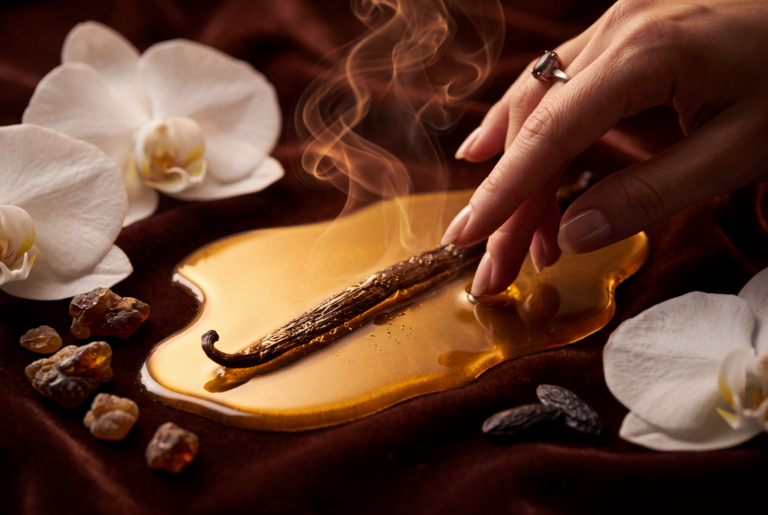
If you want one short answer, start with vanilla. In a peer-reviewed cross-cultural experiment, participants from diverse communities ranked vanillin as the most pleasant of ten tested odorants. Still, pleasantness is not the same as sexual attraction, and a vanilla perfume contains far more than vanillin. For that reason, this guide treats vanilla as the strongest broad-appeal starting point rather than a universal winner.
This article combines four kinds of information. First, it reviews peer-reviewed research on odor pleasantness, body odor, person perception, confidence, and supposed pheromones. Second, it examines the perfume profiles that recur in fragrance communities. Third, it checks each recommended fragrance against an official brand description whenever possible. Finally, it turns those findings into a practical method that you can use before a date, at work, or while choosing a signature scent.
The quick verdict: Vanilla has the clearest evidence for broad pleasantness. Soft musk, amber, jasmine, sandalwood, rose, orange blossom, gentle fruits, lavender, bergamot, tonka, and warm spices can also feel highly attractive. Nevertheless, the most reliable formula is a scent you enjoy, tested on your skin, worn at a considerate strength, and connected with a positive interaction.
Most attractive perfume notes at a glance
The following table is an editorial synthesis of scientific findings, perfume structure, official note descriptions, and recurring community preferences. It is not a laboratory ranking of sexual attraction. Instead, it shows which most attractive perfume notes make useful starting points and where each one can go wrong.
| Note or accord | Why people may find it attractive | Best use | Main risk |
|---|---|---|---|
| Vanilla | Sweet, warm, familiar, and highly pleasant across cultures | Dates, cool weather, comforting signature scents | Can become sugary, candle-like, or heavy |
| Skin musk | Suggests clean, warm skin and creates an intimate scent bubble | Close contact, everyday wear, minimalist style | Some musks smell laundry-clean, animalic, or barely detectable |
| Amber | Adds warmth, sweetness, resin, and depth | Evening, autumn, winter, dressed-up settings | “Amber” is an accord, so different perfumes can smell unrelated |
| Jasmine and hedione | Gives floral radiance, diffusion, and a warm skin-like bloom | Romantic florals, evening, elegant signatures | Indolic jasmine can smell heady or animalic |
| Sandalwood | Creamy wood softens sweetness and makes a scent feel polished | Unisex wear, dates, office-to-evening scents | Some sandalwood materials read dry, sharp, or pickle-like |
| Rose | Connects romance, freshness, fruit, spice, and softness | Floral signatures, weddings, dates, all genders | Powdery or vintage styles can divide opinion |
| Orange blossom and neroli | Combines clean citrus brightness with white-floral warmth | First dates, spring, warm climates, daytime | Can turn soapy or intensely floral |
| Pear, peach, berries, and cherry | Smell juicy, approachable, playful, and easy to recognize | Casual dates, parties, younger or playful profiles | Synthetic sweetness can resemble shampoo or candy |
| Lavender | Communicates cleanliness while adding aromatic softness | Fresh fragrances, fougères, calming signatures | Strong lavender can resemble shaving soap or household products |
| Bergamot and citrus | Create an immediate clean, energetic first impression | Daytime, summer, work, crowded spaces | Top notes fade quickly and may feel generic alone |
| Tonka, praline, and caramel | Add edible warmth, creaminess, and lingering sweetness | Cold weather, nightlife, gourmand lovers | Excess sweetness can overwhelm close spaces |
| Cardamom, cinnamon, saffron, and pink pepper | Add heat, contrast, sparkle, and intrigue | Evening, cooler weather, woody or amber scents | High doses can feel medicinal, dusty, or harsh |
| Patchouli | Gives earthiness, darkness, texture, and lasting power | Chypres, ambers, nightlife, confident signatures | Earthy or camphoraceous facets can be polarizing |
| Oud, leather, tobacco, and animalic notes | Project drama, luxury, smoke, and adult sensuality | Statement scents and experienced noses | These are among the least safe blind buys |
Consequently, there are two different meanings of “attractive.” A perfume can be broadly pleasant, which makes vanilla, soft fruits, clean musks, and smooth woods useful. Alternatively, it can be distinctive and sensual, which favors amber, jasmine, spices, patchouli, oud, leather, or tobacco. The second group often creates stronger love-or-hate reactions.
Which perfume note is the most attractive?
Vanilla is the best-supported answer if “most attractive” means most broadly pleasant. Researchers asked people from culturally and geographically diverse communities to rank ten single odorants. According to the peer-reviewed study in Current Biology, culture explained only 6% of variation in the rankings, molecular identity explained 41%, and individual variation explained 54%. Moreover, the Karolinska Institutet summary reports that vanillin ranked first, followed by peach-like ethyl butyrate.
That result deserves several limits. The study tested only ten isolated odorants, not finished perfumes, romantic encounters, or sexual arousal. In addition, a listed “vanilla note” may come from natural vanilla materials, vanillin, ethyl vanillin, balsams, woods, musks, or a constructed accord. Thus, the experiment supports vanilla as a pleasant starting point, but it does not prove that every vanilla fragrance attracts men or women.
Personal taste also dominated the variance. In practical terms, one person may adore a smoky vanilla while another prefers clean citrus or dislikes sweetness entirely. Therefore, the scientifically honest answer is: vanilla is the strongest candidate for broad appeal, while the most attractive note for a specific person depends on that person, the complete formula, and the wearer.
What does science actually say about attractive fragrance?
Search results often turn a complicated subject into statements such as “men love vanilla” or “jasmine triggers desire.” Yet scientific experiments usually measure pleasantness, intensity, memory, face ratings, body-odor ratings, confidence, or brain activity. They rarely measure real-world romantic choice. Understanding that difference prevents marketing language from turning a small finding into a false promise.
Pleasant smells can improve person perception
Odor can influence how people evaluate what they see. A broad review of scent and person perception describes studies in which pleasant or unpleasant odors changed judgments of faces, social traits, and behavior. Likewise, a controlled study found that odor valence influenced facial-attractiveness judgments: faces paired with pleasant or neutral odors received higher ratings than faces paired with unpleasant odors.
However, this effect does not identify a single winning perfume note. A pleasant background smell can create a positive halo, while an unpleasant one can work in the opposite direction. As a result, wearing an agreeable fragrance at a reasonable intensity is more defensible than chasing an alleged aphrodisiac ingredient.
Perfume mixes with the wearer instead of simply covering odor
One of the most useful fragrance studies compared untreated body odor, perfumed body odor, and different perfume-body combinations. In the PLOS ONE experiments, perfume generally improved ratings of pleasantness and attractiveness. More importantly, the effect changed with the individual donor. Participants’ own chosen perfumes produced more attractive and pleasant blends than assigned perfumes, even though the pure perfumes did not differ in pleasantness.
Therefore, “skin chemistry” is not merely a sales cliché, although consumers often use the phrase too loosely. Skin temperature, sebum, microbiota, other products, clothing, dose, and natural odor can all affect the perceived blend. Furthermore, researchers found that people could still distinguish individuals’ odors while they wore fragrance, as described in a Frontiers in Psychology study. Perfume modifies an olfactory identity; it does not necessarily erase it.
This finding changes how you should shop for the most attractive perfume notes. A strip tells you whether a composition interests you. Only a skin test tells you whether that composition works as your perfume.
Fragrance may affect confidence and behavior
Perfume can influence attraction indirectly by changing how a wearer feels and behaves. In a double-blind experiment, men who used an active scented body spray reported higher self-confidence and self-perceived attractiveness. Women did not rate their still photographs differently, but they rated the men more attractive in silent video clips. The study abstract in PubMed suggests that nonverbal behavior, rather than the viewers smelling the product, helped produce the effect.
More recently, a small EEG study with 22 women found that a pleasant body-wash fragrance increased ratings of attractiveness, confidence, and femininity for self and other faces compared with clean air. Nevertheless, the 2024 paper had commercial funding, used one pleasant product, and did not test dating success. It supports a cross-sensory effect, not a promise that perfume changes objective beauty.
Still, the confidence pathway makes practical sense. When you genuinely like your fragrance, you may stand closer, smile more easily, feel better dressed, and behave more comfortably. Consequently, a perfume you love can outperform a supposedly seductive fragrance that makes you self-conscious.
Memory and learning shape what smells attractive
Smell has close neural relationships with emotion and memory. A review of odor-evoked memory explains that olfactory cues can produce unusually emotional and vivid autobiographical memories. Therefore, a perfume may feel attractive because it recalls a first partner, a parent’s cosmetics, a hotel, clean laundry, a favorite dessert, or a formative social period.
The Reddit discussion supplied for this article illustrates that process. One commenter connected an attraction to simple Victoria’s Secret perfumes with what attractive people wore during the commenter’s formative years. Another said a fragrance smelled wonderful on one particular friend but unpleasant on paper and on other wearers. Those stories are not scientific data, yet they fit the established roles of association, context, and individual blending.
For this reason, familiarity can help or hurt. A recognizable vanilla may feel cozy and approachable, whereas the same sweetness may remind someone else of candles or frosting. Similarly, lavender can suggest clean skin to one person and cleaning products to another.
There is no proven human pheromone perfume
Commercial “pheromone perfumes” often imply that a molecule can bypass personal preference and trigger attraction. Current evidence does not support that promise. A major Royal Society review of the search for human pheromones concluded that famous candidates lacked firm evidence. Moreover, a preregistered-style test of putative sex-specific compounds found no effect on gender perception or attractiveness ratings.
Humans certainly communicate information through body odor, and researchers continue to study that process. Still, body-odor signaling is not the same as a bottled pheromone that makes strangers desire the wearer. Therefore, consumers should treat guaranteed-attraction claims as marketing, not established biology.
Hedione is interesting, but it is not a love potion
Hedione is an airy jasmine-like material used to add radiance and diffusion. A frequently cited experiment reported that smelling hedione increased activity in limbic areas and produced a sex-differentiated hypothalamic response. You can read the study abstract on PubMed. However, brain activation does not prove attraction, arousal, mate choice, or behavioral effects.
Accordingly, jasmine and hedione remain compelling most attractive perfume notes because they make compositions luminous, spacious, and floral. They do not deserve a scientific aphrodisiac label. The difference matters because a plausible biological story can sound much stronger than the experiment that produced it.
How we evaluated the most attractive perfume notes
This guide uses a hierarchy of evidence rather than treating every URL equally.
Scientific sources
Peer-reviewed experiments and reviews support claims about odor pleasantness, perfume-body odor interaction, cross-sensory perception, confidence, memory, and pheromone uncertainty. Whenever possible, the links lead to PubMed, PLOS, Frontiers, Royal Society journals, or full scholarly reviews.
Community discussions
The supplied Reddit fragrance thread contains many personal answers, including Burberry Her, Baccarat Rouge 540, Black Opium, Good Girl, Vanilla 28, La Belle, Glossier You, Alien, Hypnotic Poison, and Coco Mademoiselle. Meanwhile, the supplied Fragrantica discussion spans 84 posts across four pages and repeatedly returns to Hypnotic Poison, Dior Addict, Crystal Noir, Alien, Vanilla 28, La Belle, Coco Mademoiselle, Scandal, and several white-floral or amber-vanilla styles.
These threads show recurring language and products, not population-wide preference. Users self-select into fragrance communities, identities remain uncertain, and compliments depend on projection, setting, appearance, relationship, and memory. Thus, community comments can generate a shortlist, but they cannot prove what “men” or “women” universally prefer.
Commercial and editorial guides
Several references supplied by the reader describe warm sweetness and persistent base notes as sensual. For example, Snif’s guide highlights vanilla, sandalwood, vetiver, rose, amber, and musk, while Michel Germain’s article emphasizes oud, amber, patchouli, leather, and musk. Other supplied pages from Prosody London, Vexa Beauty, and Perfume.com offer product-oriented interpretations.
However, brands and retailers have a commercial interest in making fragrance feel transformative. Their articles help map industry language and popular recommendations, but they rank below controlled research for factual claims about attraction.
Official perfume descriptions
Official brand pages verify the advertised notes in the product recommendations. Even then, note lists describe an artistic impression rather than a full chemical formula. For instance, “amber” may refer to a warm accord rather than fossilized amber, and “musk” may cover very different modern aroma materials.
Why notes, accords, and finished perfumes are not the same thing
A perfume note is a recognizable impression, such as vanilla, rose, pear, leather, or sandalwood. Yet the listed note may not indicate a literal ingredient. Perfumers can create pear from aroma chemicals, amber from a constructed blend, and a skin-musk effect from several synthetic musks and woody-amber materials.
An accord combines materials to create a larger idea. Amber commonly brings together resinous, balsamic, vanilla-like, woody, or musky effects. Likewise, a “clean skin” accord might include ambrette, ambrox-type materials, musks, iris, woods, and pepper. Therefore, asking whether amber or musk is attractive still leaves a large range of possible smells.
Finished perfume adds structure. Bright top notes create the first impression, heart notes shape the central theme, and longer-lasting base materials dominate the drydown. The Perfume Society’s sampling advice recommends testing on skin and revisiting the fragrance over time because each stage gets its moment.
Consequently, shoppers should never reject or buy a perfume because one attractive note appears in its pyramid. A skillful composition may make patchouli transparent, rose fruity, vanilla smoky, or musk mineral. Conversely, a perfume can list every one of the most attractive perfume notes and still feel unbalanced on your skin.
The 14 most attractive perfume notes and accords
The following profiles explain what each note contributes, who may enjoy it, and how to avoid its least appealing version. Although the order begins with broad-appeal candidates, it becomes less useful as a strict ranking after vanilla. Formula quality and personal fit matter more than whether sandalwood appears two places above rose.
1. Vanilla: the strongest broad-appeal candidate
Vanilla earns the first position because it has both cultural visibility and unusually relevant pleasantness evidence. As noted above, vanillin ranked first in the cross-cultural experiment summarized by Karolinska Institutet. In addition, vanilla repeatedly appears in the Reddit and Fragrantica recommendations supplied for this article.
Why does it work so often? Vanilla can smell warm, edible, soft, familiar, and comforting. Moreover, it blends easily with amber, woods, tobacco, fruits, coffee, florals, spices, and musks. A light vanilla can feel clean and close to skin, while a dark one can suggest rum, smoke, resin, or suede.
Nevertheless, “vanilla” covers many styles. Ethyl vanillin can create an intense candy or frosting effect. Naturalistic vanilla materials may smell woody, leathery, spicy, or slightly animalic. Benzoin can produce a resinous vanilla impression, while tonka adds coumarinic facets that recall almond, hay, cherry, or tobacco.
Choose airy vanilla and musk when you want quiet intimacy. Alternatively, select vanilla with jasmine, coffee, amber, or spice for a stronger evening trail. If you dislike edible perfume, try vanilla with dry woods, citrus, iris, vetiver, or incense instead of caramel and praline.
Among the most attractive perfume notes, vanilla remains the easiest place to begin. Still, sample before buying because sweetness, dose, and drydown decide whether it smells like warm skin or a bakery candle.
2. Skin musk: intimacy rather than raw power
Musk often appears in articles about seductive perfume because it can suggest warm, clean, recently washed skin. Modern perfumery mostly uses synthetic musk materials, and they do not all smell alike. Some feel cottony or laundry-clean, whereas others seem powdery, fruity, woody, mineral, creamy, or faintly animalic.
That diversity explains why “musk is attractive” says very little on its own. A bright laundry musk projects hygiene and softness. By contrast, a warm skin musk stays close, encouraging another person to enter your scent bubble. The second style often feels more intimate because it does not announce itself from across a room.
Glossier illustrates the skin-scent approach in Glossier You, which combines pink pepper and iris with ambrette and Ambrox. Similarly, many minimalist perfumes use musks with iris, ambrette, sandalwood, or amber woods to create a scent that seems to belong to the wearer.
However, anosmia and adaptation can complicate musk. A wearer may stop detecting a material that other people still smell, or one listener may detect a musk that another barely perceives. Therefore, ask a trusted person about projection before adding extra sprays.
Skin musk belongs among the most attractive perfume notes when the goal is closeness, cleanliness, and subtle warmth. It becomes less safe when an animalic facet or powerful laundry effect dominates the room.
3. Amber: warm, enveloping, and frequently misunderstood
Amber is usually an accord, not a single raw material. Classical amber effects often combine labdanum, benzoin, vanilla, balsams, woods, or musks. Modern amber woods may smell drier, more mineral, more radiant, and far more powerful.
Because amber holds warmth on the skin, perfume marketing frequently calls it sensual. That language makes intuitive sense, but no controlled study establishes “amber” as a universal attraction trigger. Instead, its practical strength comes from texture and persistence. Amber can make a floral feel golden, a vanilla feel deeper, and a musk feel more enveloping.
For a gentle result, choose amber with vanilla, sandalwood, or soft musk. Meanwhile, saffron, patchouli, oud, leather, or smoke create a darker and more assertive interpretation. Maison Francis Kurkdjian describes Baccarat Rouge 540 as a woody, ambery, floral composition built around jasmine, saffron, an ambergris effect, dry woods, and gourmand ethyl maltol.
The same feature that makes amber memorable can also make it exhausting. Powerful woody-amber materials sometimes remain detectable after the wearer has gone, and some people experience them as sharp or medicinal. Consequently, one or two sprays may feel more attractive than six.
Amber sits high among the most attractive perfume notes for evening warmth and lasting presence. Nevertheless, “amber perfume” is too broad a category for a safe blind buy.
4. Jasmine and hedione: radiant floral warmth
Jasmine can smell luminous, creamy, green, fruity, indolic, animalic, or almost tea-like. Perfumers often use jasmine materials to expand a composition and connect bright top notes with a warm base. Hedione, a jasmine-associated material, adds diffusion without always smelling like a dense bouquet.
The hedione brain-imaging study makes this category scientifically interesting, but it does not turn jasmine into a proven aphrodisiac. A better practical explanation is that jasmine can feel alive and expansive. In small doses, it brings light. At higher levels, jasmine sambac can create a narcotic white-floral effect that suggests warm petals and skin.
Mugler’s official page lists jasmine sambac, Cashmeran, and white amber as the core of Alien Eau de Parfum. Likewise, Dior Addict combines mandarin leaf and orange blossom with jasmine sambac and Bourbon vanilla.
For maximum versatility, try transparent jasmine with citrus, tea, or musk. On the other hand, pair jasmine with vanilla, tuberose, amber, or sandalwood when you want a richer evening fragrance. People who perceive indoles strongly should test patiently because the same floral can smell sensual to one nose and overripe to another.
Jasmine deserves a place among the most attractive perfume notes, especially within balanced white-floral and amber compositions. Even so, its attractiveness comes from artistry and dosage rather than a neurological switch.
5. Sandalwood: creamy, smooth, and quietly polished
Sandalwood bridges several fragrance styles. It can make citrus feel smoother, support florals, dry down a gourmand, or give musk a creamy wooden frame. Many sandalwood effects feel warm without becoming overtly edible, which makes them useful for people who want sensuality without dessert-like sweetness.
The material can also feel gender-neutral. A sandalwood fragrance may lean soft and milky with vanilla or musk, then become drier and more tailored with cedar, vetiver, cardamom, or leather. Therefore, it works well for shared bottles and understated date scents.
Not every sandalwood accord resembles the same tree. Some modern molecules smell creamy and radiant, whereas others create dry pencil-like, savory, or pickle-like associations for sensitive noses. In the supplied Reddit thread, one commenter praised a powdery, fresh musk-and-sandalwood composition while another discussion participant elsewhere might dislike the same family. That variation reinforces the need for skin testing.
To make sandalwood approachable, seek bergamot, iris, rose, vanilla, or skin musk around it. For more drama, choose sandalwood with amber, incense, spices, oud, or white flowers. As a result, sandalwood ranks among the most attractive perfume notes for people who want warmth, texture, and elegance without excessive sugar.
6. Rose: romantic, fruity, spicy, or dark
Rose has a romantic reputation, but modern rose perfumes do much more than reproduce a bouquet. Lychee and pear make rose juicy. Patchouli and moss turn it into a chypre. Oud, saffron, and incense create a darker profile, while musk and citrus keep it sheer.
Recent research on real roses adds useful nuance. A 2025 study found that the more distinctly rosy a flower smelled, the more pleasant and attractive participants tended to rate it. Furthermore, the open-access paper linked pleasantness to a balanced mixture involving ionones, oxylipins, and 2-phenylethanol-related materials, rather than one simple “rose molecule.”
That finding mirrors perfume. Rose becomes appealing through balance. A jammy rose can feel lush, while a green rose feels fresh and a peppery rose feels modern. Parfums de Marly describes Delina with lychee, Damascena rose, soft musks, and Cashmeran, a combination that repeatedly appears in online discussions of feminine attractiveness.
If traditional rose feels dated to you, try a watery, fruity, woody, or musky version. Conversely, lovers of vintage glamour may prefer rose with aldehydes, powder, amber, or moss. Rose remains one of the most attractive perfume notes because it can move between freshness, softness, fruit, spice, and shadow.
7. Orange blossom and neroli: clean light with floral heat
Orange blossom and neroli come from the bitter orange tree, yet perfumery treats them as distinct impressions. Neroli often smells brighter, greener, and more cologne-like. Orange blossom tends to feel warmer, sweeter, fuller, and more floral.
Together, they solve a common date-fragrance problem. Citrus provides a sparkling clean opening, while the floral heart lasts longer and feels more personal. As a result, this family can project care and freshness without smelling like plain soap.
Orange blossom also pairs beautifully with vanilla, honey, jasmine, lavender, musk, and amber. Libre Eau de Parfum, for example, combines French lavender with Moroccan orange blossom, musk, and warm vanilla. Meanwhile, Dior uses Tunisian orange blossom before jasmine and Bourbon vanilla in Dior Addict.
Choose neroli with bergamot and clean woods for a daytime first date. Alternatively, select orange blossom with vanilla, honey, or amber for a warmer evening profile. Because some interpretations become soapy or intensely indolic, moderation helps in close spaces.
Orange blossom earns its position among the most attractive perfume notes by linking cleanliness with floral sensuality. It is especially valuable in warm climates where dense caramel or oud may feel oppressive.
8. Pear, peach, berries, and cherry: approachable fruit
Fruit notes create immediate recognition and playfulness. In the cross-cultural odor study, peach-like ethyl butyrate ranked second behind vanillin. However, that experiment used an isolated molecule, not a fruit perfume. The result supports the pleasant potential of fruity smells without proving that cherry or pear triggers attraction.
In finished fragrances, pear adds juicy transparency, peach adds velvety softness, berries add tart sweetness, and cherry can move from candy to liqueur or almond. These notes often attract compliments because people can describe them easily and notice them quickly.
Burberry presents Her Eau de Parfum as red and dark berries wrapped in amber and bright white woods. Likewise, Jean Paul Gaultier builds La Belle around bergamot, green pear, and vanilla pod. Both profiles appeared in the supplied community discussions.
For a more adult fruit fragrance, look for rose, woods, patchouli, tea, leather, spice, or restrained musk. On the other hand, marshmallow, caramel, whipped cream, and strong ethyl maltol amplify a playful gourmand effect. Neither style is inherently better; the setting and wearer decide.
Fruits belong among the most attractive perfume notes when they remain vibrant and balanced. Nevertheless, an overly sweet synthetic fruit can remind some people of shampoo, candy, or air freshener.
9. Lavender: clean, composed, and more sensual than expected
Lavender carries strong learned associations with cleanliness, shaving products, relaxation, and home care. Consequently, one person may read it as comforting skin while another reads it as detergent. Perfumers manage that tension by pairing lavender with citrus, vanilla, amber, woods, herbs, or orange blossom.
Many fragrances marketed to men place lavender at the aromatic heart of a fougère. Meanwhile, fragrances marketed to women include Libre’s striking lavender-orange blossom-vanilla contrast. Gender labeling can influence how consumers describe a scent, but the materials themselves do not have a biological gender. A 2021 experiment on scent labels found that feminine or masculine labels changed perceived femininity, illustrating how language shapes interpretation.
Use lavender with bergamot and clean musk when you want a crisp daytime impression. In contrast, lavender with vanilla, tonka, amber, or cardamom feels warmer and more suitable for night. Because lavender can project strongly, test it around people who matter to you before making it a date signature.
Lavender counts among the most attractive perfume notes because it communicates grooming and calm while supporting sweetness. Yet its household and barbershop associations make style selection essential.
10. Bergamot and citrus: the clean first impression
Citrus creates lift, energy, and an immediate sense of freshness. In particular, bergamot combines lemony brightness with floral, green, and slightly bitter facets. Mandarin tends to feel sweeter, grapefruit sharper, and neroli more floral.
Freshness can contribute to attractiveness by signaling cleanliness and making close contact easier. Additionally, citrus rarely feels as intrusive as dense oud, tobacco, or caramel in warm weather. Dior describes Sauvage Eau de Parfum with zesty bergamot, woody patchouli, and smoky vanilla, while Chanel frames Bleu de Chanel Eau de Toilette around citrus, aromatic notes, cedar, and sandalwood.
However, volatile citrus materials fade faster than heavy base notes. A perfume that smells perfect in the first five minutes can become generic, woody, sweet, or musky after two hours. Therefore, judge the drydown rather than buying from the opening.
Citrus belongs among the most attractive perfume notes for daytime, summer, work, and first meetings. To keep it memorable, combine it with orange blossom, tea, ginger, aromatic herbs, woods, vetiver, or soft musk.
11. Tonka, praline, caramel, and other gourmand notes
Gourmand accords borrow the language of edible pleasure. For instance, tonka can suggest vanilla, almond, hay, cherry, tobacco, or warm spice. Praline and caramel create a clearer dessert effect, while coffee, cocoa, honey, and marshmallow add recognizable themes.
These notes appear constantly in commercial “sexy perfume” lists because warmth, sweetness, and persistence fit the cultural idea of indulgence. Moreover, many community favorites combine gourmand bases with florals. Carolina Herrera’s Good Girl, for example, contrasts jasmine and tuberose with roasted tonka bean and cocoa. Lancôme’s La Vie Est Belle combines iris, patchouli, vanilla, and spun sugar.
Sweetness works best when another element creates tension. Citrus adds lift, salt adds contrast, woods add shape, and flowers prevent a dessert accord from becoming flat. Conversely, layering multiple sweet products can produce a dense cloud that overwhelms a partner at close range.
Gourmands join the most attractive perfume notes as friendly, comforting, and often complimented choices. Still, they are not universally mature, sensual, or appropriate for heat. Dose and context matter as much as the note list.
12. Cardamom, cinnamon, saffron, and pink pepper: controlled heat
Spices animate perfume without necessarily making it sweet. For example, cardamom can smell cool, green, lemony, and warm at once. Cinnamon brings recognizable heat, pink pepper adds rosy sparkle, and saffron can feel leathery, metallic, warm, or slightly medicinal.
Because spices create contrast, they often make a familiar vanilla or wood feel more adult. Yves Saint Laurent lists cardamom, cedar, and coumarin in La Nuit de L’Homme. Similarly, Le Male Le Parfum uses cardamom over lavender, iris, and vanilla.
Saffron needs special care because its metallic or medicinal facets divide opinion. Baccarat Rouge 540 uses a saffron effect to create radiance and contrast, yet the supplied Reddit thread includes both enthusiastic praise and dislike for the same fragrance family.
Warm spices rank among the most attractive perfume notes when they sharpen a smooth composition. In excess, though, cinnamon can feel like a candle, cardamom like cooking spice, and saffron like a medical dressing. Always test the whole accord.
13. Patchouli: earth, depth, and structure
Patchouli can smell earthy, woody, camphoraceous, chocolate-like, clean, or almost transparent depending on the material and treatment. It supports many chypres, ambers, gourmands, and rose fragrances because it adds persistence and contrast.
For approachable patchouli, try it with citrus, rose, vanilla, cocoa, or clean musk. Coco Mademoiselle offers a well-known example: Chanel describes the Eau de Parfum with orange, jasmine, May rose, patchouli, and vetiver. The composition appeared repeatedly in both supplied community discussions.
Still, patchouli can trigger strong associations with damp soil, incense shops, vintage perfume, or counterculture. Those associations are not defects, but they reduce universal appeal. Consequently, a polished fractionated patchouli may work for people who reject a darker earthy version.
Patchouli belongs among the most attractive perfume notes for depth and memorable texture. It becomes risky when the wearer wants an invisible, freshly showered, or universally neutral scent.
14. Oud, leather, tobacco, and animalic notes: compelling but polarizing
Dark materials often dominate lists of “erotic” perfume notes. Depending on treatment, oud can smell woody, smoky, medicinal, leathery, fruity, cheesy, or animalic. Leather may feel soft like suede or sharp like smoke and tar. Tobacco ranges from dry leaf to honeyed pipe tobacco, while animalic accords suggest fur, warm skin, civet, or musk.
These profiles can be deeply attractive because they project confidence, mystery, and texture. Furthermore, they stand apart from common sweet florals and fresh blue colognes. The Michel Germain guide reflects this cultural language by emphasizing oud, leather, amber, musk, and patchouli.
Nevertheless, high distinctiveness reduces safety. Someone who loves smoke and oud may remember you all night, while another person may move away. For that reason, choose softened versions with rose, vanilla, saffron, fruit, or sandalwood when testing this territory.
Oud, leather, tobacco, and animalic effects can be among the most attractive perfume notes for a compatible nose. They are poor choices when your goal is maximum crowd appeal, a blind gift, or a fragrance-safe workplace.
What scents do men like on women?
The most responsible answer is that men do not share one nose. Age, culture, sexual orientation, fragrance knowledge, memory, relationship history, and the individual wearer all change preference. Moreover, the scientific literature does not provide a representative global ranking of perfume notes that men prefer on women.
Still, three patterns recur across commercial guides and the supplied community conversations:
- Warm sweetness: Vanilla, tonka, amber, caramel, praline, and soft fruits appear frequently.
- Floral warmth: Jasmine, tuberose, orange blossom, and rose often sit above a sweet or musky base.
- Clean intimacy: Skin musks, fresh florals, citrus, shampoo-like fruit, and light woods receive substantial support alongside darker “sexy” perfumes.
That third pattern matters. People sometimes assume that attraction requires a dense nighttime fragrance. However, comments in the supplied Reddit thread praised fresh neroli, Sailing Day, Tommy Girl, Versace Yellow Diamond, Glossier You, and simple Victoria’s Secret perfumes as well as amber-vanilla powerhouses. Consequently, a clean scent that suits the wearer can compete with any dramatic gourmand.
The most common practical answer to “what scents do men like on women?” is therefore a balanced vanilla, fruity floral, warm white floral, or clean skin musk worn at close-to-moderate projection. Nevertheless, asking the specific man remains more accurate than reading any generalized list.
Top 10 perfumes guys often mention liking on women
No credible study has tested every perfume on a representative sample of men. Therefore, the following list is not a scientific top ten. It is a community-informed sampling shortlist built from repeated mentions in the supplied Reddit and Fragrantica discussions, then checked against official note descriptions. The order reflects recurrence and variety rather than a numerical attractiveness score.
| Perfume to sample | Main profile | Why it fits the recurring pattern | Important caution |
|---|---|---|---|
| Dior Hypnotic Poison EDT | Bitter almond, jasmine sambac, vanilla | A recognizable almond-vanilla with floral lift; one of the strongest community repeats | Sweet, powdery, and distinctive, so it can divide opinion |
| Dior Addict EDP | Mandarin leaf, orange blossom, jasmine, Bourbon vanilla | Combines citrus, white flowers, and deep vanilla; repeatedly named in the Fragrantica thread | Rich white florals can feel intense in heat |
| YSL Black Opium EDP | Coffee, vanilla, white flowers | Uses the popular sweet-floral formula with a dark coffee contrast | Extremely familiar and sweet for some noses |
| Versace Crystal Noir EDT | Cardamom, ginger, gardenia, orange flower, amber, sandalwood, musk | Blends spice, creamy florals, woods, and musk; repeatedly cited for compliments | Versions and concentrations may smell different, so test the exact bottle |
| Mugler Alien EDP | Jasmine sambac, Cashmeran, white amber | A simple but forceful jasmine-amber structure that projects clearly | Strong projection and jasmine can overwhelm close settings |
| KAYALI Vanilla 28 | Vanilla orchid, jasmine, tonka, brown sugar, amber woods, musk, patchouli | Directly answers the vanilla preference with warmth and layering flexibility | Brown sugar and patchouli change notably across skin and aging of the liquid |
| Jean Paul Gaultier La Belle EDP | Bergamot, green pear, vanilla pod | Pairs juicy fruit with an easy-to-recognize vanilla drydown | Can become very sweet and dense in hot weather |
| Chanel Coco Mademoiselle EDP | Orange, jasmine, May rose, patchouli, vetiver | Balances clean brightness, florals, and a structured woody base | Patchouli may feel sharp or familiar to people who encounter it often |
| Carolina Herrera Good Girl EDP | Jasmine, tuberose, tonka, cocoa | Contrasts luminous white flowers with a warm gourmand base | The full formula is more complex and stronger than the four-note summary suggests |
| Parfums de Marly Delina EDP | Lychee, Damascena rose, musks, Cashmeran | Represents the fruity-rose-musk pattern that appears throughout modern recommendations | Tart rhubarb-like and rosy facets can feel sharp on some skin |
Several other names recur, including Scandal, Vanilla 28, Libre Le Parfum, La Vie Est Belle, Coco Noir, Black Orchid, and older or discontinued perfumes. Yet recurrence does not make them universal winners. One Fragrantica participant described a fragrance that drew enthusiastic compliments, while another participant could strongly dislike the same scent. That disagreement is the real pattern.
If you are choosing for a known partner, test three contrasting profiles rather than ten similar sweet perfumes. For example, compare a vanilla gourmand, a fruity rose, and a clean skin musk. Then ask which one invites closeness after the drydown, not which strip produces the loudest opening.
What perfume attracts men the most?
No perfume has demonstrated that it attracts men more than every alternative. If a shopper wants the most defensible single starting point, a balanced vanilla-centered perfume makes sense because vanillin showed broad pleasantness and vanilla styles recur in community answers. Hypnotic Poison, Vanilla 28, Black Opium, La Belle, and Dior Addict offer very different versions of that idea.
However, the exact partner’s reaction matters more than the category. Someone who dislikes sweetness may prefer Coco Mademoiselle, Glossier You, a citrus neroli, a watery floral, or even a traditionally masculine wood. Therefore, “the perfume that attracts men the most” is a search phrase, not a measurable universal product title.
For a first date with no preference information, choose moderate projection and a clean-to-warm balance. Vanilla with citrus, musk, woods, or transparent florals is safer than an extremely syrupy gourmand. Likewise, a fruity floral with a soft base may feel welcoming without filling the entire venue.
What perfume notes do women often find attractive on men?
Scientific evidence does not support a universal female preference list either. Nevertheless, community and editorial recommendations commonly favor aromatic woods, citrus freshness, clean musks, lavender, cardamom, amber, vanilla, tobacco, and restrained leather. These profiles combine an immediate impression of grooming with a warmer drydown.
Freshness often matters at the beginning. Bergamot, grapefruit, marine notes, lavender, and aromatic herbs can create clarity. Later, cedar, sandalwood, vetiver, amber, vanilla, musk, or tobacco provide texture and persistence. Thus, many popular masculine fragrances follow a fresh-top, warm-base structure.
Sweetness does not belong to one gender. Vanilla, tonka, caramel, and iris appear throughout successful fragrances marketed to men. In fact, several of the most discussed modern masculine releases use the same most attractive perfume notes found in feminine gourmands, but they frame them with aromatic, woody, spicy, or leather facets.
Top 10 most attractive perfumes to a man: a sampling list
This second shortlist answers the image query “top 10 most attractive perfumes to a man” in the sense of fragrances worn by a man. Again, it is a set of profiles to test, not a universal ranking.
| Perfume to sample | Main profile | Why it is a useful test |
|---|---|---|
| Bleu de Chanel EDT | Citrus, aromatic accord, cedar, sandalwood | Tests the clean, woody, versatile category |
| Dior Sauvage EDP | Bergamot, patchouli, smoky vanilla | Combines recognizable freshness with a warm drydown |
| YSL La Nuit de L’Homme EDT | Cardamom, cedar, coumarin | Represents a softer spicy-woody date profile |
| Jean Paul Gaultier Le Male Le Parfum | Cardamom, lavender, iris, vanilla | Shows how powdery florals and vanilla can read masculine |
| Azzaro The Most Wanted | Cardamom, caramel, woody amber | Tests a sweet, warm, attention-grabbing style |
| Armani Stronger With You Parfum | Chestnut, leathered vanilla, spice | Represents the modern vanilla-amber trend for men |
| Viktor&Rolf Spicebomb Extreme | Lavender, spices, tobacco, vanilla, woody amber | Tests a dense cold-weather tobacco gourmand |
| Creed Aventus | Bergamot, pineapple, birch, musk | Contrasts bright fruit with a smoky woody base |
| Armani Acqua di Giò Profondo EDP | Marine notes, cypress, lavender, rosemary, patchouli, musk | Tests a fresh aquatic and aromatic direction |
| Viktor&Rolf Spicebomb EDT | Bergamot, grapefruit, cinnamon, vetiver, tobacco, white leather | Adds a brighter spicy-leather option without the Extreme’s vanilla weight |
For a warm climate or daytime meeting, begin with Bleu de Chanel, Acqua di Giò Profondo, or the brighter side of Aventus. Meanwhile, La Nuit de L’Homme and Le Male Le Parfum suit closer evening settings. Spicebomb Extreme and sweet amber-vanillas need cooler air and lighter application.
The wearer should also try fragrances outside the marketed gender category. A woman may smell excellent in Sauvage, and a man may wear Delina or Black Opium beautifully. Marketing determines the aisle; skin and taste determine the result.
Most attractive perfume notes by mood and occasion
Attractiveness depends partly on congruence. A fragrance feels more natural when its volume and mood fit the environment. Therefore, the same perfume can seem captivating at dinner and exhausting in an airplane cabin.
| Desired impression or setting | Notes and accords to try | Why they fit | Application direction |
|---|---|---|---|
| First date in warm weather | Bergamot, neroli, orange blossom, pear, tea, clean musk, light woods | Fresh, approachable, and unlikely to dominate conversation | Start with 1 to 3 sprays depending on strength |
| Dinner date in cool weather | Vanilla, amber, jasmine, sandalwood, cardamom, tonka | Warmth develops gradually and holds through the evening | Apply early enough to reach the drydown |
| Close, private setting | Skin musk, ambrette, iris, soft vanilla, sandalwood | Creates an intimate scent bubble rather than a room-filling trail | Keep fragrance below the collarbone or on inner arms |
| Party or nightlife | Cherry, berries, tuberose, amber woods, saffron, patchouli, gourmand accords | Higher contrast and projection can survive noise and movement | Adjust for venue size and heat |
| Office or class | Citrus, tea, lavender, sheer florals, cedar, vetiver, soft musk | Communicates grooming without demanding attention | Favor one light application and respect scent-free rules |
| Formal event | Rose, jasmine, iris, sandalwood, refined patchouli, amber | Feels polished and works with dressier clothing | Test on fabric first to avoid stains |
| Beach or humid climate | Citrus, coconut water, neroli, fig, marine notes, transparent musk | Airy profiles resist becoming syrupy in humidity | Avoid heavy resins and overspraying |
| Cold outdoor weather | Vanilla, tobacco, leather, oud, amber, cinnamon, balsams | Dense base notes remain perceptible in cold air | Apply conservatively before entering heated rooms |
If you want more ideas for warm-weather associations, the Shelf Behavior guide to what vacation smells like explores how citrus, sunscreen-like florals, salt, woods, and memory build a travel mood. Likewise, the article on Disney resort scents shows how place and repetition can make an aroma emotionally powerful.
How to choose the most attractive perfume for your skin
Shopping by note list alone creates expensive mistakes. Instead, use a small controlled test that separates your first impression from the full wearing experience.
Step 1: Choose three different profiles
Select one broadly pleasant option, one clean option, and one expressive option. For example, test vanilla-amber, citrus-musk, and rose-patchouli. This contrast teaches you more than sampling three similar vanilla gourmands.
Begin with paper blotters, then remove anything you actively dislike. However, do not declare a winner in the store. Strong openings, alcohol, crowded air, and olfactory fatigue distort the decision.
Step 2: Put only the finalists on skin
Apply one perfume to each inner forearm or elbow area, leaving space between them. Avoid scented lotion, strong soap, or another perfume during the test. Moreover, do not rub the wrists together because friction and mixing make comparison less controlled.
The PLOS ONE perfume-body odor research supports this step: a chosen perfume produced a different and often more pleasant blend than an assigned fragrance. Therefore, your skin result matters more than the abstract popularity of a note.
Step 3: Evaluate four moments
Check the fragrance after approximately 5 minutes, 45 minutes, 3 hours, and 8 hours. Write down pleasantness, comfort, projection, and the emotion or image it creates. Meanwhile, notice whether one sample becomes sour, overly sweet, metallic, dusty, or invisible.
The opening tells you how a perfume introduces itself. Next, the middle shows its main theme, while the late drydown reveals what a partner may smell during sustained close contact. Consequently, the drydown should receive more weight than the first spray.
Step 4: Run a blind partner test
If attracting a particular partner matters, remove brand and price cues. Wear Sample A on one day and Sample B on another under similar conditions. Ask for a simple rating of pleasantness, desire to smell closer, and strength, without revealing the name.
Repeat the better sample once because mood, weather, and expectation can change perception. Furthermore, do not ask “Is this sexy?” if you want useful information. Ask “Would you like to smell this near you for two hours?” The second question captures real-life tolerance and closeness.
Step 5: Buy the smallest useful size
A sample or travel spray gives enough time to test different weather, clothing, and settings. Only buy a full bottle when you enjoy the perfume across several wears. This approach protects you from hype, reformulation differences, and the excitement of a beautiful bottle.
If vanilla becomes your leading family, the complete Shelf Behavior vanilla perfume guide compares styles rather than assuming every vanilla smells alike.
How much perfume smells attractive?
Attractive projection usually allows another person to notice the fragrance at conversational distance without tasting it in the air. The correct number of sprays varies too much for one rule because atomizers, concentrations, formulas, climate, skin, and venue differ.
As a starting test:
- Use 1 spray for a very strong extrait, dense oud, powerful amber wood, or scent-sensitive environment.
- Try 2 to 3 sprays for many eaux de parfum in a date, office, or restaurant setting.
- Consider 3 to 5 light sprays for a quiet eau de toilette, fresh cologne, or outdoor event.
- Reduce the dose when heat, humidity, public transportation, classrooms, medical settings, or close seating will concentrate the smell.
These numbers are not permissions to ignore other people. A fragrance may project much more than the wearer realizes because the nose adapts. Therefore, ask someone you trust whether they can detect it from an arm’s length after one hour.
Why overspraying can make an attractive note unattractive
Odor intensity and odor pleasantness are different variables. A note that feels warm at low concentration can become sharp, cloying, or headache-inducing at a higher dose. In addition, adaptation may make you spray more while everyone else still detects the earlier application.
For close encounters, leave space for the person rather than building a wall of perfume. A subtle musk or vanilla can encourage a closer sniff. Conversely, a massive amber-oud cloud may reveal itself before you enter the room and remove any sense of discovery.
Skin, clothes, or hair?
On skin, fragrance mixes with your body and evolves with warmth. Clothing often extends longevity and preserves brighter facets, but some formulas stain silk, light fabric, leather, jewelry, or finished surfaces. Hair holds scent well, yet alcohol-heavy perfume may dry hair and a strong application near the face can become tiring.
Apply to clean, moisturized skin if your product and skin tolerate it. Still, people with sensitive skin should patch cautiously or use clothing at a safe distance. Never spray intimate tissue, broken skin, eyes, or another person without permission.
Perfume attraction myths that deserve skepticism
Myth 1: Vanilla makes every man sexually attracted
Vanillin ranked highly for pleasantness in a limited odor-ranking study. It did not make participants choose dates, report arousal, or evaluate vanilla perfumes on women. Therefore, the finding supports broad pleasantness, not universal sexual power.
Myth 2: Musk is a human pheromone
“Musk” describes a family of perfumery effects, while “pheromone” has a specific biological meaning. Modern musk ingredients can smell clean, soft, woody, fruity, or animalic, but a musk label does not establish human pheromone activity.
Myth 3: Hedione activates a sex receptor, so jasmine guarantees desire
The hedione study found patterns of brain activation, including a sex-differentiated hypothalamic response. However, it did not demonstrate romantic behavior or sexual attraction. Consequently, marketers should not turn neural activity into a guarantee.
Myth 4: Pumpkin pie and lavender increase attraction by 40 percent
Viral articles often cite genital blood-flow experiments linked to specific odor combinations. Even if a physiological response changed under laboratory conditions, that outcome would not identify the most attractive perfume, prove conscious desire, or generalize to dating behavior. Without strong replication and accessible peer-reviewed methods, the claim should not guide an expensive purchase.
Myth 5: Natural perfume is automatically sexier or safer
Natural extracts can smell beautiful and complex, but “natural” does not predict attraction or allergy risk. Synthetic materials also enable modern musk, fruit, marine, lily-of-the-valley, and amber effects while improving consistency or reducing pressure on scarce natural resources. Judge the composition and safety information instead of treating origin as a quality score.
Myth 6: More compliments mean more attraction
Compliments measure noticeability, social comfort, and the opportunity to comment. Loud perfume often gets more comments because more people can smell it. Meanwhile, a quiet scent may create a stronger response in one partner but never reach a stranger across the room.
Myth 7: Expensive perfume smells more attractive
Price can reflect materials, packaging, distribution, brand position, concentration, or scarcity. Yet brand information can alter fragrance evaluations, and price does not guarantee personal fit. The supplied Reddit discussion includes enthusiastic reactions to inexpensive body sprays beside luxury niche perfumes, showing why status and attraction should remain separate questions.
Are the most attractive perfume notes different for women and men?
Fragrance materials have no biological gender. Vanilla does not become feminine inside one bottle and masculine inside another. Instead, formula structure, concentration, packaging, advertising, and learned expectations shape how people label the result.
Perfumes marketed to women often place vanilla beside flowers, fruits, sugar, or soft musk. Meanwhile, fragrances marketed to men may pair the same vanilla with lavender, cardamom, tobacco, leather, or amber woods. The shared material remains recognizable, but the frame changes its social meaning.
Likewise, the same principle applies to rose, iris, jasmine, and fruit. Men have worn rose, violet, and powdery iris for centuries, while women can wear vetiver, leather, marine woods, or smoky birch. Therefore, the best route to the most attractive perfume notes is smelling without looking at the gendered box.
A simple blind-test exercise
Ask a store associate or friend to prepare four labeled blotters without telling you their marketed gender. Include one floral, one woody aromatic, one gourmand, and one skin scent. Rank only personal pleasantness and desire to wear each sample. Afterward, reveal the bottles and notice whether the packaging would have changed your expectation.
This exercise does not remove every bias. However, it can uncover a sandalwood, rose, or vanilla style that you would have ignored in the “wrong” aisle. It also prevents a brand’s model, color, or name from answering the attraction question before your nose does.
How skin, weather, and time change attractive perfume notes
The same formula can produce different experiences across people and seasons. “Skin chemistry” serves as a convenient umbrella phrase, but several mechanisms contribute.
Skin condition and other products
Dry skin may release some perfume more quietly or shorten its apparent life, while moisturized skin can hold aromatic materials longer. Unscented lotion offers a more controlled base than a fragranced cream that changes the accord. Likewise, deodorant, shampoo, laundry products, and hair products join the scent around you.
As a result, a partner evaluates the whole personal scent environment, not the perfume bottle alone. Test with your normal routine, then simplify products if the combination becomes too busy.
Heat and humidity
Heat increases evaporation and can make sweet, spicy, musky, or woody-amber perfumes feel larger. Humidity may also change the perceived density and persistence of a scent cloud. Therefore, an amber vanilla that feels elegant outdoors in December may become cloying in a crowded August restaurant.
Citrus, neroli, watery florals, green notes, tea, and transparent woods often feel easier in heat. Conversely, cold air can support tobacco, leather, resin, vanilla, and dense floral compositions. These are practical tendencies, not rules.
Perception changes during the day
Hunger, mood, fatigue, and context can influence odor evaluation. A review of state-dependent odor perception describes especially strong evidence that satiety changes the pleasantness of food odors, with preliminary evidence for other behavioral states. Consequently, a rich gourmand may feel different before dinner and after dessert.
Testing once cannot capture every state. Wear a finalist on at least three days, including the kind of occasion for which you plan to use it. That repeated test provides more useful evidence than a quick mall visit.
Reformulations and batch expectations
Fragrance formulas can change because of regulations, sourcing, cost, creative updates, or manufacturing. Storage and bottle age also alter what you smell. Therefore, test the version currently sold rather than assuming that a vintage review describes today’s bottle.
Online arguments about “batch quality” often mix real variation with memory, storage, adaptation, and expectation. Buy from an authorized or reputable seller, then judge the sample in front of you.
How to smell attractive without relying on perfume alone
Perfume works best as one layer of grooming rather than a substitute for it. Clean clothing, oral hygiene, appropriate deodorant, washed hair, and breathable fabrics usually matter more than a seductive note pyramid. Furthermore, adding fragrance over strong unwanted odor can create a louder and less pleasant mixture.
Choose a neutral or compatible deodorant. Wash fragrance-holding outerwear periodically, and avoid spraying every new perfume onto a jacket that already carries older scents. In addition, give shoes and damp clothing time to dry because strong environmental odor can overpower the most attractive perfume notes.
Scent also interacts with behavior. Respect for distance, attentive conversation, and consent influence attraction far more than a bottle can. A perfume may enrich a positive encounter, but it cannot manufacture chemistry or replace how you treat another person.
Fragrance safety and consideration
Attractiveness disappears quickly when fragrance causes discomfort. Some people live with migraine, asthma, sensory sensitivity, or fragrance allergy, while many workplaces and medical settings follow scent-free policies. Therefore, consideration belongs inside any practical definition of attractive perfume.
Allergy and irritation
The U.S. Food and Drug Administration notes that some fragrance components can cause allergic reactions or sensitivities in susceptible people. Likewise, the American Academy of Dermatology lists fragrance and perfume among common contact-dermatitis triggers.
Stop using a product that causes a rash, swelling, burning, or persistent irritation. Seek appropriate medical care for a severe reaction, breathing problem, or facial swelling. Moreover, do not use perfume to cover symptoms or apply it to damaged skin.
“Natural” does not mean non-allergenic
Essential oils and botanical extracts contain potent aromatic molecules. A naturally derived citrus, spice, balsam, or flower can still irritate or sensitize. Consequently, people with known allergies should read the package ingredient list and follow professional advice rather than relying on “clean” or “natural” marketing.
The European Commission explains its expanded fragrance-allergen labeling requirements, which help sensitized consumers identify listed substances above regulatory thresholds. An ingredient name on the package does not automatically mean that a product is unsafe for everyone.
Safe application
Keep spray away from eyes, mouth, broken skin, flames, and heat. Test delicate fabrics in an unseen area, and follow the product label. Additionally, avoid spraying perfume onto pets, children, shared upholstery, or another person’s body without consent.
If skin reacts but you still enjoy scent, discuss alternatives with a qualified clinician and consider whether limited clothing application is appropriate. Never assume that a reaction to one perfume means every fragrance is safe or unsafe.
Frequently asked questions about the most attractive perfume notes
Which perfume notes are most attractive?
Vanilla, soft musk, amber, jasmine, sandalwood, rose, orange blossom, juicy fruits, lavender, bergamot, tonka, and warm spices are useful starting points. Among the most attractive perfume notes, vanilla has the clearest evidence for broad pleasantness. Nevertheless, personal preference and the finished perfume-body combination prevent a universal ranking.
What is the most attractive note?
Vanilla is the strongest concise answer. Participants across diverse cultures ranked vanillin as the most pleasant of ten tested odorants, according to the Current Biology research. However, that result measured pleasantness, not sexual attraction, and finished vanilla perfumes can smell radically different.
Is vanilla the scent men find most attractive?
Vanilla appears frequently in community discussions and commercial lists, so it represents a reasonable first sample. Still, no representative study proves that all men or even most men rank vanilla perfume first on women. A particular man may prefer citrus, rose, shampoo-like fruit, woods, musk, or no perfume.
What perfume attracts men the most?
No single perfume attracts men the most in a scientifically demonstrated way. Balanced vanilla, fruity-floral, white-floral amber, and skin-musk styles often receive positive comments. Therefore, compare different families on your skin and involve the person whose opinion actually matters.
What perfume attracts men sexually?
No commercial perfume can reliably create sexual attraction. Fragrance can improve pleasantness, support confidence, and become associated with intimacy, but it cannot guarantee arousal or desire. Products sold as pheromone perfumes lack the evidence needed for that promise.
What perfumes make guys go crazy?
“Make guys go crazy” is advertising language, not a measurable fragrance effect. Online discussions repeatedly mention Hypnotic Poison, Dior Addict, Black Opium, Crystal Noir, Alien, Vanilla 28, La Belle, Coco Mademoiselle, Good Girl, and Delina. Even so, every one of those perfumes also has detractors.
What are the top 10 perfumes guys love?
A practical ten-sample list includes Hypnotic Poison, Dior Addict, Black Opium, Crystal Noir, Alien, Vanilla 28, La Belle, Coco Mademoiselle, Good Girl, and Delina. This list reflects recurring community patterns and varied note profiles; it does not represent a scientific poll of all men.
What scents do men like on women according to Reddit?
In the supplied r/fragrance thread, commenters mention vanilla and amber frequently, but the answers range widely. They include Burberry Her, Baccarat Rouge 540, Black Opium, Good Girl, Kayali Vanilla 28, La Belle, Glossier You, Gucci Rush, neroli fragrances, fresh aquatics, rose oud, and inexpensive Victoria’s Secret perfumes. Thus, Reddit supports variety more strongly than one universal winner.
What perfume do men find most attractive on women?
Men often mention warm vanilla, fruity florals, white flowers over amber, and clean skin musks. Yet the wearer-perfume match can outweigh the category. The best answer for a real couple comes from a blind, repeated skin test rather than an internet list.
What are the most attractive perfumes for a woman?
Attractive options for a woman span several moods. Hypnotic Poison or Vanilla 28 provides warm vanilla; Coco Mademoiselle offers citrus, rose, jasmine, and patchouli; Delina explores fruity rose and musk; Glossier You represents a skin scent; Crystal Noir adds spice, flowers, amber, sandalwood, and musk. A woman should choose the profile that feels authentic and works on her skin.
What are the top 10 most attractive perfumes to a man?
If “to a man” means fragrances worn by a man, a varied ten-sample list is Bleu de Chanel EDT, Dior Sauvage EDP, YSL La Nuit de L’Homme EDT, Le Male Le Parfum, Azzaro The Most Wanted, Armani Stronger With You Parfum, Viktor&Rolf Spicebomb Extreme, Creed Aventus, Armani Acqua di Giò Profondo EDP, and Viktor&Rolf Spicebomb EDT. These options cover fresh woods, spicy lavender, vanilla amber, smoky fruit, tobacco, and marine musk. Once again, they are profiles to compare rather than guaranteed winners.
What perfumes make you smell attractive?
Perfumes that smell clean, balanced, and appropriate for the setting offer the best odds. Start with one of the most attractive perfume notes, then evaluate the whole drydown on skin. Moderate projection, compatible grooming products, and personal comfort usually matter more than maximum strength.
Are sweet perfumes more attractive?
Sweet perfumes often feel comforting, recognizable, and warm, which explains their popularity. However, sweetness can become cloying in heat or close rooms. Citrus, herbs, woods, salt, musk, spice, or flowers can balance it and make the composition easier to wear.
Are floral perfumes attractive to men?
Many men report liking jasmine, orange blossom, rose, gardenia, tuberose, and mixed fruity florals. Others prefer clean musk, citrus, woods, or gourmands. Therefore, the useful question is not whether “floral” is attractive, but whether a specific floral style suits the wearer and listener.
Do men prefer perfume or natural scent?
Preferences vary, and the choice is not strictly binary because perfume mixes with natural odor. Research shows that a person’s chosen fragrance can create a more pleasant blend than an assigned one. Some partners prefer a quiet skin scent or only clean grooming, while others enjoy noticeable perfume.
Are pheromone perfumes real?
No bottled human pheromone has strong enough evidence to justify guaranteed-attraction marketing. Studies of famous candidate molecules have produced weak, inconsistent, or null results. Buy a pheromone-labeled product only if you enjoy its ordinary fragrance, not because you expect a biological command.
Does perfume make you more attractive?
A pleasant fragrance can influence person perception, improve ratings in controlled settings, and increase a wearer’s confidence. Nevertheless, effect sizes and real-world outcomes depend on context. Perfume can complement attraction; it cannot create compatibility, consent, or a relationship.
Where should perfume be applied for attraction?
Apply a modest amount to clean skin on areas such as the inner arms, upper chest, or neck if your skin tolerates it. Placement below the nose can reduce fatigue, while inner arms allow easy testing. Avoid spraying intimate areas, irritated skin, or another person without permission.
How many sprays are best for a date?
Two or three sprays provide a reasonable starting test for many eaux de parfum, but strong extraits may need one and quiet eaux de toilette may need more. Ask a trusted person to assess the scent after an hour. Most importantly, reduce the dose for small rooms, high heat, sensitive company, or a powerful formula.
Can women wear men’s cologne and men wear women’s perfume?
Yes. Perfume materials have no biological gender, and many compositions become different on each wearer. Blind testing can reveal that the most attractive perfume notes for you sit in a bottle marketed to someone else.
Why does the same perfume smell different on two people?
Natural odor, skin temperature, sebum, microbiota, application amount, other products, fabric, and perception all contribute. The PLOS ONE experiments also found meaningful donor-by-perfume interactions. Consequently, reviews can describe a direction, but they cannot reproduce your skin.
Should I buy a perfume because it gets compliments?
Only if you also enjoy wearing it. Compliments favor noticeable fragrances and socially easy moments, so they do not measure private attraction. A scent that makes you comfortable and draws the right person closer may be more successful than a loud “compliment monster.”
Final verdict: attractive perfume is a relationship, not a note
The search for the most attractive perfume notes produces a useful shortlist, but it cannot produce a universal love potion. Vanilla offers the strongest starting point for broad pleasantness. Soft musk, amber, jasmine, sandalwood, rose, orange blossom, fruits, lavender, citrus, tonka, and spices then provide different forms of warmth, freshness, familiarity, and intrigue.
Science also changes the shopping strategy. Perfume interacts with individual body odor, pleasant scents can shape person perception, and fragrance may support confidence. At the same time, individual preference explains enormous variation, while strong evidence for bottled human pheromones remains absent.
Therefore, use the most attractive perfume notes as directions rather than commandments. Sample contrasting profiles, wear finalists on skin, judge the drydown, control the dose, and ask the specific person you hope to enchant. Ultimately, the most attractive perfume is the one that smells coherent on you, makes you feel at ease, respects the people nearby, and becomes part of a good memory.
Key research and reference sources
- Arshamian A. et al. (2022), The perception of odor pleasantness is shared across cultures, Current Biology.
- Karolinska Institutet (2022), People around the world like the same kinds of smell.
- Lenochová P. et al. (2012), Psychology of Fragrance Use: Perception of Individual Odor and Perfume Blends, PLOS ONE.
- Allen C. et al. (2015), Effect of fragrance use on discrimination of individual body odor, Frontiers in Psychology.
- Spence C. (2021), The scent of attraction and the smell of success, Cognitive Research: Principles and Implications.
- Roberts S. C. et al. (2009), Manipulation of body odour alters men’s self-confidence and judgments of visual attractiveness, International Journal of Cosmetic Science.
- Davies-Owen J. et al. (2024), Beauty is in the nose of the beholder, Behavioural Brain Research.
- Herz R. S. (2016), The role of odor-evoked memory in psychological and physiological health, Brain Sciences.
- Wallrabenstein I. et al. (2015), The smelling of Hedione results in sex-differentiated human brain activity, NeuroImage.
- Wyatt T. D. (2015), The search for human pheromones: the lost decades and the necessity of returning to first principles, Proceedings of the Royal Society B.
- Hare R. M. et al. (2017), Putative sex-specific human pheromones do not affect gender perception, attractiveness ratings or unfaithfulness judgments, Royal Society Open Science.
- Adrar I. et al. (2025), Why do we like so much the smell of roses?, iScience.
- U.S. Food and Drug Administration, Fragrances in Cosmetics.
- American Academy of Dermatology, Contact dermatitis causes.
Editorial note: Product availability and formulas can change. Official note descriptions were checked during the August 31, 2026 research review. Community threads provide anecdotal experience and do not represent controlled surveys.