What does vacation smell like?
What does vacation smell like?
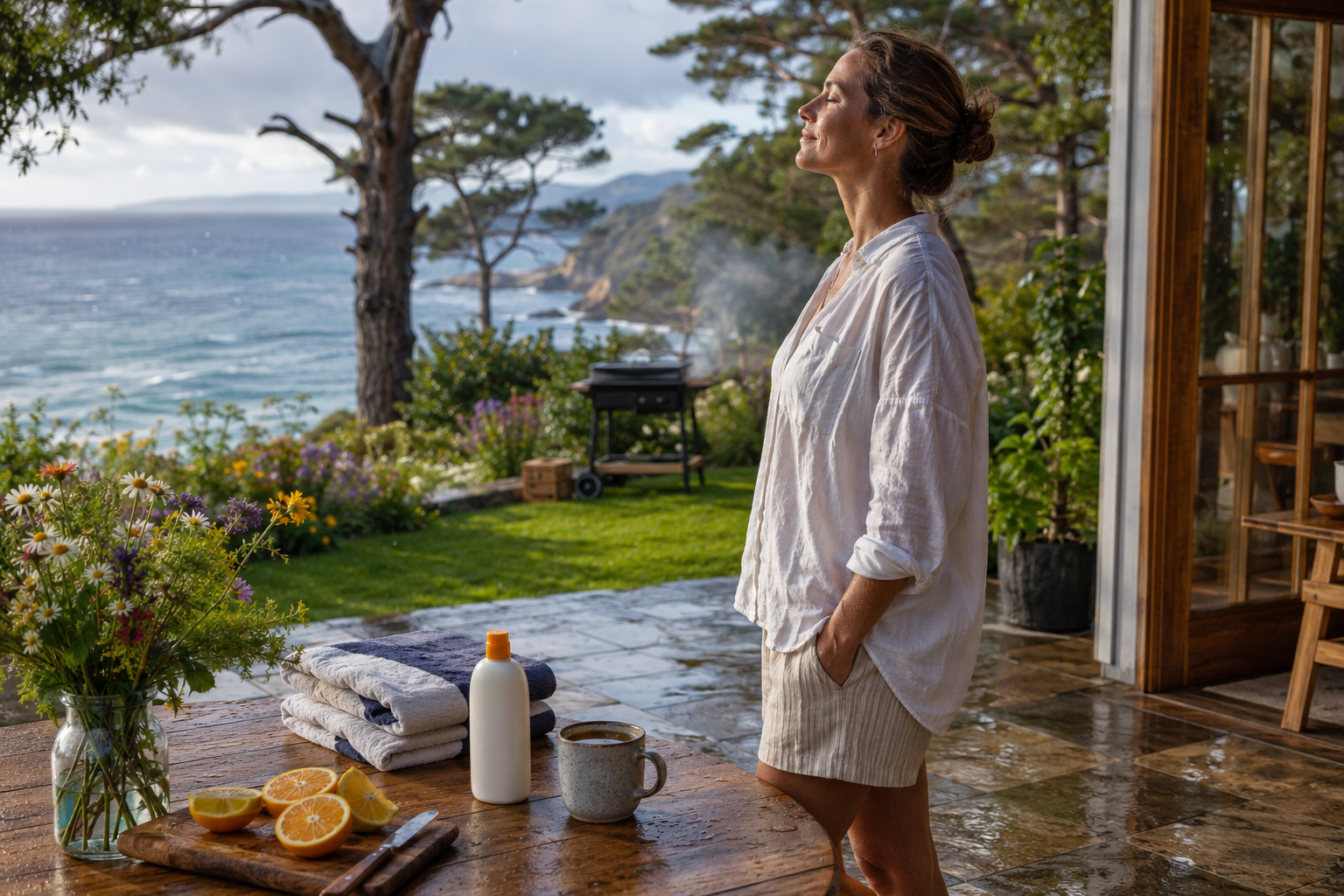
What does vacation smell like? For many people, the answer begins with sea air, sunscreen, barbecues, wildflowers, fresh-cut grass, pine, rain on warm ground, or food from somewhere far from home. Yet vacation has no single universal scent. Instead, the brain builds a personal smellscape from place, season, products, meals, companions, and emotion.
A nationally representative 2026 survey of 3,000 people in the United Kingdom found that sea air or saltwater made 45% of respondents happy. Barbecues followed at 39%, meadow or wildflowers at 38%, and freshly cut grass at 37%. Meanwhile, another British travel-company poll ranked sun cream first, followed by sea air, barbecues, flowers, and cut grass. The two polls asked different questions, so their percentages do not form one universal ranking. However, their overlap reveals a strong pattern: people often connect vacation with coastlines, warm-weather rituals, nature, and shared food (Away Resorts survey; Jet2holidays poll).
Science helps explain why those ordinary aromas can feel extraordinary. Odor signals travel through brain networks closely linked with emotion and memory. Consequently, one brief scent can bring back the setting and feeling of a trip before a photograph does. Researchers call this kind of involuntary, odor-triggered recall the Proust phenomenon.
The short answer: vacation smells like a personal memory map
Most vacation smells fall into a few recurring families. Coastal trips often feature marine air, sunscreen, coconut, hot skin, and pool water. Camping trips add pine resin, damp earth, wood smoke, and grilled food. Meanwhile, city breaks may smell like coffee, bread, spices, rain on stone, transit, or a hotel lobby fragrance.
The emotional context matters as much as the molecule. A chloramine odor may remind one person of carefree childhood pool days, while it reminds another person of an uncomfortable swimming lesson. Likewise, diesel near a ferry can signal adventure to one traveler but nausea to another. Therefore, the best answer to the title question combines population patterns with individual history.
Key takeaways about vacation smells
- Sea air, sunscreen, barbecues, flowers, and fresh-cut grass recur in vacation-scent surveys.
- No global scientific ranking identifies one definitive smell of vacation.
- Odor-evoked memories tend to feel older, vivid, emotional, and unusually transporting.
- Biology creates some travel aromas, while products and businesses deliberately create others.
- Repetition, attention, emotion, and later re-exposure can help a scent become a memory cue.
- Fragrance can also trigger asthma, migraine, irritation, or negative memories, so lighter and optional scent works best.
What does vacation smell like according to surveys?
Public polling offers the clearest numerical answer, although it also has important limits. Available surveys focus heavily on British travelers and warm-weather leisure. As a result, they may underrepresent city breaks, ski trips, religious travel, family visits, cruises, and vacation traditions outside Europe.
Two recent vacation-scent polls compared
| Source and date | Sample and wording | Leading results | What the data can tell us | Main limitation |
|---|---|---|---|---|
| Away Resorts, January 2026 | 3,000 nationally representative UK respondents; the company asked about nature, sensory holiday memories, happiness, and nostalgia | Sea air or saltwater 45%; BBQs 39%; meadow or wildflowers 38%; fresh-cut grass 37% | Coastal air, food smoke, flowers, and green landscapes commonly produce happy holiday associations in this sample | The published page does not provide the full questionnaire or a complete ranking of every tested odor |
| Jet2holidays, January 2026 | UK brand research about missing summer scents; the page does not disclose sample size or detailed methods | Sun cream 77%; sea air 67%; barbecues 42%; flowers in bloom 40%; fresh-cut grass 36% | Sun-care rituals and coastal aromas strongly signal summer holiday for respondents | Brand-sponsored poll with incomplete methodology on the public page |
The Away Resorts survey also found that 69% of respondents primarily wanted relaxation from a holiday. Although that question did not measure smell, it helps explain the setting. People may interpret sea air, flowers, and grass through the emotional goal of switching off from work and daily routines.
In addition, the Jet2holidays page reported that 89% missed summer scents during winter. About 24% said they burned summer-scented candles in winter, while 16% said they wore sun cream year-round to recreate a summer-holiday smell. Those findings show the strength of the association. Nevertheless, they do not prove that sunscreen molecules automatically improve mood.
What the survey overlap reveals about vacation smells
Both polls place nature, coastlines, cooking, and sun-care products near the center of vacation imagery. Sea air appears in both sets of leading results. Similarly, barbecue, flowers, and fresh-cut grass repeat despite different question wording.
Still, the surveys cannot identify a universal human vacation odor. First, both studies reflect a British cultural and travel context. Second, a smell can represent summer without representing travel. Finally, respondents choose from prompts and categories that researchers define, which may exclude highly personal answers such as a grandparent’s coffee, airplane cabin air, a particular hotel soap, or the spices from a childhood trip.
The most common smells people associate with vacation
The following scent families combine survey evidence, travel writing, environmental chemistry, and memory research. Together, they show why the smell of vacation often feels like a layered scene rather than a single perfume note.
| Scent family | Common examples | Vacation settings | Why it becomes memorable |
| Marine | Sea air, seaweed, wet sand, saltwater impression | Beaches, islands, cruises, seaside towns | Distinctive marine volatiles meet wind, humidity, and an open horizon |
| Solar and sun care | Sunscreen, tanning lotion, warm skin, coconut accords | Beaches, pools, resorts, outdoor festivals | Repeated application creates a strong ritual at the start of leisure time |
| Green and floral | Cut grass, meadow flowers, tropical blossoms, herbs | Countryside stays, gardens, parks, family holidays | Seasonal plant volatiles differ sharply from indoor daily life |
| Forest and earth | Pine, cedar, resin, moss, wet leaves, soil | Cabins, mountains, national parks, camping | A complex natural smellscape surrounds the traveler for hours or days |
| Rain and water | Petrichor, lake air, riverbanks, damp stone | Tropical trips, summer storms, hiking, city breaks | Weather rapidly changes the local odor profile and marks a specific moment |
| Fire and cooking | Barbecue, campfire, toasted bread, roasted coffee | Campsites, cookouts, markets, hotel breakfasts | Aroma combines food, anticipation, warmth, and social interaction |
| Fruit and spice | Citrus peel, mango, coconut, vanilla, cardamom, cinnamon | Tropical destinations, food tours, markets, holiday homes | Flavor aromas bind place to meals, family customs, and novelty |
| Pool and water park | Chloramine, wet fabric, rubber pool toys, shower products | Hotels, cruises, water parks, childhood trips | The unusual combination repeats in a narrow leisure context |
| Hospitality and transit | Clean linen, lobby perfume, coffee, leather, cabin materials | Hotels, airports, trains, cruise terminals | Arrival rituals teach the brain that ordinary life has temporarily changed |
Sea air and saltwater as vacation smells
Sea air leads one recent holiday survey, yet table salt does not create the characteristic smell of the coast. Sodium chloride does not readily become an airborne odor molecule. Instead, coastal air carries a changing mixture of volatile compounds from algae, plankton, seaweed, microbial activity, wet organic material, and human activity.
Dimethyl sulfide, or DMS, contributes an important part of that marine signature. NOAA explains that grazing interactions between copepods and phytoplankton release DMS, while the Woods Hole Oceanographic Institution describes the gas as part of the tangy, slightly sweet smell that sailors recognize near productive waters (NOAA National Marine Sanctuaries; Woods Hole Oceanographic Institution).
However, DMS does not act alone. Different algae, decaying material, shoreline plants, boats, restaurants, temperature, and wind alter the smellscape. Consequently, Maine, Rio de Janeiro, the Mediterranean, and a tropical island will not smell identical even when people label each experience “sea air.”
Sunscreen, coconut, and warm skin
Sunscreen often becomes a vacation cue because people use it repeatedly in a distinctive context. Opening the bottle may signal the start of a beach day, a pool visit, or a long outdoor afternoon. Over time, the added fragrance, emollients, packaging, and surrounding odors merge into one learned “sunshine” memory.
No single sunscreen smell exists. Some products use coconut, banana, vanilla, citrus, floral, or powdery fragrance profiles, while fragrance-free formulas smell mostly like their base ingredients. Therefore, coconut smells like vacation to many consumers partly because decades of sun-care products and beach fragrances have taught that association.
The ritual also matters. Applying a product several times while hearing waves, feeling heat, and seeing family or friends gives the brain repeated multisensory pairings. In other words, the lotion becomes an olfactory bookmark for the whole day.
Pool vacation smells: chlorine, chloramines, and water parks
The “pool smell” usually does not mean that a facility added an especially healthy amount of chlorine. Chlorine can react with sweat, urine, dirt, and other swimmer waste to form chloramines. Those compounds can leave the water and collect in the air, especially around poorly ventilated indoor pools.
The U.S. Centers for Disease Control and Prevention notes that chloramines can irritate the eyes, skin, and respiratory tract. Moreover, a strong chemical odor can warn operators about chloramine buildup rather than confirm cleanliness (CDC Healthy Swimming).
Even so, many people learned that odor during positive childhood vacations. Their brains may preserve the emotional meaning despite the less romantic chemistry. This example shows why a pleasant memory and a healthy exposure are not the same thing.
Barbecue, campfire, and toasted food
Barbecue ranked highly in both British polls. The aroma does more than announce food because it also marks gathering, waiting, conversation, and outdoor time. Meanwhile, heat creates many volatile flavor compounds through the Maillard reaction, which occurs when reducing sugars and amino compounds interact during cooking.
A 2022 scientific review describes how Maillard chemistry produces varied roasted and meaty aromas through compounds that contain oxygen, nitrogen, or sulfur (Frontiers in Nutrition). Fat oxidation, spices, marinades, fuel, and smoke add further layers. Therefore, a seaside fish grill smells different from a backyard burger or Brazilian churrasco even though all belong to the barbecue category.
Campfire smoke can also trigger strong camping memories. However, wood smoke contains gases and fine particles. The U.S. Environmental Protection Agency identifies particle pollution as its largest health threat, so nostalgia should not encourage deliberate smoke exposure (EPA on wood smoke and health).
Floral vacation smells: meadows and tropical blossoms
Flowers create some of the most location-specific vacation smells. A Mediterranean trip may feature citrus blossom, rosemary, lavender, or jasmine. By contrast, tropical travel may bring frangipani, tiare, ylang-ylang, hibiscus surroundings, or lush green foliage.
Nevertheless, a floral smellscape depends on season and time of day. Rain, wind, temperature, species, and flowering stage change what reaches the nose. Personal learning matters too, since the same white-floral note can suggest a wedding, a religious ceremony, a hotel, a garden, or a cosmetic product.
Fresh-cut grass as a vacation smell
Fresh-cut grass appears in both 2026 polls because it can represent summer, open space, sports, gardens, and time away from a desk. Chemically, damaged plants release a group of compounds called green leaf volatiles. The U.S. Department of Agriculture describes these molecules as the source of the familiar cut-grass odor and explains that plants also use them in defense-related interactions (USDA Agricultural Research Service).
Compounds such as (Z)-3-hexenal, (Z)-3-hexenol, and hexenyl acetate help form the green aroma. In fact, researchers used that three-compound mixture to simulate freshly cut grass in a field experiment with white storks (Scientific Reports). Thus, a smell that humans read as leisure begins as plant chemistry after tissue damage.
Forest vacation smells: pine, cedar, and resin
Forest vacations create an immersive mixture of needles, bark, resin, soil, fungi, leaves, and water. Pines release monoterpenes that include alpha-pinene, beta-pinene, limonene, 3-carene, and myrcene. A U.S. Forest Service analysis of 927 ponderosa pines found substantial variation in their monoterpene composition, which helps explain why forests do not share one uniform “pine” smell (U.S. Forest Service research).
Alpha-pinene contributes a signature pine-fresh quality. Still, the complete forest aroma comes from many plants and from soil-level emissions. Weather, tree species, time of day, and recent rain can shift the balance.
Petrichor, wet earth, and summer rain
Rain does not carry one simple odor. Instead, moisture and raindrop impacts release or aerosolize materials already present on soil, stone, plants, and pavement. Geosmin from soil microorganisms supplies a familiar earthy note, while plant-derived oils and other compounds contribute to petrichor.
Australian researchers Isabel Joy Bear and Richard Thomas coined the word “petrichor” in the 1960s. CSIRO recounts how moisture can release oils from porous rock and soil into the air (CSIRO). In addition, high-speed research at MIT showed how raindrops striking porous surfaces create tiny bubbles and aerosols that can carry material into the air (MIT News).
For travelers, a sudden storm also divides the day into a before and after. As a result, wet stone in Rome, damp red soil in Brazil, and a rain-soaked American campground may become highly specific memory cues.
Coffee, bread, spices, and street food
Food often defines a trip because smell plays a central role in flavor. When people chew and swallow, volatile compounds move from the mouth toward olfactory receptors through retronasal olfaction. The National Institute on Deafness and Other Communication Disorders confirms that smell and taste both contribute to flavor, which explains why smell loss can make food feel flat (NIDCD Taste and Smell Program).
However, readers should distrust the common claim that exactly 75%, 80%, or 90% of taste comes from smell. A scholarly review traced those figures and found no sound basis for one precise percentage. Olfaction clearly plays a major role in flavor, but science cannot reduce that contribution to a universal number (Flavour journal review).
Coffee, bread, grilled food, citrus, and spices also create recognizable arrival moments. A hotel breakfast may feel generic while traveling, yet the aroma of its coffee can revive the trip years later because the brain stored it beside the room, weather, conversation, and anticipation of the day.
Hotel lobbies, clean linen, and transit
Some vacation smells come from designed interiors rather than nature. Hotels may diffuse a signature fragrance in a lobby, use scented toiletries, or select detergents that create a consistent impression. Airports, trains, and cruise terminals also combine coffee, upholstery, cleaning products, food, machinery, and human movement.
These cues can become powerful because they mark transitions. For example, a lobby smell arrives at check-in, when the traveler feels relief, curiosity, fatigue, or excitement. Likewise, an aircraft cabin or ferry odor may signal that the journey has truly begun.
Still, transit-related smells can include pollution or irritants. A memory can remain emotionally positive even when one ingredient in the scene is unhealthy. Therefore, recreating jet fuel, exhaust, heavy fragrance, or smoke at home makes little sense.
Why vacation smells trigger such vivid memories
Odor does not bypass thought in a magical way, yet olfactory anatomy gives scent unusually close access to networks that process emotion and memory. The nose contains hundreds of receptor types. When airborne molecules activate them, olfactory sensory neurons send patterned signals to the olfactory bulb and then to regions that include the piriform cortex, amygdala, and hippocampal system.
In that sense, the question “What does vacation smell like?” is also a question about memory retrieval.
Harvard Medical School explains that visual and auditory information usually travels through a thalamic relay before reaching major memory and emotion centers. Olfactory pathways have a more direct anatomical relationship with those areas. Consequently, the same scent can revive both an event and its emotional tone (Harvard Medicine).
The Proust phenomenon
Researchers use “Proust phenomenon” to describe a smell or flavor that suddenly evokes autobiographical memory. The name comes from Marcel Proust’s literary scene in which a madeleine dipped in tea brings back childhood experience. Modern experiments support key parts of the idea, although they also reveal limits.
In a classic 1992 experiment, Rachel Herz and Gerald Cupchik asked 40 participants to evaluate 20 odors and report personal memories. The odor-evoked memories tended to feel emotional, vivid, specific, rare, and old. Interestingly, participants could not name the odor in 32% of memory-producing trials, which shows that a scent can unlock personal information without a clear verbal label (Chemical Senses).
Later research summarized the pattern with the acronym LOVER: Limbic, Old, Vivid, Emotional, and Rare. The “rare” component matters because odors do not always produce more memories than words or pictures. Instead, successful odor memories can feel especially sudden and transporting when they occur (Frontiers in Psychology review).
Smell can bring back older periods of life
In a 2006 study, Johan Willander and Maria Larsson compared autobiographical memories triggered by odors, pictures, and words. Odor cues reached further back in participants’ lives than the visual and verbal cues (PubMed record). Reviews also find that odor-evoked memories often carry a stronger feeling of being brought back in time.
This age pattern helps explain why sunscreen, pool water, grass, and campfire can feel disproportionately powerful. Many people first encountered those combinations during childhood vacations, school breaks, family visits, or summer camps. Therefore, a present-day trip can reactivate a much older emotional template.
New 2026 evidence highlights repetition
A 2026 PLOS Biology study began with an online survey of 647 adults who recalled their earliest meaningful odor memory. About 73.1% said the original event had occurred more than five times. Participants also rated the childhood odor as strongly pleasant, with a mean of 7.1 on a nine-point scale. Furthermore, 82% reported encountering the memory-linked odor again later in life.
The researchers then modeled positive early-life odor memory in mice to investigate neural mechanisms. Their experiments implicated early-born olfactory-bulb neurons in adult recall and found broader changes in reward and limbic connectivity across time (PLOS Biology).
These findings do not prove that wearing one perfume will make any adult vacation unforgettable. However, the human survey supports a practical idea: strong smell memories often grow from repeated positive experiences, not one isolated sniff.
Nostalgia can affect mood, but it is not treatment
Scent-evoked nostalgia can accompany positive affect, optimism, social connection, self-continuity, and meaning. One peer-reviewed study found links between stronger scent-evoked nostalgia and each of those psychological outcomes (Memory).
Nevertheless, association does not make a fragrance a mental-health treatment. A familiar scent can also prompt grief, fear, homesickness, motion sickness, or trauma. The emotional result depends on the memory, the person, and the present context.
Strong emotion does not guarantee perfect accuracy
Odor-triggered memories may feel convincing, yet vividness and accuracy are different qualities. Memory reconstructs the past rather than replaying a flawless recording. Thus, a beach scent may restore the feeling of a childhood trip while dates, sequence, and details remain incomplete or altered.
That distinction keeps the science grounded. Smell often excels as an emotional and contextual cue. By contrast, words may perform better when a person needs to recall a list, name, or precise fact.
The chemistry behind classic vacation scents
Each vacation aroma contains multiple volatile molecules. Moreover, the nose interprets mixtures in context rather than labeling every compound separately.
From a chemistry perspective, “What does vacation smell like?” leads to mixtures, reactions, ecosystems, and learned product cues rather than one molecule.
| Perceived vacation smell | Important chemical or physical contributors | What actually happens | Reliable source |
| Sea air | Dimethyl sulfide and other marine volatiles | Plankton, algae, grazers, seaweed, and shoreline biology release airborne compounds; salt itself does not provide the main odor | NOAA |
| Pool water | Chloramines | Chlorine reacts with swimmer waste; some chloramines leave the water and accumulate in air | CDC |
| Fresh-cut grass | Green leaf volatiles such as (Z)-3-hexenal and (Z)-3-hexenol | Cutting damages plant tissue and rapidly releases volatile defense-related compounds | USDA ARS |
| Rain on dry ground | Geosmin, plant oils, soil and stone aerosols | Moisture and raindrop impact lift odor-active material from porous surfaces | CSIRO |
| Pine forest | Alpha-pinene, beta-pinene, limonene, 3-carene, myrcene, and many other biogenic volatiles | Trees, litter, soil, and nearby plants create a changing mixture | U.S. Forest Service |
| Grilled food | Maillard-reaction products, lipid-derived volatiles, spices, and smoke | Heat transforms sugars, amino compounds, and fats into many aroma molecules | Frontiers in Nutrition |
| Campfire | Volatile phenols, gases, and fine particles | Burning wood creates both recognizable smoky aroma and harmful air pollution | U.S. EPA |
| Sunscreen | Product-specific fragrance, emollients, solvents, and packaging cues | Repeated use in a leisure setting teaches the brain a learned vacation accord | 2026 PLOS memory study for repetition and context |
Why mixtures matter more than single molecules
Real-world smellscapes change from minute to minute. A beach combines marine biology, sunscreen, skin, food, vegetation, damp fabric, wood, and wind. Similarly, a cabin blends resin, dust, bedding, coffee, soil, and smoke.
Context also changes interpretation. The same vanilla-like aroma can suggest a bakery, hotel lotion, ice cream, sunscreen, or perfume. Therefore, asking for the molecule that smells like vacation often misses the point. Vacation emerges from an accord created by environment and learning.
How vacation smells change by trip type
Different trips produce different olfactory signatures. The table below offers a broader answer than the beach-centered survey results.
Therefore, the answer to “What does vacation smell like?” changes with the itinerary, season, climate, and purpose of the journey.
| Vacation type | Likely scent layers | Why the combination feels distinctive |
| Beach holiday | Marine air, sunscreen, coconut, warm skin, wet fabric, seafood, boardwalk food | Sun-care rituals repeat against a highly recognizable coastal background |
| Tropical resort | Humid vegetation, white flowers, fruit, sunscreen, pool water, lobby fragrance | Natural and engineered scents create a dense, warm-air mixture |
| Cruise | Sea air, pool deck, food service, cabin products, fuel near port | The traveler moves between marine, hospitality, and transit environments |
| Camping trip | Pine or local trees, soil, canvas, bug repellent, campfire, coffee | Outdoor exposure lasts all day, while repeated routines reinforce a narrow set of cues |
| Mountain or forest cabin | Resin, wood, moss, damp leaves, fireplace, cool soil | Plant and earth volatiles replace the familiar indoor smellscape |
| Countryside stay | Grass, hay, flowers, soil, rain, animals, home cooking | Seasonal agriculture and open-air activity create strong place cues |
| City break | Coffee, bakeries, spices, pavement after rain, transit, hotel soap | Dense neighborhoods place many short, novel odor scenes close together |
| Road trip | Car interior, coffee, roadside food, fuel stops, rain, regional vegetation | Repeated movement links transit odors with anticipation and changing landscapes |
| Ski holiday | Cold air sensation, pine, wool, wood smoke, hot drinks, boot rooms | Thermal contrast makes indoor food and wood aromas especially noticeable |
| Theme park or water park | Popcorn, sugar, sunscreen, chloramines, warm pavement, ride materials | Branded food and unusual materials repeat throughout an emotionally intense day |
| Family visit | A relative’s cooking, laundry products, garden, coffee, furniture, local weather | Familiar people and rituals give ordinary household odors deep autobiographical meaning |
Beach vacation smells versus city vacation smells
Beach smells often spread across a broad landscape, so wind and humidity blend them into one background. City smells arrive in short zones: a bakery door, a subway platform, a flower stall, a restaurant vent, or rain on pavement. Consequently, a beach memory may return as one continuous atmosphere, while an urban trip may return as a sequence of scent snapshots.
Warm vacations versus cold vacations
Warmth generally helps many volatile compounds enter the air, while cold conditions can reduce volatility. Yet cold travel still creates strong smell memories through contrast. Entering a heated café after snow makes coffee, bread, wool, wood, and spices feel unusually rich.
In addition, “cold air” includes sensations beyond olfaction. Temperature and trigeminal signals contribute to the perception of freshness, sharpness, or sting. Thus, people may describe a winter vacation smell even when part of the experience comes from touch-like chemical and thermal sensations in the nose.
Why vacation does not smell the same to everyone
Biology, learning, culture, health, and trip history all influence the answer. Some odor preferences show broad similarities across populations, yet the meaning “vacation” requires personal and cultural experience.
This variation explains why “What does vacation smell like?” cannot have one global winner.
Molecular pleasantness and personal meaning are different
A 2022 Current Biology study asked 225 people across nine diverse non-Western cultures to rank single odor molecules. Culture explained only 6% of the variance in pleasantness rankings, while personal variability explained 54% and molecular identity explained 41%. The reported percentages involve rounding. Vanilla ranked as the most pleasant tested odor across the study (Current Biology via PubMed).
However, that experiment tested whether people liked monomolecular odorants. It did not ask what vacation smelled like. A molecule can smell broadly pleasant without representing leisure, while a personally meaningful vacation cue can smell neutral or unpleasant to outsiders.
Therefore, the study supports two ideas at once. Humans share some broad responses to chemical properties, but individual experience strongly shapes preference. Travel meaning adds another learned layer beyond basic pleasantness.
Childhood vacation smells and family traditions
Someone raised near the coast may treat marine air as ordinary rather than exotic. Meanwhile, a person who visited the sea only during annual family vacations may treat the same scent as a powerful escape cue. Likewise, cardamom, grilled corn, coconut, citronella, hotel soap, gasoline, or wet wool can carry very different meanings across households.
Repetition strengthens these personal patterns. Annual trips often reuse the same route, foods, products, and accommodation. As a result, the brain receives a stable scent set beside the same people and rituals.
Geography changes the smellscape
Coasts vary by water temperature, algae, tide, vegetation, industry, and food culture. Forests vary by tree species, soil, rainfall, and season. Cities also differ through architecture, transportation, cuisine, sanitation, plants, and climate.
For that reason, “sea air,” “pine,” or “street food” should function as broad categories rather than exact formulas. A good travel article preserves those differences instead of flattening destinations into one commercial tropical accord.
Smell ability changes across people and age
Not everyone detects the same intensity or range of odors. According to the NIDCD, approximately one in eight Americans over age 40 has measurable smell dysfunction, while about 3% has anosmia or severe hyposmia (NIDCD statistics). Age, viral illness, smoking, head injury, medication, sinus problems, and neurological conditions can alter smell.
Consequently, a smell-centered vacation description will not represent every traveler. Sound, texture, temperature, movement, taste, and visual details can provide equally meaningful memory routes for people with limited or changed olfaction.
How hotels and destinations design a smell of vacation
Travel smellscapes do not always happen by accident. Hotels, spas, stores, and attractions may use ambient fragrance to shape atmosphere and brand recognition. A consistent lobby scent can become part of arrival, just like lighting, music, and interior design.
For hospitality brands, “What does vacation smell like?” can become a deliberate design question.
Evidence from a real hotel experiment
In 2021, researchers ran a randomized controlled experiment in a four-star hotel in Barcelona. Ninety-nine participants entered either a lavender-scented guest room or an identical unscented room. On average, the scented-room group displayed higher measured happiness and emotional valence (European Journal of Tourism Research).
Nevertheless, the experiment had meaningful limits. Participants came from a student convenience sample, remained in the rooms for only 60 seconds, and encountered one scent in one hotel type. Accordingly, the study supports a short-term effect in that setting, not a universal promise that scent improves every stay.
Congruence also matters. A seaweed-like aroma may fit a coastal heritage exhibit but feel wrong in an urban bedroom. In addition, guests need unscented options because fragrance can trigger respiratory symptoms, migraine, nausea, or negative memories.
Smell can support attention and brand memory
A peer-reviewed marketing experiment found that pleasant ambient scent improved evaluations and recall for unfamiliar brand names, with attention helping to explain the recall effect (Journal of Business Research summary from Rutgers). This result helps explain why hospitality brands invest in signature fragrances.
However, scent does not operate independently from service. A pleasant diffuser cannot compensate for an unclean room, excessive noise, poor ventilation, or bad treatment. Moreover, an overpowering fragrance may cause the opposite of the desired effect.
Smellscapes can become cultural interpretation
A 2026 study at the Yunnan Ethnographic Museum used smell-walks with 120 visitors and follow-up interviews with 30 of them. Researchers developed a five-part model that moved from odor perception to association, evaluation, environmental expectation, and cultural meaning or export (Frontiers in Psychology).
The model shows that tourists do more than detect a scent. First, they notice it. Next, they connect it to behavior, memory, and environment. Then, they judge intensity, harmony, safety, and authenticity. Finally, the interpreted smell can influence how they understand and remember a place.
How to create stronger scent memories on vacation
At this point, “What does vacation smell like?” becomes a practical question.
Travelers cannot force a perfect memory. Still, research on repetition, attention, and context offers practical ways to notice a trip’s smellscape without turning it into a fragrance project.
Choose one light, repeatable cue
Consider using one familiar, commercially formulated product throughout the trip, such as a perfume, lotion, soap, shampoo, tea, or coffee. A repeated cue can become part of several positive moments rather than one isolated event.
However, choose a product that already suits your skin and health needs. Vacation is a poor time to test a strongly fragranced cosmetic that could cause irritation. Moreover, select sunscreen for broad-spectrum protection, water resistance, comfort, and correct use rather than scent alone. The FDA advises consumers to follow sunscreen directions and warns that some sprays contain flammable ingredients (FDA sunscreen guidance).
Pause and describe the real environment
Once or twice a day, stop for 20 seconds and notice the air. Ask what comes first, what sits in the background, and what changes after rain, wind, food, or movement. Then write two or three concrete notes, such as “wet stone, coffee, orange peel,” rather than “it smelled nice.”
This simple naming practice adds attention and language to the experience. Yet do not worry if a scent remains hard to name. The 1992 odor-memory experiment found that personal recall sometimes occurred without successful odor identification.
Pair scent with a short travel journal
Record the place, people, activity, weather, emotion, and smell together. For example: “First breakfast in Lisbon, warm bread, espresso, orange peel, cool tiled room, excited but tired.” Such context gives future recall several entry points.
In addition, photograph the source rather than trying to capture a random physical sample. A picture of the café, pine trail, market stall, or rain-darkened street can later work beside the written scent description.
Repeat the cue during positive moments
The 2026 PLOS survey found that repeated events characterized most early odor memories in its sample. Therefore, consistency may matter more than intensity. Use a chosen scent lightly across several enjoyable moments instead of saturating one room.
At the same time, leave room for natural smells. Heavy perfume can mask food, vegetation, sea air, and the scent of rain. A useful vacation cue should join the place rather than erase it.
Revisit the scent after the trip
Context-dependent memory research suggests that reinstating an odor can support retrieval. In a famous real-world study, people who had visited the Jorvik Viking Centre years earlier improved their recall when researchers reintroduced the museum’s distinctive odors (British Journal of Psychology record). Laboratory studies also find better memory when the same odor appears during learning and testing (Chemical Senses).
Consequently, save the trip perfume, soap, tea, or coffee for occasional use after returning. Smelling it every day may make it ordinary, while rare re-exposure can preserve its specificity. Still, no study guarantees that this routine will produce accurate or permanent travel memory.
Recreate a food, not an artificial cloud
Cooking a recipe, brewing a regional coffee, peeling citrus, or using a familiar soap can revive a trip with less indoor pollution than burning incense, making smoke, or running a strong diffuser. Food also combines aroma, taste, texture, and social memory.
Before bringing plant material, fruit, seeds, meat, or other food across borders, check destination and home-country customs rules. Alternatively, photograph the ingredient and buy a legal equivalent after returning.
Ask before scenting shared space
Hotel rooms, rental cars, offices, and family homes belong to more than one nose. Therefore, ask companions before using perfume, diffusers, incense, candles, or sprays. An unscented environment remains the most accessible choice when preferences or health conditions differ.
How to recreate a vacation smell at home safely
The most convincing recreation usually uses one or two real cues rather than a dense “tropical” fragrance cloud. Start with the memory itself: Was the key note coffee, sunscreen, rain, pine, citrus, a particular soap, or grilled food?
Lower-exposure ways to evoke a trip
| Desired memory | Safer, simple cue | What to avoid |
| Beach morning | Use the same tolerated sunscreen as directed, open a window, handle a clean beach towel, or play the trip’s soundscape | Adding essential oil to sunscreen or deliberately inhaling aerosol spray |
| Seaside dinner | Cook a related recipe with lemon, herbs, or seafood when appropriate | Trying to synthesize “ocean air” with harsh chemicals |
| Tropical hotel | Use a lightly scented soap or personal fragrance from the trip | Diffusing a strong blend continuously in a closed room |
| Forest cabin | Walk among local trees, use untreated wood objects, or brew the same coffee | Burning wood indoors solely for aroma |
| Summer storm | Open a screened window after safe rainfall or care for potted soil outdoors | Creating damp indoor conditions that encourage mold |
| City bakery | Bake bread, toast spices, or brew coffee | Overheating food or intentionally producing smoke |
| Campfire evening | Use photographs, music, toasted food, and outdoor memories | Filling indoor air with wood smoke or scented smoke products |
Why “natural” does not automatically mean harmless
Essential oils contain concentrated chemicals. Poison Control warns that some oils can cause skin reactions, lung injury after aspiration, or poisoning if swallowed (Poison Control). Therefore, never ingest an essential oil to recreate a flavor, and do not apply an undiluted oil to skin.
Indoor fragrance also adds volatile organic compounds. The EPA reports that concentrations of many VOCs can run higher indoors than outdoors, sometimes by up to a factor of ten (EPA indoor-air guidance). In addition, the American Lung Association notes that perfumes, air fresheners, and other strong scents can worsen asthma in susceptible people (American Lung Association).
Accordingly, use less, ventilate, stop if symptoms develop, and keep shared spaces fragrance-free when needed. A subtle cue can retrieve memory without making the entire room smell like a resort lobby.
When a vacation smell is unpleasant
Travel marketing usually presents scent as warm and nostalgic. Real olfactory experience includes disgust, overload, illness, and fear as well.
Negative memories can return quickly
A perfume may recall a breakup during a trip. Diesel can revive seasickness, while a hospital-like cleaner can bring back illness abroad. Similarly, wildfire smoke may connect a location with danger rather than a cozy cabin.
Because odors can arrive without warning, the response may feel immediate. People should not pressure themselves to “reframe” a scent that causes distress. Instead, distance, ventilation, and an unscented space can provide practical relief.
Fragrance sensitivity deserves respect
People with asthma, COPD, allergies, migraine, pregnancy-related nausea, or chemical sensitivity may react to concentrations that others barely notice. The Agency for Toxic Substances and Disease Registry also notes that children and older adults may show greater sensitivity to environmental odors (ATSDR).
Thus, hospitality businesses should treat scent as optional atmosphere, not mandatory identity. Low intensity, good ventilation, fragrance-free rooms, and clear guest communication create a more inclusive experience.
A changed sense of smell may need attention
Persistent anosmia, hyposmia, parosmia, or phantosmia can change food enjoyment and environmental safety. NIDCD recommends medical evaluation because infections, injury, nasal disease, medication, aging, and neurological conditions can contribute to smell disorders (NIDCD smell disorders).
Meanwhile, travelers with reduced smell can build equally rich memories through sound, texture, temperature, movement, color, and taste. Sensory travel does not require one specific sense.
Fascinating facts about the smell of vacation
A smell can unlock memory even when you cannot name it
In the 1992 Herz and Cupchik experiment, 32% of odor-evoked memories appeared without successful naming of the odor. Therefore, “I know this smell, but I cannot say what it is” can still accompany genuine autobiographical recall.
The strongest smell memories may be rare, not frequent
Words and images often retrieve information faster and more reliably. However, odor memories can feel unusually vivid and emotional when they succeed. This contrast helps create their dramatic reputation.
Familiar pool smell can signal chloramines
A strong “chlorine” odor may reflect chloramines produced when disinfectant reacts with swimmer waste. Consequently, the smell does not prove that the water is extra clean.
Sea salt is not the main thing you smell at the beach
People call the aroma “salty air,” but marine biology supplies major volatile ingredients. DMS from plankton-related processes contributes to the familiar coastal signature.
Cut grass smells pleasant to humans after plant damage
Mowing releases green leaf volatiles from injured plant tissue. Humans may connect those molecules with summer leisure, while plants use them within ecological defense systems.
Childhood odor memories often involve repetition
In the 2026 PLOS human survey, 73.1% of respondents said the source event for their earliest meaningful odor memory happened more than five times. That result makes annual family rituals especially relevant to vacation nostalgia.
Hotels can measurably change short-term emotion with scent
The Barcelona hotel experiment found higher happiness and emotional valence in the lavender room. Still, the student sample and 60-second exposure limit broad conclusions.
“Most of taste is smell” has no defensible exact percentage
Olfaction plays a major role in flavor, especially through the retronasal route. Nevertheless, the popular 75% to 95% figures lack a firm universal calculation.
Frequently asked questions
What smell is most associated with vacation?
Recent British polling points to sea air and sunscreen. In the nationally representative Away Resorts survey, sea air or saltwater led the listed happy holiday smells at 45%. Separately, a Jet2holidays summer-scent poll placed sun cream first at 77%. Because the surveys used different questions and methods, neither result establishes a universal winner.
Why does sunscreen smell like vacation?
People often apply sunscreen repeatedly during beach, pool, and outdoor leisure. The brain learns to connect the product’s fragrance and texture with heat, water, family, friends, and freedom from routine. As a result, opening the bottle later can retrieve the larger scene.
What makes sea air smell like the ocean?
Marine volatiles from plankton, algae, seaweed, microbes, and shoreline material create much of the aroma. Dimethyl sulfide contributes an important note. By contrast, sodium chloride itself does not readily enter the air as an odor molecule.
Why do pools smell like chlorine?
Often, people smell chloramines. Chlorine forms those compounds after reacting with sweat, urine, dirt, and other material introduced by swimmers. Strong odor and irritation can indicate chloramine buildup, especially indoors.
Can a scent make a vacation easier to remember?
Research supports odors as contextual retrieval cues, particularly when the same odor returns later. Repetition, emotion, distinctiveness, and attention may also help. However, scent cannot guarantee complete or accurate memory.
Why do smells bring back childhood vacations?
Odor pathways connect closely with brain systems involved in emotion and memory. Studies also find that odor-cued autobiographical memories often reach earlier periods of life than memories prompted by words or pictures. Repeated childhood rituals can strengthen the association further.
What scents make a room smell like a vacation?
The answer depends on the intended trip. Marine, citrus, coconut, floral, green, woody, coffee, or rain-like cues can work. Still, one light and personally meaningful note usually feels more authentic than a strong generic “tropical” blend.
Is it safe to use essential oils to recreate a vacation smell?
Not automatically. Some essential oils irritate skin or airways, and swallowing them can cause serious poisoning. Use only products intended for the chosen purpose, follow the label, ventilate, and avoid fragrance when anyone nearby has respiratory or sensory sensitivity.
Why does a hotel smell stay in memory?
A hotel fragrance appears during emotionally important transition moments such as arrival, rest, and exploration. Consistency can also pair that odor with the brand and destination. Nevertheless, toiletries, laundry, breakfast, building materials, and local air may contribute as much as a signature diffuser.
Can someone enjoy sensory travel without a sense of smell?
Yes. Sound, temperature, texture, movement, visual atmosphere, and basic tastes can create strong place memories. A multisensory journal can emphasize waves, street rhythm, fabric, wind, food texture, architecture, and emotion rather than odor.
Conclusion: so, what does vacation smell like?
What does vacation smell like? Survey data suggests sea air, sunscreen, barbecue, flowers, and freshly cut grass, especially for warm-weather travelers. Chemistry adds DMS from marine ecosystems, chloramines above pools, green leaf volatiles from cut plants, geosmin and aerosols after rain, monoterpenes in forests, and Maillard aromas around cooked food.
Yet molecules provide only half the answer. Vacation smells like the moment when an odor meets relief, novelty, repetition, place, and people. For one traveler, that combination may be coconut and saltwater. Another may remember espresso in a tiled café, damp pine beside a cabin, a relative’s cooking, or rain rising from a city street.
Ultimately, the most powerful travel scent is not the one a perfume company declares universal. It is the quiet olfactory detail that your brain stores beside a meaningful experience and returns to you years later.
Sources and further reading
Surveys and tourism research
- Away Resorts: Holiday ASMR survey of 3,000 UK respondents
- Jet2holidays: British summer-scent polling
- European Journal of Tourism Research: Ambient scent in hotel rooms
- Frontiers in Psychology: Smellscape perception in a tourism museum
Olfaction, memory, and nostalgia
- Harvard Medicine: The connections between smell, memory, and health
- Chemical Senses: Experimental characterization of odor-evoked memories
- Frontiers in Psychology: The LOVER model of autobiographical odor memory
- PubMed: Smell your way back to childhood
- PLOS Biology: Positive early-life olfactory memory
- Memory: Scent-evoked nostalgia
- British Journal of Psychology: Viking museum odors and recall
- Chemical Senses: Olfactory context-dependent memory
- Current Biology: Odor pleasantness across cultures
Environmental and food chemistry
- NOAA: Dimethyl sulfide in marine food webs
- Woods Hole Oceanographic Institution: DMS and the smell of the sea
- CDC: Chloramines and pool operation
- USDA Agricultural Research Service: Green leaf volatiles
- CSIRO: The science and naming of petrichor
- MIT: Aerosol release after raindrop impact
- U.S. Forest Service: Monoterpene variation in ponderosa pine
- Frontiers in Nutrition: Maillard-reaction flavor chemistry
- NIDCD: Taste, smell, and flavor