Why Do Beauty Products Promise a Glow?
Somewhere Along the Way, Healthy-Looking Became Glowing
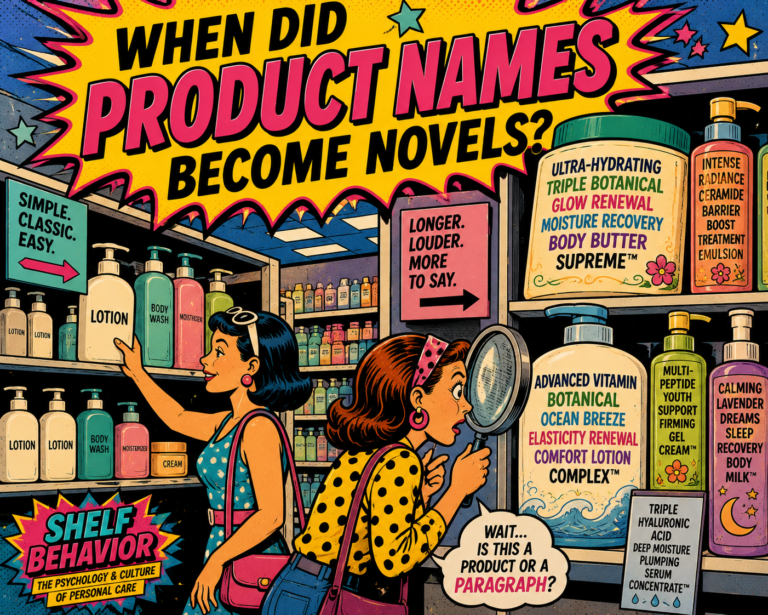
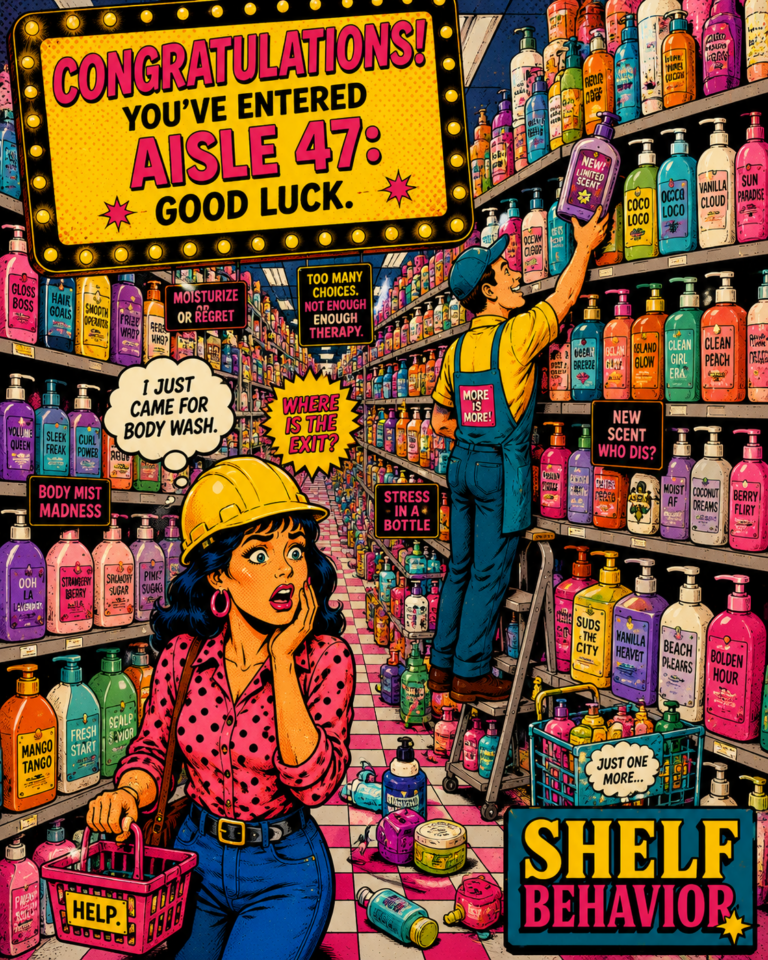
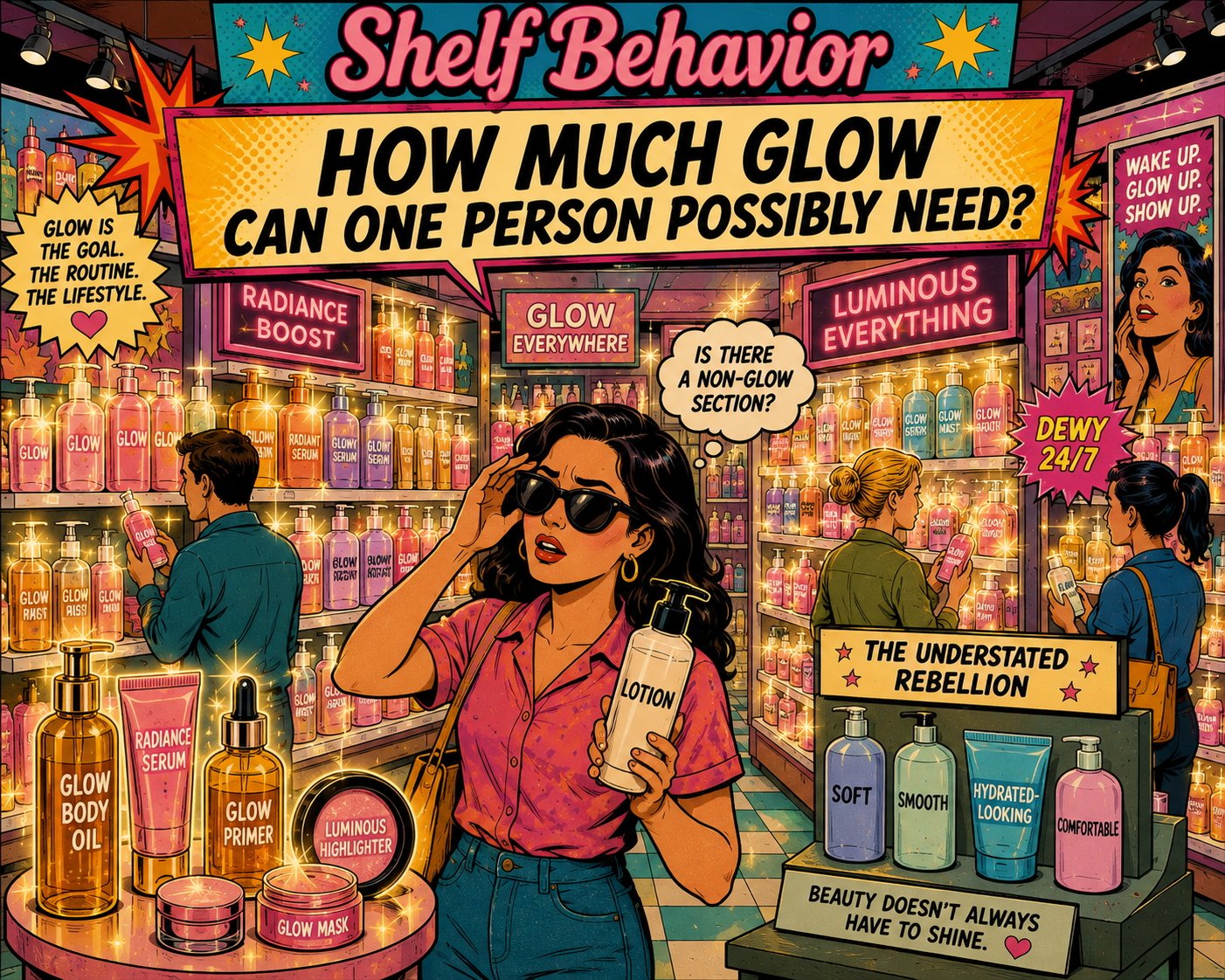
Why do so many beauty products promise a glow? Walk through a personal care aisle and you can find glowing skin, glowing hair, glowing body oils, glow serums, glow lotions, glow primers, and products apparently determined to make every visible surface of the human body generate its own lighting. Of course, “glow” can describe several real cosmetic effects. Hydrated skin may appear smoother and reflect light differently, while oils, pigments, and other cosmetic ingredients can create immediate luminosity or sheen. However, glow is not a scientific synonym for healthy skin, and healthy skin does not need to look shiny, dewy, or radiant. Somehow, though, beauty culture has turned glow into one of its favorite visual shortcuts for looking well. Apparently, merely looking moisturized was no longer ambitious enough. We needed illumination.
Glow Has Become a Language the Beauty Industry Understands
The popularity of glow makes cultural sense because it communicates a lot with one short word. Beauty products promise a glow because “glow” can suggest freshness, energy, hydration, youthfulness, luminosity, and even happiness without requiring a paragraph on the front of the bottle.
That versatility makes the word enormously useful.
Moreover, glow works across categories. Makeup can create luminosity through reflective pigments or finishes. A body oil can add visible shine. Some skincare products may improve dryness, roughness, or uneven-looking texture, which can make skin appear more radiant. Hair products can increase shine by smoothing or coating the hair surface.
However, those effects are not identical.
A highlighter produces glow differently from a moisturizer. Likewise, an illuminating body oil does something very different from a skincare product used over several weeks. Yet the same vocabulary often surrounds all of them.
Consequently, “glow” has become less of a precise product description and more of an umbrella beauty ideal.
That does not make the word meaningless. Instead, it means the industry has found an unusually efficient piece of language.
One word.
Many products.
A tremendous amount of shimmer.
Consumer Psychology Helps Explain Why Glow Feels So Appealing
From a consumer psychology perspective, glow is powerful because it creates an immediate mental image.
Compare these two phrases:
Improves the appearance of skin hydration.
Get your glow back.
The first is more specific.
The second practically arrives with mood lighting.
Vivid language can make benefits easier to imagine. Additionally, people often evaluate products partly through the future state they expect the product to help create. Therefore, a word such as “glow” can turn an abstract cosmetic benefit into something visually concrete.
There is also an emotional dimension. Culturally, we use glowing language far beyond beauty. Someone can be “glowing” after good news. A person can “radiate” confidence. We describe happiness, health, excitement, and even pregnancy with language associated with light.
As a result, glow carries positive associations before anyone even opens the moisturizer.
However, there is an important distinction for marketers. A consumer may interpret “glowing” as “healthy,” even though appearance alone cannot establish skin health. Matte skin can be healthy. Oily skin can reflect plenty of light without being healthier because of it. Likewise, skin with visible texture, pores, lines, or pigmentation can be perfectly healthy.
Therefore, brands can use glow creatively while still describing product benefits accurately.
Perhaps the opportunity is not to eliminate glow.
It is to become more precise about what kind of glow we are talking about.
We May Need a Glow Classification System
Imagine arriving at a beauty store in search of moisturizer.
An employee asks what you want.
“Something hydrating.”
“Wonderful. Would you like Natural Glow, Radiant Glow, Glass Glow, Dewy Glow, Lit-From-Within Glow, or I Have Apparently Swallowed a Lightbulb Glow?”
You pause.
“I was mostly hoping my face would stop feeling dry.”
The employee nods solemnly.
“Hydration Glow.”
Naturally.
The humor works because beauty has stretched glow across so many different effects that consumers may not always know what a product actually intends to do.
So perhaps brands could become more descriptive.
Instead of simply saying GLOWING SKIN, a product could explain:
Creates an immediate luminous finish.
Helps dry skin look smoother and more hydrated.
Adds a sheer reflective sheen.
Leaves hair looking glossy.
Gives the body a dewy finish.
Those descriptions do not remove the aspiration. Instead, they tell consumers what the aspiration actually looks like.
Brands could even treat different finishes as equally desirable. Some consumers want luminous skin. Others prefer satin, soft-matte, natural, velvety, or simply comfortable.
Not everybody wants to shine.
Sometimes we would like to enter a room without functioning as auxiliary lighting.
Beauty Could Expand Beyond the Glow
Ultimately, beauty products promise a glow because glow is simple, visual, emotionally positive, and remarkably flexible. It gives marketers a convenient way to communicate an attractive appearance across skincare, makeup, hair care, and body care.
There is nothing inherently wrong with that.
In fact, glow can be useful language when it accurately describes the effect a product creates.
However, beauty becomes more interesting when one ideal does not have to carry the entire industry.
Healthy-looking skin can be dewy.
It can also be matte.
Hair can be glossy, soft, textured, defined, voluminous, or deliberately messy. Meanwhile, body care can focus on comfort, softness, smoothness, fragrance, hydration, or sensory pleasure without requiring anyone to become radiant enough to guide aircraft toward a runway.
Perhaps that is the constructive opportunity.
Keep the glow.
Just give it some company.
Because the future of beauty does not need to be less luminous.
It could simply have a larger vocabulary.