Lip Filler: Duck Lips, Lip Lifts, and What Comes Next
Lip filler moved from specialized cosmetic clinics into mainstream beauty culture, became a defining feature of the selfie era, and now appears to be entering a correction phase. The procedure remains popular, but its visual ideal has changed. Instead of obviously enlarged lips, many patients and practitioners now favor subtle, proportionate results that are difficult to detect.
At the same time, discussions about “duck lips,” filler migration, dissolving previous treatments, and upper lip lift surgery have become more common. Some people now wonder whether reducing the skin between the nose and upper lip could create a more natural result than repeatedly adding volume.
The available data do not show that lip filler has disappeared. The American Society of Plastic Surgeons recorded approximately 1.45 million lip augmentation procedures with injectable materials in 2024, an increase of 1% from 2023. Globally, plastic surgeons performed an estimated 6.34 million hyaluronic acid filler procedures across all treatment areas, up 5.2% in one year.
Therefore, interest in lip enhancement has not collapsed. Instead, the highly projected and deliberately artificial look appears to be losing cultural status.
This article examines how the lip filler trend started, why larger lips became desirable, whether people actually consider “duck lips” attractive, what causes an unnatural result, how lip lifts differ from fillers, and whether the trend will continue.
Safety note: This article discusses medical and surgical procedures performed on adults. It does not replace an examination by a qualified professional. In the United States, the FDA approves dermal fillers for specific uses in adults aged 22 and older. The agency does not approve needle-free filler devices, over-the-counter fillers, online self-injection products, or DIY filler procedures.
Lip filler trend: the short answer
| Question | Evidence-based answer |
|---|---|
| How did the trend begin? | Injectable lip augmentation has existed for more than a century. However, modern lip filler took off after hyaluronic acid products became available and social media transformed lips into a major visual focus. |
| Are “duck lips” considered attractive? | There is no universal agreement. Moderate increases can improve attractiveness ratings for naturally thinner lips, while further enlargement can reduce ratings for lips that already have substantial volume. |
| Does every lip filler treatment create duck lips? | No. Early swelling can temporarily create extra projection. Persistent overprojection may involve excessive volume, an unsuitable treatment plan, unfavorable product placement, migration, or repeated treatments. |
| Can a lip lift replace filler? | Sometimes it treats the actual anatomical concern more directly. However, fillers add volume, while lip lifts shorten the philtrum and permanently reposition the upper lip. |
| Is lip filler going out of style? | Procedure numbers still show stability or growth. Nevertheless, the preference appears to be shifting toward smaller, more natural-looking, less detectable results. |
How the lip filler trend began
Lip augmentation started long before Instagram
The desire to change lip shape did not begin with selfies. In the early 20th century, some physicians experimented with injectable paraffin. Over time, patients developed inflammation, deformities, and other serious complications.
During the 1960s, some practitioners used liquid silicone injections. However, unpredictable movement, delayed reactions, and the difficulty of removing permanent materials exposed the limitations of that approach.
In 1981, the US Food and Drug Administration approved Zyderm and Zyplast, two bovine collagen injectable devices. These products required skin testing and offered temporary results.
Later, in 2003, the FDA approved Restylane, the first hyaluronic acid dermal filler in the United States. That approval helped start the modern filler era because hyaluronic acid offered more predictable texture and duration than many earlier materials.
Hyaluronic acid fillers also introduced the possibility of reducing the product with hyaluronidase. Nevertheless, the ability to dissolve a filler does not guarantee an easy, complete, or risk-free reversal.
Lip-specific approvals arrived during the following decade. The FDA approved Restylane Silk for lip augmentation in 2014. Products in the Juvéderm family received lip indications in 2015 and 2016.
Consequently, the medical and commercial infrastructure for lip augmentation already existed when selfies and visual social media placed the mouth at the center of beauty culture.
The FDA’s historical report on dermal fillers documents the major regulatory milestones. Meanwhile, Bourmand and colleagues review the transition from paraffin and silicone to collagen and hyaluronic acid in the Journal of Cosmetic Dermatology.
Lip augmentation timeline
| Period | Development | Why it mattered |
|---|---|---|
| Early 20th century | Physicians experimented with paraffin injections | Complications exposed the dangers of permanent and unpredictable injectable materials |
| 1960s | Some practitioners used liquid silicone | Delayed reactions and removal difficulties encouraged the search for better alternatives |
| 1981 | FDA approved bovine collagen fillers | Regulated temporary injectable fillers entered the US market |
| 2003 | FDA approved Restylane | Hyaluronic acid began its rise as the dominant modern filler material |
| 2014 to 2016 | Products received specific US indications for lip augmentation | Commercial availability expanded during the rise of mobile visual culture |
| 2015 | Kylie Jenner publicly confirmed that she had received lip filler | Celebrity disclosure coincided with dramatic increases in online searches |
| Around 2017 | “Lip flip” entered the cosmetic vocabulary | Consumers gained another temporary option that changed upper-lip movement without adding gel |
| 2020 | Pandemic restrictions temporarily reduced procedures and searches | Interest recovered after restrictions eased and video calls increased attention to facial appearance |
| 2023 and 2024 | Lip procedures remained common, but natural-looking results gained attention | The trend started moving from maximum volume toward balance and subtlety |
| 2025 and 2026 | “Filler fatigue” and dissolving became major beauty topics | Patients did not necessarily abandon filler, but many reconsidered excessive volume |
The Kylie Jenner effect
In 2015, Kylie Jenner confirmed that she used lip filler. A peer-reviewed analysis of Google search activity found increases of 43% for “lip augmentation,” 37% for “lip enhancement,” and 3,233% for “lip fillers” following the announcement.
The study does not prove that one celebrity caused the entire trend. People who already had an interest in lip enhancement may simply have searched for more information after the disclosure. Still, the size of the increase shows how quickly celebrity culture could focus attention on a previously specialized procedure (Tijerina et al., 2019).
Moreover, Jenner did not promote only a cosmetic procedure. Her public image linked full lips to makeup, transformation, branding, and social status. As a result, a medical treatment entered the same fast trend cycle as lipstick, lip liner, contouring, and beauty filters.
The phenomenon also inspired dangerous imitation challenges outside medical clinics. No suction challenge, needle-free pen, online filler kit, or self-injection method provides a safe alternative to professional care.
Selfies changed how people examine their faces
Front-facing cameras encouraged people to inspect their faces at close range. First, selfies placed the center of the face under constant visual attention. Next, filters started changing the lips, nose, skin, jawline, and eyes in real time. Finally, repeated exposure created a new reference point for comparison.
A cross-sectional study involving 470 Instagram users between the ages of 18 and 25 associated frequent filter use and following influencers who had cosmetic procedures with greater acceptance of cosmetic treatments.
However, the study could not prove causation. People who already liked cosmetic procedures may have followed more aesthetic accounts and used more filters (Hermans et al., 2022).
Another study involving 175 dermatology patients found similar associations between image-focused social media, photo editing, cosmetic procedure accounts, and interest in cosmetic treatment. Once again, the findings show correlation rather than direct causation (Boston University, 2024).
Therefore, social media represents one part of a larger explanation. The lip filler boom combined improved products, quick visible results, lower upfront costs than surgery, limited downtime, celebrity exposure, and algorithms that reward noticeable transformations.
Why full lips became a beauty ideal
Youth, volume, and expression provide only part of the answer
Aging can reduce lip volume, decrease visible vermilion, and increase the apparent distance between the nose and upper lip. Consequently, restoring a small amount of lost volume may make an older face look more rested or youthful.
However, aging does not explain the popularity of lip filler among younger adults who have not experienced age-related volume loss. Cultural meaning becomes especially important in this group.
Full lips gained associations with sensuality, youth, confidence, makeup, and photographic presence. Meanwhile, celebrities and algorithms repeated similar facial proportions until they started to look normal or expected.
The beauty ideal did not develop from biology alone. Marketing, cultural identity, social belonging, repeated exposure, and the desire to perform well in photographs also shaped it.
There is no universal perfect lip ratio
Some cosmetic sources promote a fixed ratio between the upper and lower lip. Common examples include 1:1.6 and 1:2.
Nevertheless, much of the supporting research examined Western, white, female faces. Static photographs also fail to capture speech, smiling, three-dimensional projection, cultural identity, dental support, and natural facial movement.
Turning a group average into a universal treatment formula creates two problems. First, it ignores substantial human anatomical diversity. Second, it presents a culturally variable preference as a biological law.
A review of lip overfilling found that different studies proposed different ideal proportions. Therefore, the research does not support one mathematical formula for every face (Atiyeh et al., 2024).
Beauty standards also differ across ethnic and cultural groups. A review of cosmetic preferences found that different populations value different facial shapes and proportions. Applying one ethnic template to every patient can erase identity and create unnatural results (Arian et al., 2023).
In addition, sociological research describes media, cosmetic professionals, and consumer markets as participants in the construction of race-specific beauty standards. The same feature can receive different social interpretations depending on the person and cultural context (Yale News, 2023).
Are duck lips considered attractive?
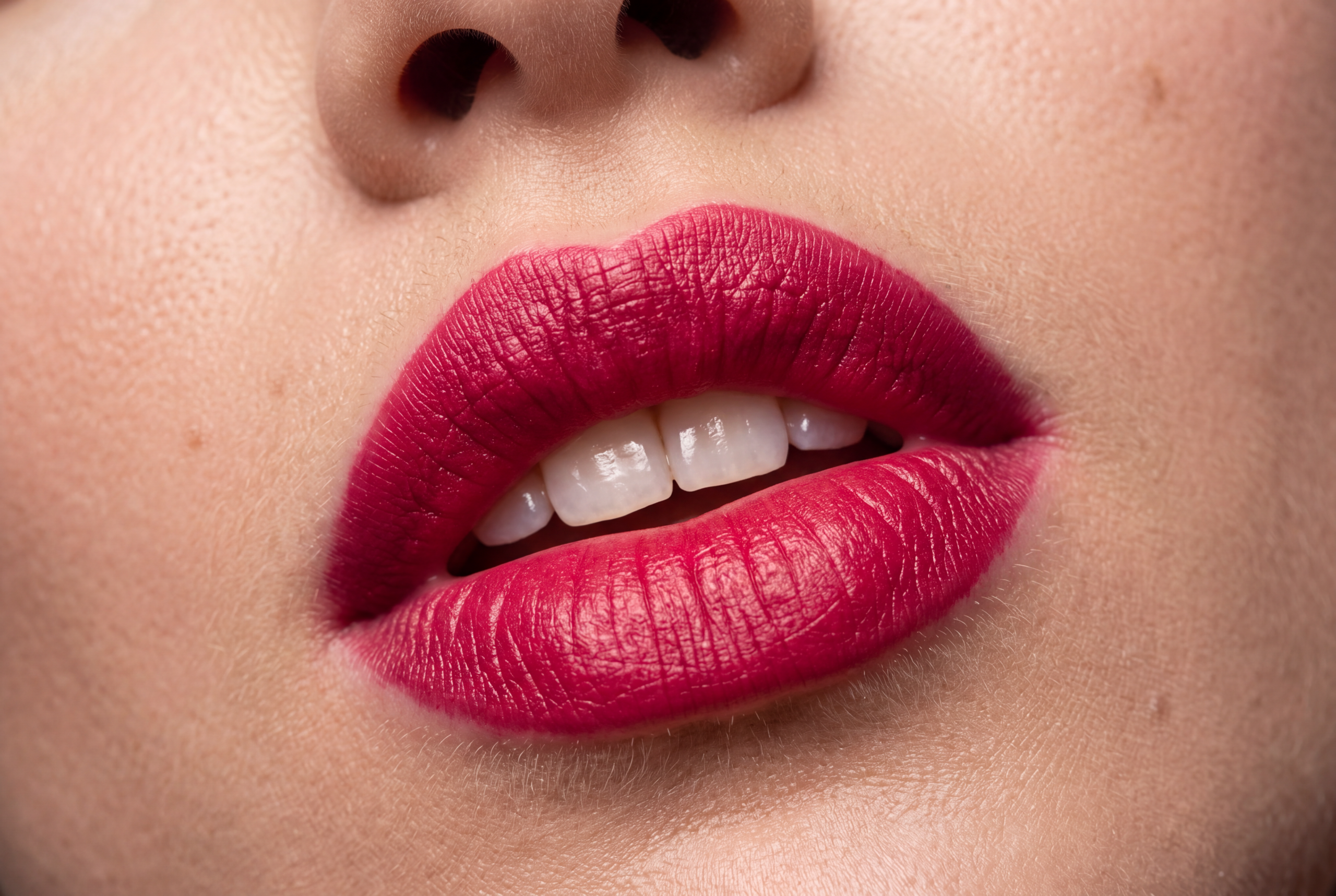
“Duck lips” is not a medical diagnosis. People generally use the expression to describe excessive forward projection of the upper lip, a rigid border, or a lip shape that appears disconnected from the rest of the face.
During the first few days after a lip filler treatment, swelling can temporarily create this appearance. If strong projection remains after the inflammatory period, excessive volume, unfavorable placement, migration, or unsuitable treatment goals may contribute.
The short answer is that some online communities may value extremely projected lips. However, the available research does not support duck lips as a universal beauty ideal.
In fact, the best direct evidence suggests that additional volume reaches a limit. Increasing naturally thin lips may improve attractiveness ratings, while enlarging lips that already have substantial volume can lower those ratings.
What happened when 327 people rated filled lips?
A study published in Scientific Reports photographed 16 adult white women before and ten days after they received 1 milliliter of hyaluronic acid lip filler. The researchers divided the women into two groups: eight with initially thinner lips and eight with initially fuller lips.
Next, 327 participants rated the photographs. The evaluators included members of the general public, dentists, and facial aesthetics specialists.
The two groups produced opposite results:
- The thinner-lip group increased from an average attractiveness score of 3.89 to 4.74.
- The fuller-lip group decreased from 6.38 to 5.82.
- The average change reached positive 0.85 points in the thin-lip group.
- In contrast, the fuller-lip group lost an average of 0.56 points.
- The difference between the changes reached statistical significance, with a p-value below 0.001.
The findings provide a valuable message: more volume does not automatically produce greater attractiveness (Hernandez et al., 2023).
Still, the study does not define the correct amount for every patient. It included only 16 treated women, all of whom were white. Researchers used one product quantity and evaluated photographs only ten days after treatment.
Therefore, the results describe a pattern within one small experiment rather than a universal beauty rule.
| Study | Sample and method | Main finding | Essential limitation |
|---|---|---|---|
| Hernandez et al., 2023 | 16 treated women and 327 evaluators | One milliliter improved ratings for initially thinner lips but reduced ratings for initially fuller lips | Small and demographically narrow patient sample |
| Alais et al., 2025 | 32 students rated 168 synthetic faces with seven lip sizes | Preferences changed according to evaluator gender and previous visual exposure | Small laboratory experiment using artificial faces |
| Atiyeh et al., 2024 | Narrative review of lip overfilling | Extreme proportions tend to receive worse ratings and create visible disharmony | Included studies used different methods and populations |
| Tijerina et al., 2019 | Search analysis following celebrity disclosure | Lip filler search interest rose dramatically | Search activity measures attention, not attractiveness or completed procedures |
Repeated exposure can change what looks normal
In 2025, University of Sydney psychologists asked 32 students to evaluate 168 synthetic faces with seven different lip sizes.
On average, the group preferred slightly fuller lips on female faces and thinner lips on male faces. However, male and female participants did not judge every image in the same way.
Male participants generally preferred unaltered female lips. In contrast, female participants favored fuller versions of female lips.
The most interesting result involved visual adaptation. After repeated exposure to either larger or smaller lips, participants shifted their subsequent ratings toward the size they had just seen.
In other words, brief exposure recalibrated what looked normal. The experiment may help explain why exaggerated aesthetics become normalized within highly curated social media feeds.
Nevertheless, the study used a small sample and artificial images. It does not prove that online exposure creates permanent changes in real-world preferences (Alais et al., 2025).
Why do exaggerated results receive so much online attention?
First, dramatic changes appear more clearly in thumbnails and short videos. Subtle alterations may disappear on a small screen.
Second, social media algorithms reward novelty, contrast, comments, and emotional reactions. An extreme result often generates more engagement than a treatment nobody can detect.
Moreover, people who follow many cosmetic accounts see an unusual selection of treated faces. Their feed does not represent the general population.
Camera distortion adds another problem. A modest change that looks balanced in person may disappear in a selfie. Conversely, a procedure designed to appear dramatic through a phone camera may look excessive in person.
Finally, aesthetic adaptation can influence maintenance decisions. After a person becomes accustomed to a new lip size, that size may begin to feel like the natural baseline. The individual may then request additional product before the earlier filler has fully diminished.
This gradual shift does not happen to everyone. Still, it can explain how a previously subtle result becomes increasingly visible after repeated sessions.
What causes the duck-lip effect?
The final appearance does not depend only on the number of milliliters. Anatomy, product characteristics, swelling, placement, previous procedures, lip movement, and treatment goals all matter.
Consequently, two people can receive the same volume and develop very different results.
| Possible cause | How it can change the appearance | Important context |
|---|---|---|
| Early swelling | Temporarily increases volume and forward projection | Patients cannot accurately judge the final result immediately after treatment |
| Excessive product | Makes the lips dominate the face and lose natural movement | There is no universally safe or attractive volume |
| Wrong indication | Uses volume to address a long philtrum or limited tooth show | Adding gel does not shorten the skin between the nose and lip |
| Unfavorable distribution | Creates rigid borders, visible bumps, or forward projection | Safe treatment requires detailed anatomical knowledge |
| Repeated treatments | May add product before earlier filler has fully diminished | Scheduled reassessment can reduce impulsive top-ups |
| Filler migration | Places visible material beyond the intended lip area | Migration can occur, but researchers do not know its exact frequency |
| Untraceable product | Creates unpredictable results and complicates emergency care | Regulators warn against online fillers and needle-free injection devices |
| Filters and camera lenses | Distort facial proportions and create unrealistic treatment goals | A filtered photograph cannot replace a three-dimensional examination |
A review involving 3,965 patients treated with hyaluronic acid lip filler identified pain, swelling, bruising, redness, itching, and small irregularities among the most commonly reported problems.
The review also linked high volume and unfavorable placement with visible material, palpable nodules, and overcorrection (Kroumpouzos et al., 2023).
How adults can reduce the risk of an unnatural result
Avoiding duck lips does not mean learning an injection technique. Lip filler remains a regulated health procedure with vascular risks and the potential need for emergency treatment.
Therefore, prevention begins with decision quality, professional qualifications, and realistic goals.
Identify the actual anatomical concern
“I want better lips” does not describe one specific problem. The concern may involve volume, border definition, asymmetry, scarring, philtrum length, tooth show, or upper-lip movement during smiling.
Each issue requires a different discussion.
For example, adding filler to a long philtrum can push the lip outward without reducing the distance between the nose and mouth. Continued volumization may then create an unnatural profile.
On the other hand, a lip lift does not make sense for every person who wants a minor contour change. Surgery should not become the automatic answer to concerns about filler.
Treat lip filler as healthcare
The FDA recommends choosing a licensed professional with training in dermatology or plastic surgery and experience with facial anatomy.
Depending on the country, other qualified and regulated healthcare professionals may also provide dermal filler treatments. Adults considering the procedure should verify professional registration, legal scope of practice, facility standards, and product traceability.
A responsible consultation should also cover:
- Allergies
- Autoimmune and inflammatory conditions
- Current infections
- Medications and supplements
- Previous fillers
- Dental procedures
- Prior complications
- Expected results
- Emergency planning
Omitting previous treatments or medical information can make complications harder to prevent and diagnose.
Use a conservative, staged plan
A gradual treatment plan allows swelling to decrease before anyone decides whether the lips need more product.
However, “using a small amount” does not eliminate the vascular risk. Even low-volume treatments require anatomical expertise, an appropriate product, and an emergency response plan.
Patients should also question rigid milliliter targets and branded techniques offered to everyone. A fashionable injection pattern cannot replace individual assessment.
Wait for swelling to settle
Redness, tenderness, bruising, and swelling can last for several days. In some cases, visible reactions may continue for one or two weeks.
Therefore, immediate before-and-after photographs do not prove that a stable result looks good. Those photographs often document swelling as much as they document filler.
The American Society for Dermatologic Surgery Association recommends that professionals explain expected reactions and signs of complications before treatment (ASDS evidence-based recommendations).
Ask about the product and emergency plan
An adult patient can request the product name, lot number, expiration date, and regulatory status.
In addition, the patient can ask:
- How does the clinic identify vascular occlusion?
- Does the clinic keep hyaluronidase available?
- Who responds to problems outside normal hours?
- Where does the clinic send a patient with visual symptoms?
- How does the provider document previous filler?
- What follow-up does the clinic offer?
These questions cannot guarantee a complication-free procedure. However, they help distinguish a prepared medical environment from a business that treats injectables like a simple beauty service.
Do not use filters as surgical plans
Filters often alter several facial features at the same time. They may enlarge lips while narrowing the nose, changing the jaw, smoothing the skin, and enlarging the eyes.
Furthermore, front-facing cameras distort central facial features depending on distance and lens type.
Reference photographs can help communicate a general preference. Nevertheless, reproducing a digitally altered face represents an unrealistic treatment goal.
Accept that the best recommendation may involve no procedure
A responsible professional may recommend waiting, treating an earlier complication, addressing expectations, or avoiding intervention.
Intense distress over small features, compulsive procedure-seeking, external pressure, and expectations that no procedure can satisfy deserve attention before cosmetic treatment.
Lip lift surgery: reducing the skin between the nose and lip
The procedure often described as “removing skin between the nose and upper lip” is an upper lip lift. The most common version is the subnasal or bullhorn lip lift.
During the operation, a surgeon removes a carefully planned strip of skin beneath the nose and repositions the upper lip. As a result, the philtrum becomes shorter and more of the upper vermilion may become visible.
A lip lift creates a different structural change from lip filler. Instead of adding material and increasing projection, the surgery changes the position of the patient’s existing tissue.
Therefore, the operation may address a long philtrum, limited upper-lip show, or some age-related changes more directly than filler. Still, it creates a permanent scar and introduces surgical risks.
Lip filler vs. lip flip vs. lip lift
| Feature | Hyaluronic acid lip filler | Lip flip with botulinum toxin | Upper lip lift |
|---|---|---|---|
| What it changes | Volume, contour, and some projection | Temporarily relaxes part of the muscle so the upper lip turns slightly outward | Shortens the philtrum and increases visible vermilion |
| Adds volume | Yes | No | Not directly |
| Typical duration | Several months, with a clear decline between 6 and 12 months in clinical research | Usually around 8 to 12 weeks | Permanent, although the face continues to age |
| Reversibility | Hyaluronidase may reduce many HA fillers, but reversal is not guaranteed or risk-free | The effect gradually wears off and cannot disappear immediately | Surgery cannot offer filler-like reversibility |
| Recovery | Swelling, tenderness, and bruising for days or occasionally weeks | Usually limited, but temporary weakness can affect lip movement | Surgical healing, swelling, tightness, and scar maturation over weeks or months |
| Main advantage | Adjustable nonsurgical volume and contour | Subtle movement change without gel | Corrects philtrum length, which filler cannot shorten |
| Main limitation | Can overproject, migrate, or cause vascular complications | Provides a small temporary effect and may weaken oral functions | Creates a permanent scar and can cause asymmetry or difficult-to-reverse changes |
| Key consultation question | “Do I need volume, or am I trying to correct another structure?” | “Does my concern involve lip movement during smiling?” | “Is philtrum length actually causing the appearance I want to change?” |
What does the evidence say about lip lifts?
The Cleveland Clinic describes the lip lift as an outpatient procedure that often takes less than one hour.
Bruising and swelling commonly improve during the first week and may take around one month to disappear. Tightness can continue for several months, while the final result may take approximately four months to mature.
Potential complications include infection, nerve injury, persistent swelling, asymmetry, anesthesia reactions, and permanent scarring (Cleveland Clinic).
A 2024 scoping review found promising outcomes but emphasized limited standardization and a shortage of strong comparative studies.
Among the included research:
- A series of 202 patients found significant philtrum shortening and increased visible upper vermilion.
- Another study involving 84 patients reported that 72.4% felt “highly satisfied.”
- A series of 311 endonasal lip lifts reported infection or wound separation in 2.8% of cases.
However, uncontrolled case series can overestimate benefits because they lack comparison groups and often rely on selected patients.
The same review found that unfavorable scarring rates varied by procedure and study. Authors cited 3.2% following lip advancement and between 6.7% and 10.5% in some subnasal lip lift series.
Nevertheless, the review warned about heterogeneity and possible inflation of those percentages. Readers should not treat them as a precise prediction for one patient (Jain et al., 2024).
Can a lip lift prevent duck lips?
A lip lift may prevent attempts to “shorten” a long philtrum through repeated volumization. It changes the underlying geometry instead of pushing the lip forward with additional gel.
However, surgery does not guarantee a natural result. Excessive skin removal, tension, visible scarring, nostril distortion, asymmetry, or unsuitable tooth show can also create an artificial appearance.
In summary, a lip lift is not a superior version of lip filler. It is a different procedure for a different anatomical indication.
The decision requires an in-person surgical assessment, evaluation of the smile in motion, review of skin quality, discussion of scar history, and acceptance of a permanent result.
Lip filler safety: reversible does not mean risk-free
Marketing often describes hyaluronic acid filler as temporary and reversible. That description contains some truth, but it can create false reassurance.
Product duration varies according to formulation, injection area, metabolism, movement, and previous treatments. Moreover, hyaluronidase can reduce many hyaluronic acid fillers, but it does not work like a precise undo button.
Dissolving may require several sessions. The enzyme can also produce allergic reactions, uneven volume changes, swelling, and unexpected aesthetic results.
Permanent fillers, liquid silicone, and unknown injectable materials create even greater removal problems. The FDA warns that reducing or removing a filler may require injections, surgery, or other interventions. In certain cases, complete removal may not be possible (FDA dermal filler guidance).
Lip filler risks
| General frequency | Examples | General response |
|---|---|---|
| Common and usually temporary | Swelling, bruising, redness, tenderness, itching, and discomfort | Follow professional aftercare instructions and report unexpected progression |
| Less common or delayed | Infection, inflammation after illness or dental procedures, nodules, granulomas, irregularities, and migration | Seek professional assessment instead of massaging, puncturing, or attempting DIY correction |
| Rare and serious | Vascular occlusion, skin injury, visual changes, blindness, stroke, and death | Require immediate recognition and emergency treatment |
A retrospective study involved 370 board-certified dermatologists and approximately 1.7 million filler syringes used across several facial areas.
The participating physicians reported:
- One vascular occlusion per 6,410 syringes used with needles.
- One vascular occlusion per 40,882 syringes used with cannulas.
- The lips and nasolabial folds ranked among the areas most frequently associated with occlusion.
- About 85% of reported cases produced no long-term consequences.
These figures do not represent the exact risk of one lip filler appointment. The study included several facial regions, relied on retrospective physician reports, and may not have captured every event (Alam et al., 2021, JAMA Dermatology).
Therefore, a cannula does not eliminate vascular risk. Likewise, the use of a needle does not mean a complication will occur. Provider experience, anatomical knowledge, treatment planning, and emergency response remain essential.
Warning signs that should not wait
Sudden severe pain, unusual whitening or mottling of the skin, visual changes, and neurological symptoms after filler require immediate contact with the treatment team and emergency medical assessment.
A patient should not wait until the next day, attempt a home correction, or rely only on social media advice.
How long does lip filler really last?
A meta-analysis of hyaluronic acid lip augmentation studies found that 74% of participants still qualified as responders at six months. Researchers defined a responder as someone with improvement of at least one grade on a validated lip-fullness scale.
At 12 months, the proportion fell to 46%.
However, the studies showed very high heterogeneity at the 12-month point, with an I² of 93%. That figure indicates substantial differences among products, study methods, and patients (Czumbel et al., 2021).
Consequently, statements such as “lip filler lasts exactly one year” oversimplify the evidence. Some visual effects may decline earlier, while other effects may remain longer.
Previous procedures may also influence duration. If a patient receives repeated treatments before earlier filler has fully diminished, the lips may not return to their original baseline between appointments.
Long-term independent research remains limited. Researchers still need better answers about product persistence, migration, repeated dissolving, and outcomes after many years of maintenance.
The size of the lip augmentation market
Global hyaluronic acid filler procedures
The International Society of Aesthetic Plastic Surgery surveys plastic surgeons and uses statistical extrapolation to produce global estimates.
For its 2024 report, ISAPS invited approximately 17,000 surgeons and received data from 2,975 participants. The previous survey included around 1,600 respondents.
Therefore, the totals do not represent a complete census of every professional who performs injectable procedures. Furthermore, changes in the sample and the addition of new procedure categories limit some direct comparisons with earlier reports.
| Global ISAPS indicator | 2020 | 2023 | 2024 | Correct interpretation |
|---|---|---|---|---|
| Hyaluronic acid filler, all treatment areas | 4,053,016 | 6,025,911 | 6,338,184 | Increased 5.2% in one year and 56.4% since 2020 |
| Surgical procedures, all categories | 10,129,528 | 16,827,984 | 17,415,678 | The raw total increased, but new categories limit direct growth comparisons |
| Nonsurgical procedures, all categories | 13,642,459 | 20,284,547 | 20,535,686 | The raw total increased, although comparable categories showed a 3.1% decline |
| All procedures | 23,771,987 | 37,112,531 | 37,951,364 | The global total approached 38 million in 2024 |
Source: ISAPS Global Survey 2024.
The 6.34 million hyaluronic acid procedures include the lips and many other facial and body areas. Therefore, the number does not mean that surgeons performed 6.34 million lip filler treatments.
ISAPS also compared only procedures that appeared consistently in both annual questionnaires. Under that method, the organization reported a 6.7% decline in surgical procedures and a 3.1% decline in nonsurgical procedures from 2023 to 2024.
United States: growth continues but has slowed
| Procedure reported by ASPS | 2023 | 2024 | Change |
|---|---|---|---|
| Lip augmentation with injectable materials | 1,439,291 | 1,449,565 | +1% |
| Hyaluronic acid fillers, all treatment areas | 5,294,603 | 5,331,426 | +1% |
Lip augmentation increased by 4% in 2023 compared with 2022. In 2024, growth slowed to 1%.
Thus, the US data show deceleration rather than a decline.
The ASPS 2024 statistics report also introduced a separate category for hyaluronic acid lip augmentation. That category contained 1,589,502 procedures.
However, ASPS warns readers not to add the 1.59 million figure to the broader 1.45 million lip augmentation figure. The two categories overlap and could produce double counting.
ASPS lists an average US cost of approximately $743 for lip augmentation with dermal filler. The amount may not include every facility, consultation, anesthesia, or follow-up expense. It also represents a US average rather than a guaranteed clinic price (ASPS cost information).
Brazil: high procedure volume with important category limits
The ISAPS 2024 survey estimated that Brazilian plastic surgeons performed approximately 3.12 million cosmetic procedures:
- 2.35 million surgical procedures
- 769,245 nonsurgical procedures
- 176,069 hyaluronic acid filler procedures across all treatment areas
- 94,207 surgical lip enhancement or perioral procedures
Hyaluronic acid represented 22.9% of the nonsurgical procedures reported for Brazil.
However, the 176,069 figure includes lips and other treatment areas. Similarly, the 94,207 surgical figure covers a broad group of lip and perioral operations rather than lip lifts alone.
| Brazil, ISAPS 2024 | Estimated procedures | What the figure does not mean |
|---|---|---|
| Total cosmetic procedures | 3,123,758 | It does not represent every provider or appointment in Brazil |
| Surgical procedures | 2,354,513 | They were not all facial procedures |
| Nonsurgical procedures | 769,245 | They were not all injections |
| Hyaluronic acid fillers, all areas | 176,069 | They were not all lip filler procedures |
| Surgical lip enhancement and perioral procedures | 94,207 | They were not all upper lip lifts |
Market reports produce very different estimates
Grand View Research valued the global lip augmentation market at approximately $6.4 billion in 2022. The company projected that the market could reach $11.61 billion by 2030, representing a compound annual growth rate of 7.8%.
In contrast, Fortune Business Insights used the narrower category of “lip augmentation fillers.” It estimated a market value of $1.29 billion in 2025 and projected $2.53 billion by 2034.
The difference, which approaches five times the starting value, does not necessarily represent a calculation error.
Each company defines products, services, distribution channels, and geographical coverage differently. In addition, commercial research firms often keep parts of their methodology private.
Consequently, market forecasts can indicate general commercial interest, but medical society procedure counts provide more transparent evidence of treatment volume.
Sources: Grand View Research and Fortune Business Insights.
Is the lip filler trend ending?
The most accurate answer requires two separate questions.
Is the procedure disappearing? No. Recent statistics show stability or continued growth in important categories.
Is the exaggerated visual style losing popularity? Cultural evidence suggests that it may be.
Evidence that lip filler will continue
| Signal | Why it supports continued demand |
|---|---|
| Procedure volume | ASPS recorded approximately 1.45 million injectable lip augmentation procedures in 2024 |
| Hyaluronic acid growth | Global HA filler procedures increased 5.2% in 2024 and 56.4% compared with 2020 |
| Search interest | “Lip filler” remained far more popular than “lip flip” in US searches from 2014 through 2024 |
| Recurring maintenance | Temporary results create repeat demand, although maintenance intervals vary |
| Limited downtime | Recovery is generally shorter than recovery from surgical lip procedures |
| Broad availability | Clinics, products, training, and social awareness have made filler widely accessible to adults |
Bourmand and colleagues analyzed US Google Trends data from January 2014 to January 2024.
The average relative search volume reached 30.4 for “lip filler” and 12.1 for “lip flip.” Lip filler remained consistently more searched, and the difference reached statistical significance.
Search activity dropped during the early pandemic period. Nevertheless, interest recovered during the reopening period (Bourmand et al., 2025).
In addition, a 2024 survey from the American Academy of Facial Plastic and Reconstructive Surgery reported that minimally invasive treatments represented 80% of facial treatments performed by responding members.
Approximately 90% of the surveyed surgeons regularly performed neurotoxin and dermal filler procedures.
The survey involved selected AAFPRS members, so it does not measure prevalence across the entire population. Still, it shows that injectable treatments remain a central part of facial aesthetic practice (AAFPRS, 2024).
Evidence that the exaggerated look is losing status
First, US lip augmentation growth slowed from 4% in 2023 to 1% in 2024.
Second, ASPS has acknowledged “filler fatigue,” a term that describes public dissatisfaction with swollen, overfilled, or unnatural facial results.
Third, patients and practitioners increasingly discuss dissolving, longer maintenance intervals, facial balance, and “undetectable” injectables.
In May 2026, the Brazilian newspaper O Globo also described how natural-looking lip filler gained space in the Brazilian aesthetic market. The article provides evidence of cultural discussion rather than population-level clinical data (O Globo, 2026).
International beauty coverage has used the expression “the great dissolving” to describe celebrities and patients reducing previous filler treatments (InStyle, 2025).
However, dissolving does not always mean abandoning filler permanently. Some patients dissolve migrated or excessive product and later receive a smaller, more carefully planned treatment.
As a result, growing demand for dissolving can coexist with high filler sales and stable procedure counts.
What will happen to lip filler next?
The most likely future includes five major changes.
Smaller treatments and longer reassessment periods
Patients may increasingly prefer lower-volume treatments with more time between sessions. The goal will shift from immediate transformation toward facial integration.
Nevertheless, smaller quantities do not automatically eliminate medical risks. Conservative treatment still requires qualified care.
More complete perioral assessment
Professionals will need to distinguish among volume loss, philtrum length, dental support, tooth show, muscle movement, asymmetry, and aging.
This broader assessment may reduce attempts to solve every concern by adding filler.
Greater demand for undetectable work
Highly dramatic before-and-after photographs may lose some of their marketing power. Instead, patients may value results that improve balance without announcing that treatment occurred.
More ultrasound use in selected cases
Ultrasound can help trained professionals identify old filler, evaluate nodules, map product location, and manage some complications.
However, ultrasound does not eliminate vascular risk or replace detailed anatomical training. Access, cost, operator experience, and limited standardized evidence also remain barriers.
Pressure for better long-term evidence
Lip filler popularity grew faster than independent research on repeated treatment, long-term migration, dissolving, and outcomes after many years.
Consequently, regulators, clinicians, and patients will likely demand more product-specific data and longer follow-up.
The trend does not appear to be moving simply from “filler” to “no filler.” Instead, it appears to be moving from volume as the main goal toward proportion as the main goal.
That shift can support conservative filler, alternative procedures, or the decision to avoid treatment.
Lip filler facts and curiosities
The “Kylie effect” appeared in search data
The 3,233% increase in searches for “lip fillers” followed Kylie Jenner’s public disclosure. However, the figure represents an increase in search attention rather than a 3,233% increase in completed procedures.
Lip flip is much newer than lip filler
Volume injections have a history of more than a century. In contrast, the term “lip flip” gained widespread use around 2017.
TikTok and short-form video helped popularize the procedure because small changes in upper-lip movement work well in smiling comparisons.
Temporary results do not follow an identical schedule
The lip filler meta-analysis found that 46% of participants still qualified as responders after 12 months.
Therefore, an automatic six-month or annual appointment may not reflect what every patient needs.
The same volume produced opposite attractiveness results
In the Scientific Reports experiment, 1 milliliter increased attractiveness ratings for the initially thinner-lip group but reduced ratings for the initially fuller-lip group.
The result reinforces an important principle: the same dose does not provide the same aesthetic benefit to every person.
Members of the public rated the photographs more critically
In the same study, members of the general public gave lower scores than dentists and facial aesthetics specialists.
Professional experience may change how someone evaluates a treated face. Still, that difference does not prove that one group has the objectively correct beauty standard.
Gender findings differ across studies
The Hernandez study found no statistically significant difference between ratings from men and women.
However, the 2025 Australian experiment found different preferences according to participant gender.
The studies used different samples and visual materials. Thus, their disagreement demonstrates why researchers should avoid universal conclusions.
Cannulas do not eliminate vascular risk
The large JAMA Dermatology study reported fewer occlusions per syringe with cannulas than with needles.
Even so, occlusions still occurred. Safety depends on the entire clinical system rather than one instrument.
ASPS lip categories overlap
The 2024 ASPS report contains both “lip augmentation with injectable materials” and “HA fillers for lip augmentation.”
The organization specifically warns readers not to combine the categories. Ignoring the note would incorrectly turn approximately 1.45 million and 1.59 million procedures into more than 3 million.
Market size changes according to the definition
One commercial report measures the broad lip augmentation market, while another measures lip augmentation filler products.
As a result, one estimate can appear several times larger than another without necessarily measuring the same activities.
A short period of exposure can shift preferences
In the University of Sydney experiment, repeated exposure to larger or smaller lips changed participants’ subsequent ratings.
The result offers an experimental clue about how personalized feeds may influence visual norms.
Frequently asked questions about lip filler and lip lifts
Does lip filler always cause duck lips?
No. The result depends on anatomy, treatment goals, product selection, placement, swelling, and previous procedures.
However, excessive projection and attempts to correct a long philtrum through volume can increase the likelihood of a disproportionate result.
How can someone distinguish swelling from overfilling?
Early swelling can temporarily imitate overfilling. Therefore, clinicians must consider the time since treatment and whether the appearance continues to improve.
Sudden severe pain, unusual skin color, visual changes, or neurological symptoms should never receive the label of “normal swelling.” Those symptoms require immediate medical attention.
Can hyaluronic acid lip filler migrate?
Yes. Medical literature describes filler appearing beyond the intended treatment area.
Nevertheless, researchers do not know the exact frequency of lip filler migration. Studies use different definitions, and some events may never enter formal reporting systems.
Can a professional dissolve all lip filler?
Hyaluronidase can reduce many hyaluronic acid fillers. However, a patient may require more than one treatment, and the outcome may not be perfectly predictable.
The enzyme also has risks. Furthermore, permanent fillers and unknown materials can be extremely difficult to remove.
Is a lip flip a type of filler?
No. A lip flip uses botulinum toxin to temporarily alter muscle activity. It does not add gel or create true tissue volume.
The effect usually remains smaller and shorter than filler. In addition, temporary weakness may affect some oral functions.
Is a lip lift better than lip filler?
There is no universally better option.
A lip lift primarily changes philtrum length and visible vermilion. In contrast, filler changes volume and contour.
Because a lip lift creates a permanent scar and permanent structural change, it should not serve as an automatic escape from concerns about filler.
How long does hyaluronic acid lip filler last?
The visible effect usually lasts for several months and gradually declines.
In a meta-analysis, 74% of participants still showed improvement after six months, while 46% remained responders after 12 months. Product formulation, metabolism, previous treatments, and individual anatomy influence duration.
What is the minimum age for lip filler?
In the United States, the FDA approves dermal filler uses for adults aged 22 and older.
Regulations differ by country. However, elective cosmetic procedures should not become impulsive decisions, DIY experiments, or responses to social media pressure, particularly during adolescence.
What should an adult look for in a provider?
An adult considering filler should verify licensing, professional qualifications, facial anatomy experience, treatment facility standards, product traceability, and emergency planning.
Follower counts, discounted packages, and dramatic social media photographs do not replace those criteria.
Conclusion: duck lips may fade, but lip filler will remain
Lip filler developed through more than a century of experiments with injectable materials. Hyaluronic acid then offered greater predictability than many earlier options, although no filler procedure became risk-free.
The treatment exploded when social media transformed the face into a constantly displayed public image. Celebrities accelerated attention, while filters and algorithms helped normalize increasingly large lips.
However, attractiveness research does not support the idea that bigger always means better. In the most directly relevant experiment, 1 milliliter improved ratings for initially thinner lips but reduced ratings for lips that already had substantial volume.
Other studies show that culture, evaluator gender, visual exposure, and facial context can change preferences. Therefore, duck lips may remain attractive within specific aesthetic niches, but they do not represent a universal beauty consensus.
The latest procedure data also do not show the end of lip augmentation. US injectable lip procedures increased by 1% in 2024, while global hyaluronic acid filler procedures across all areas increased by 5.2%.
At the same time, slower US growth, filler fatigue, dissolving discussions, and demand for natural-looking results point toward a new phase.
Upper lip lift surgery may offer an alternative when philtrum length or limited vermilion show represents the actual concern. Still, it cannot automatically replace filler because it creates a scar and permanent structural change.
Ultimately, the most likely future includes less standardization, more anatomical assessment, smaller treatments, and greater acceptance of the choice to have no procedure at all.
Reliable sources in alphabetical order
- AAFPRS, American Academy of Facial Plastic and Reconstructive Surgery. “2024 Annual Trends Survey.” https://www.aafprs.org/Media/Press_Releases/2024_Annual_Trends_Survey.aspx
- Alais, David, et al. “Lip Size and Attractiveness: Perceptual Adaptation and Gender Differences.” Proceedings of the Royal Society B, 2025. https://royalsocietypublishing.org/doi/full/10.1098/rspb.2025.0202
- Alam, Murad, et al. “Rates of Vascular Occlusion Associated With Using Needles vs Cannulas for Filler Injection.” JAMA Dermatology, 2021. https://jamanetwork.com/journals/jamadermatology/fullarticle/2774505
- Arian, Hooman, et al. “Cosmetic Surgery and the Diversity of Cultural and Ethnic Perceptions of Facial, Breast, and Gluteal Aesthetics in Women.” 2023. https://pmc.ncbi.nlm.nih.gov/articles/PMC10258039/
- ASDS, American Society for Dermatologic Surgery Association. “Preventing and Treating Adverse Events of Injectable Fillers.” https://www.asds.net/Portals/0/PDF/asdsa/Preventing%20and%20Treating%20Adverse%20Events%20of%20Injectable%20Fillers%20Evidence-Based%20Recs%20From%20ASDS%20Task%20Force%20Article.pdf
- ASPS, American Society of Plastic Surgeons. “2024 Plastic Surgery Statistics Report.” https://www.plasticsurgery.org/documents/news/statistics/2024/plastic-surgery-statistics-report-2024.pdf
- Atiyeh, Bishara, et al. “The Art of Lip Enhancement: The Overinflation Concept.” 2024. https://pmc.ncbi.nlm.nih.gov/articles/PMC11521003/
- Boston University. “Study Shows Correlation Between Social Media Use and Cosmetic Procedures.” 2024. https://www.bu.edu/articles/2024/study-shows-correlation-between-social-media-use-and-cosmetic-procedures/
- Bourmand, Brian, et al. “Lip Filler Versus ‘Lip Flip’: Longitudinal Public Interest and a Brief Review of Literature.” Journal of Cosmetic Dermatology, 2025. https://pmc.ncbi.nlm.nih.gov/articles/PMC11815597/
- Cleveland Clinic. “Lip Lift.” https://my.clevelandclinic.org/health/procedures/lip-lift
- Czumbel, Levente M., et al. “Hyaluronic Acid Is an Effective Dermal Filler for Lip Augmentation.” Frontiers in Surgery, 2021. https://www.frontiersin.org/journals/surgery/articles/10.3389/fsurg.2021.681028/full
- FDA, US Food and Drug Administration. “Dermal Fillers: Soft Tissue Fillers.” https://www.fda.gov/medical-devices/aesthetic-cosmetic-devices/dermal-fillers-soft-tissue-fillers
- FDA, US Food and Drug Administration. “Executive Summary: General Issues Panel Meeting on Dermal Fillers.” https://www.fda.gov/media/146870/download
- Fortune Business Insights. “Lip Augmentation Fillers Market.” https://www.fortunebusinessinsights.com/lip-augmentation-fillers-market-113862
- Grand View Research. “Lip Augmentation Market.” https://www.grandviewresearch.com/industry-analysis/lip-augmentation-market
- Hermans, Anne-Marie, et al. “Follow, Filter, Filler? Social Media Usage and Cosmetic Procedure Intention, Acceptance, and Normalization Among Young Adults.” Body Image, 2022. https://doi.org/10.1016/j.bodyim.2022.10.004
- Hernandez, et al. “Evaluation of the Attractiveness of Lips With Different Volumes After Filling With Hyaluronic Acid.” Scientific Reports, 2023. https://www.nature.com/articles/s41598-023-31332-1
- InStyle. “Plastic Surgery and Injectable Trends for 2025.” 2025. https://www.instyle.com/plastic-surgery-injectable-trends-2025-11687686
- ISAPS, International Society of Aesthetic Plastic Surgery. “Global Survey 2024.” https://www.isaps.org/media/oogpzodr/isaps-global-survey_2024.pdf
- Jain, Rachita, et al. “Advancements in Lip Augmentation: A Scoping Review Exploring Novel Techniques.” Journal of Cutaneous and Aesthetic Surgery, 2024. https://pmc.ncbi.nlm.nih.gov/articles/PMC11497539/
- Kroumpouzos, George, et al. “Complications of Fillers in the Lips and Perioral Area.” 2023. https://www.sciencedirect.com/science/article/abs/pii/S1748681523000712
- O Globo. “Saiba o que mudou no preenchimento labial e por que a naturalidade ganhou espaço.” 2026. https://oglobo.globo.com/ela/noticia/2026/05/14/saiba-o-que-mudou-no-preenchimento-labial-e-por-que-a-naturalidade-ganhou-espaco.ghtml
- Tijerina, James D., et al. “Kylie Jenner and the Influence of Celebrity on Plastic Surgery.” 2019. https://pubmed.ncbi.nlm.nih.gov/31392394/
- Yale News. “Beauty Standards: How Cosmetic Surgeons Are ‘Refashioning’ Race.” 2023. https://news.yale.edu/2023/10/03/beauty-standards-how-cosmetic-surgeons-are-refashioning-race
Editorial note about the evidence
Peer-reviewed studies, FDA documents, ISAPS, ASPS, ASDS, and Cleveland Clinic support the primary medical claims and procedure statistics.
Commercial market reports appear only in the market section, where the article explains their different definitions and methodological limitations.
News reports and beauty publications help document cultural language and trend changes. However, they do not replace clinical research or population-level procedure statistics.
The article also directly incorporates the three provided academic papers: Bourmand et al. (2025), Jain et al. (2024), and Hernandez et al. (2023).