Indoor Tanning Risks and Safer Alternatives
Introduction
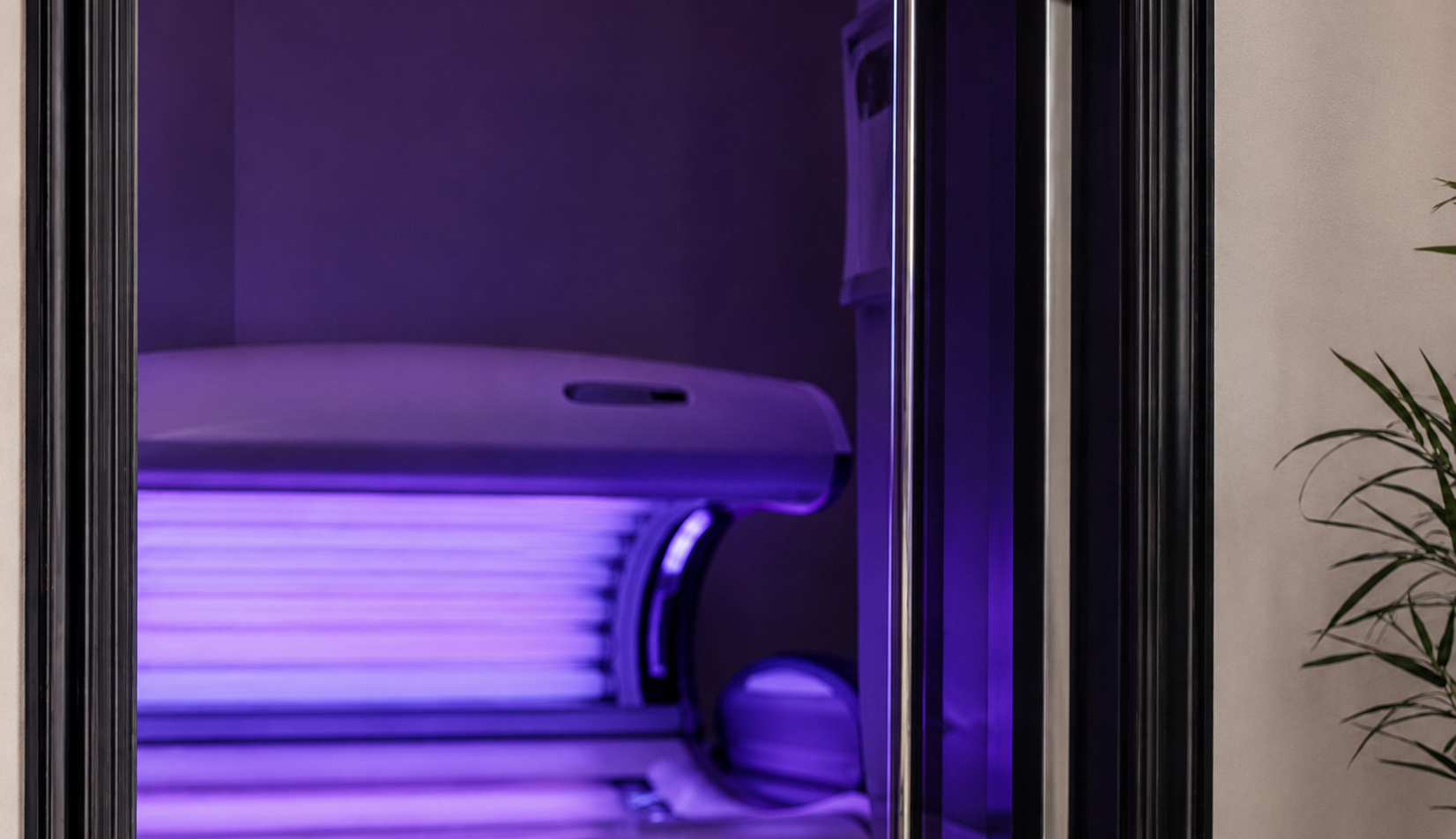
Indoor tanning risks extend far beyond a temporary burn. Tanning beds, sunbeds, booths, and sunlamps expose the skin to ultraviolet radiation that can damage DNA, accelerate skin aging, injure the eyes, and increase the risk of several skin cancers. Although the color may fade within weeks, some of the biological damage can remain for life.
The evidence has become strong enough that the International Agency for Research on Cancer, or IARC, places UV-emitting tanning devices in Group 1, its category for agents known to cause cancer in humans. This category describes the strength of the evidence, not an identical level of danger among every Group 1 agent. Still, the message remains clear: artificial UV tanning causes cancer, and no health organization has established a safe exposure threshold. IARC
Fortunately, people do not need UV radiation to change their appearance. Keeping one’s natural skin tone creates no additional UV or cosmetic exposure. Meanwhile, wash-off bronzers and topical self-tanners can provide temporary color without causing a UV tan.
Medical and legal information reviewed through July 2026. This article provides general education, not personalized medical advice.
Indoor Tanning Risks at a Glance
The safest choice is to avoid tanning beds and intentional outdoor tanning. If someone wants temporary color, a topical, non-aerosol sunless product generally presents fewer known risks than any UV tanning method.
| Question | Evidence-based answer |
|---|---|
| Do tanning beds cause cancer? | Yes. IARC classifies UV-emitting tanning devices as carcinogenic to humans. |
| Is UVA-only tanning safe? | No. UVA damages skin and contributes to skin cancer and premature aging. |
| Does a base tan protect the skin? | Barely. A base tan provides only about SPF 2 to 4, which does not offer adequate protection. |
| Can tanning beds provide vitamin D? | They can trigger some vitamin D production, but health authorities advise against using them for this purpose because the risks outweigh the benefits. |
| Are spray tans safer? | They avoid UV radiation. However, people should avoid inhaling the mist or exposing their eyes, lips, and mucous membranes. |
| Do self-tanners replace sunscreen? | No. Most sunless tanning products offer no meaningful sun protection. |
| Is one tanning session harmless? | No exposure qualifies as risk-free. However, the popular claim that one session automatically raises melanoma risk by 75% misrepresents the evidence. |
| What is the healthiest alternative? | Keeping one’s natural skin tone adds no UV or cosmetic exposure. A topical self-tanner is a lower-risk cosmetic option for people who still want temporary color. |
What Counts as Artificial Tanning?
The phrase “artificial tanning” can describe very different products. Therefore, separating UV tanning from sunless tanning matters.
| Method | How it changes appearance | UV exposure | Main concern |
|---|---|---|---|
| Tanning bed or sunbed | UV radiation stimulates melanin production | Yes | Cancer, burns, eye injury, photoaging |
| Tanning booth or sunlamp | UV radiation stimulates melanin production | Yes | Same risks as tanning beds |
| Outdoor intentional tanning | Sunlight stimulates melanin production | Yes | Cancer, burns, eye damage, photoaging |
| DHA lotion or mousse | DHA colors proteins in the skin’s outer layer | No | Irritation, allergy, no sun protection |
| Spray tan | Aerosolized DHA colors the skin’s surface | No | Inhalation and mucous membrane exposure |
| Wash-off bronzer or body makeup | Pigment sits temporarily on the skin | No | Irritation, allergy, transfer to clothing |
| Prescription phototherapy | Clinicians deliver measured UV for a medical condition | Yes | Controlled medical risks, not cosmetic tanning |
How tanning beds produce a tan
Tanning lamps emit UVA, UVB, or a combination of both. UVA penetrates more deeply into the skin and plays a major role in premature aging. UVB more readily causes sunburn. However, both forms damage skin and contribute to cancer.
Some businesses advertise “high-pressure,” “mostly UVA,” or “no-burn” tanning as safer. Nevertheless, avoiding a burn does not prevent DNA damage. The FDA explains that both UVA and UVB can damage skin and cause skin cancer.
The intensity can also surprise consumers. IARC reported that some powerful tanning units may produce UV intensities 10 to 15 times greater than Mediterranean midday sunlight. In addition, a recent European cancer-prevention review described typical tanning-device exposure around UV Index 12, comparable to intense midday equatorial sun. IARC monograph
Why a UV tan signals skin damage
A tan is not a sign that the skin has become healthier. Instead, UV radiation triggers skin cells to produce more melanin as a defensive response to injury.
Consequently, the color represents evidence that UV exposure has affected the skin. A person does not need to burn for that damage to occur. Moreover, repeated exposure allows mutations and other cellular changes to accumulate over time.
The FDA summarizes the issue directly: there is no safe UV tan. FDA tanning risk guidance
Indoor Tanning Risks and Skin Cancer Evidence
Researchers cannot ethically conduct a trial that assigns people to years of carcinogenic UV exposure. Therefore, the evidence comes from cohort studies, case-control studies, laboratory research, dose-response analyses, biological mechanisms, and systematic reviews.
These methods have limitations. For example, people may not remember every tanning session accurately, and outdoor sun exposure can complicate comparisons. However, the consistency of the findings, evidence of higher risk with greater exposure, known DNA damage, and results across different populations support a causal conclusion.
IARC’s carcinogenic classification
In 2009, IARC moved UV-emitting tanning devices into Group 1, “carcinogenic to humans.” Its review found sufficient evidence linking these devices to melanoma and ocular melanoma. IARC announcement
Importantly, Group 1 identifies confidence in causation. It does not mean every Group 1 exposure carries the same probability of cancer. Cigarette smoke, solar radiation, and UV tanning devices can all appear in the category while producing different risks under different exposure patterns.
Even so, the classification removes a key area of uncertainty: scientists do not merely suspect that tanning beds cause cancer. The evidence shows that they can.
What the largest recent meta-analysis found
A 2021 systematic review and meta-analysis evaluated 54 studies, including 36 melanoma studies and 18 non-melanoma skin cancer studies. Together, the included evidence covered 14,583 melanoma cases and 10,406 non-melanoma skin cancers. Cancers systematic review
The following estimates compare people who had ever used indoor tanning with those who had never used it:
| Outcome | Pooled relative risk | 95% confidence interval | Plain-language interpretation |
|---|---|---|---|
| Melanoma | 1.27 | 1.16 to 1.39 | 27% higher relative risk |
| Any non-melanoma skin cancer | 1.40 | 1.18 to 1.65 | 40% higher relative risk |
| Squamous cell carcinoma | 1.58 | 1.38 to 1.81 | 58% higher relative risk |
| Basal cell carcinoma | 1.24 | 1.00 to 1.55 | About 24% higher relative risk |
| Early-onset melanoma | 1.75 | 1.14 to 2.69 | 75% higher relative risk |
| Early-onset non-melanoma cancer | 1.99 | 1.48 to 2.68 | About twice the relative risk |
These outcomes overlap, so readers should not add the percentages together. Furthermore, “early-onset” followed the younger-age definitions used by the individual studies.
Relative risk is not the same as absolute risk
A 27% relative increase does not mean that 27 out of every 100 tanning-bed users will develop melanoma. Instead, it compares the rate in an exposed group with the rate in an otherwise similar unexposed group.
For illustration, suppose a hypothetical population had a baseline outcome rate of 10 cases per 10,000 people. A relative risk of 1.27 would correspond to approximately 12.7 cases per 10,000 under the simplified assumption that everything else remained equal. If the baseline rate were 100 per 10,000, the same relative risk would correspond to 127 cases.
Actual personal risk varies with age, skin type, genetics, number of sessions, sunburn history, outdoor exposure, immune status, and other factors. Nevertheless, a preventable increase matters because skin cancers already affect large populations.
Earlier exposure and frequent use matter
The 2021 meta-analysis also found stronger associations for early and frequent exposure:
| Exposure pattern | Melanoma relative risk | Non-melanoma cancer relative risk |
|---|---|---|
| First exposure at age 20 or younger | 1.47 | 2.02 |
| At least 10 sessions per year | 1.52 | 1.56 |
Therefore, adolescents and young adults deserve particular protection. Earlier exposure also creates more years during which damaged cells can accumulate additional changes.
The World Health Organization advises children and adolescents not to use sunbeds. Similarly, FDA-required device labeling warns that people under 18 should not use sunlamp products. FDA sunlamp information
What the “75% higher risk” statistic really means
A widely repeated statement claims that a single tanning-bed session before age 35 raises melanoma risk by 75%. That wording is misleading.
IARC’s influential analysis found a 75% higher melanoma risk among people who began using tanning devices before age 30, compared with people who never used them. It did not conclude that one isolated session automatically creates a 75% increase. IARC
Later meta-analyses have produced different estimates because they included different studies, age definitions, exposure categories, and statistical methods. Still, they point in the same direction: earlier use, repeated use, and greater cumulative exposure correspond with higher risk.
Correcting the statistic does not make one session safe. Rather, it prevents health communication from exaggerating a specific number while preserving the evidence-based conclusion that unnecessary UV exposure should be avoided.
Major Health Effects of Indoor Tanning
Melanoma
Melanoma develops from pigment-producing cells called melanocytes. Although it represents a smaller share of skin cancers than basal or squamous cell carcinoma, it causes many skin-cancer deaths because it can spread to other parts of the body.
Indoor tanning contributes to melanoma risk through repeated UVA and UVB exposure. Moreover, beginning at a young age appears particularly concerning. The American Academy of Dermatology reports that tanning-bed use increases the risk of melanoma and that the association remains especially important for younger users.
Squamous cell carcinoma
Squamous cell carcinoma, or SCC, arises from cells in the skin’s upper layers. Most cases respond well to timely treatment. However, some grow aggressively or spread.
The 2021 pooled evidence linked indoor tanning with a 58% higher relative risk of SCC. Consequently, discussions that focus only on melanoma leave out a substantial part of the harm.
Basal cell carcinoma
Basal cell carcinoma, or BCC, is the most common type of skin cancer. It rarely spreads to distant organs, but it can damage nearby tissue and require repeated procedures.
Indoor tanning showed a smaller but still meaningful association with BCC in the meta-analysis. In addition, younger users may develop these cancers earlier than they otherwise would.
Burns and acute injury
Tanning lamps can cause burns, especially when equipment delivers an unexpectedly intense dose or when a user has photosensitive skin. Medications, cosmetics, and certain medical conditions can also increase sensitivity.
Some antibiotics, acne treatments, pain relievers, and other drugs can make the skin react more strongly to UV radiation. Therefore, people should check medication warnings and ask a pharmacist or clinician about photosensitivity. Avoiding intentional UV tanning remains the safest approach regardless of medication status. FDA guidance on sun and medicines
Premature skin aging
UVA damages collagen, elastin, and other structures that support the skin. Over time, repeated exposure can contribute to wrinkles, uneven pigmentation, reduced elasticity, and a rougher texture.
These changes can appear years before skin cancer. Furthermore, cosmetic procedures cannot reliably erase all cellular damage caused by UV exposure.
Eye damage
UV radiation can harm both the surface and internal structures of the eye. WHO identifies cataracts, pterygium, inflammation, and cancers around the eye among possible consequences of excessive UV exposure. WHO ultraviolet radiation fact sheet
IARC also found sufficient evidence linking tanning devices with ocular melanoma. Although protective eyewear may reduce some eye exposure, it cannot protect the rest of the skin or make a tanning session safe.
Effects on immune function
UV radiation can alter immune activity in the skin. Consequently, the body may become less effective at identifying or responding to some abnormal cells and infections in exposed areas.
Researchers continue to study the clinical importance of these effects at different doses. Still, immune alteration adds to the reasons that WHO recommends avoiding artificial tanning.
Dependence and difficulty stopping
Some frequent users report cravings, loss of control, or continued tanning despite knowing the risks. Researchers have therefore investigated whether repeated UV exposure can produce dependence-like behavior.
The AAD reports that approximately one in five white women aged 18 to 30 who tan indoors show signs of tanning dependence. That statistic comes from a specific demographic group, so it should not automatically apply to every population. Nevertheless, it shows that “just stop” may not feel simple for every frequent user. AAD statistics
Who Faces the Greatest Indoor Tanning Risks?
No one gains immunity from UV damage. However, several factors can increase either the chance of damage or its consequences.
| Risk factor | Why it matters |
|---|---|
| Childhood or adolescent exposure | Younger skin receives damage earlier, leaving more time for additional mutations to accumulate. |
| Fair skin, light eyes, freckles, or easy burning | Lower natural melanin protection often increases UV sensitivity. |
| Many or unusual moles | A higher mole count can correlate with higher melanoma risk. |
| Personal or family history of skin cancer | Genetics and shared exposure patterns can raise baseline risk. |
| Previous severe sunburns | Burns indicate intense UV injury and contribute to cumulative risk. |
| Frequent tanning sessions | Research shows a dose-response pattern, with greater exposure generally linked to greater risk. |
| Photosensitizing medication | Some drugs make skin more vulnerable to burns and other reactions. |
| Weakened immune system | Immune suppression can increase skin-cancer risk and allow cancers to behave more aggressively. |
| Certain inherited conditions | Some genetic conditions greatly increase sensitivity to UV-induced DNA damage. |
People with darker skin generally have more natural melanin protection, but they can still experience DNA damage, premature aging, eye injury, and skin cancer. Moreover, skin cancer in darker skin sometimes receives a later diagnosis, which can worsen outcomes. WHO therefore advises sun protection across skin tones rather than treating any complexion as immune.
Indoor Tanning Myths Versus Evidence
| Myth | What the evidence shows |
|---|---|
| “A base tan prevents sunburn.” | A base tan offers only about SPF 2 to 4. That level falls far below standard sun-protection recommendations. |
| “A tan means my skin has adapted.” | The color represents a response to UV injury, not proof of improved health. |
| “UVA-only beds are safe because they do not burn as quickly.” | UVA contributes to DNA damage, cancer, and premature aging even without a visible burn. |
| “One session increases melanoma risk by exactly 75%.” | The 75% estimate concerned people who began tanning before age 30, not one isolated session. |
| “Tanning beds provide a healthy source of vitamin D.” | WHO and dermatology organizations advise obtaining vitamin D without carcinogenic UV exposure. |
| “Only fair-skinned people need to worry.” | Every skin tone can sustain UV damage and develop skin cancer. |
| “A legal or regulated salon must be safe.” | Regulation may control labeling, age, sanitation, or equipment, but it does not remove the carcinogenic effect of UV radiation. |
| “Tanning beds treat acne or psoriasis.” | Commercial tanning beds do not substitute for prescription phototherapy. |
| “Sunscreen makes intentional tanning safe.” | Sunscreen lowers some UV exposure when used correctly, but it cannot make deliberate tanning risk-free. |
| “If I do not burn, no damage occurred.” | UVA can damage skin without producing an obvious burn. |
| “Spray tans protect me from the sun.” | Most spray tans and self-tanners provide no SPF. |
| “Outdoor tanning is healthier than a tanning bed.” | Both expose the skin to carcinogenic UV radiation. The dose and spectrum may differ, but neither method creates a healthy tan. |
The FDA estimates that a base tan provides an SPF of only 2 to 4. By comparison, health organizations generally recommend broad-spectrum SPF 30 or higher as one part of a complete sun-protection strategy. FDA
How Large Is the Public Health Burden?
Different studies answer different questions. Prevalence surveys measure how many people use tanning beds, whereas disease-burden models estimate how many cancers may result from that exposure. Therefore, dates and assumptions matter.
Indoor tanning prevalence
A CDC analysis found that 5.6% of U.S. adults reported indoor tanning during 2010. However, the percentage reached 31.8% among non-Hispanic white women aged 18 to 21 and 29.6% among those aged 22 to 25. White female users also reported an average of 20.3 sessions during the preceding year. CDC MMWR
Fortunately, use among U.S. high school students declined substantially:
| Measure | 2009 | 2017 | Change |
|---|---|---|---|
| High school students reporting past-year indoor tanning | 15.6% | 5.6% | Approximately 64% lower |
| Estimated number of student users | About 2.5 million | About 0.9 million | About 1.6 million fewer |
| Non-Hispanic white female students | 37.4% | 10.1% | Large but incomplete decline |
The decline likely reflects several influences, including age restrictions, taxes, public education, shifting beauty preferences, and reduced availability. Still, approximately 900,000 high school students reporting use in 2017 represented a substantial preventable exposure. CDC-supported analysis
Modeled cancer cases
A 2014 systematic review estimated that indoor tanning could account for more than 450,000 non-melanoma skin cancers and over 10,000 melanomas each year across the United States, Europe, and Australia. JAMA Dermatology study
Those figures represent modeled estimates, not a current count of cancers proven individually to result from tanning beds. Additionally, the model relied on prevalence and incidence data available at the time. The numbers should therefore communicate scale rather than function as an exact 2026 total.
WHO later summarized the burden as roughly half a million skin-cancer diagnoses annually across those regions. WHO artificial tanning interventions
Economic consequences
A U.S. economic model estimated that indoor tanning contributed to approximately 263,600 skin-cancer cases in 2015. Researchers associated those cases with about $343.1 million in direct medical costs and $127.3 billion in lifetime productivity losses. AAD summary of the economic model
Again, these totals depend on modeling assumptions and 2015 dollars. Nevertheless, they show why artificial tanning affects health systems, families, schools, and workplaces, not only individual salon customers.
Surprising Facts About Tanning Beds
A strong tanning bed can rival extreme sunlight
Some tanning units produce UV radiation at levels comparable to, or greater than, intense tropical midday sun. Consequently, a short session does not necessarily mean a small dose.
A base tan offers very little protection
SPF 2 to 4 means the skin remains largely unprotected. Moreover, acquiring the base tan already requires UV injury.
Cancer can develop without a memorable burn
Burns mark intense damage, but cancer risk does not depend on burns alone. Repeated UVA exposure may injure cells even when the skin never becomes visibly red.
“Carcinogenic” describes hazard, not destiny
Indoor tanning raises risk, but it does not guarantee that every user will develop cancer. Similarly, avoiding tanning beds cannot reduce risk to zero because genetics and outdoor UV exposure also matter.
Tanning devices and medical UV equipment belong to different categories
Commercial equipment aims to darken the skin. In contrast, medical phototherapy treats a diagnosed condition with a selected wavelength, measured dose, schedule, and clinical follow-up.
The United States still taxes UV tanning
The U.S. federal government applies a 10% excise tax to indoor tanning services that use UV radiation. Spray tans and topical sunless services do not fall under that tax. IRS indoor tanning tax guidance
The absence of a nationwide ban does not mean scientific uncertainty
Countries regulate health risks in different ways. Some impose total commercial bans, while others use age limits, warnings, taxes, advertising restrictions, or operator requirements. Therefore, legal status should not serve as a safety test.
How Governments Regulate Tanning Beds
Regulations change frequently. The following comparison reflects sources reviewed through July 2026 and should not replace current local legal guidance.
| Jurisdiction | Main approach | Important detail |
|---|---|---|
| Brazil | Nationwide ban on cosmetic UV tanning chambers | The prohibition dates to 2009. Anvisa expanded enforcement in 2025 by banning high-power replacement lamps used to keep illegal equipment operating. |
| Australia | Commercial solarium bans | All states and territories prohibit commercial services, except the Northern Territory has no commercial operators. Private ownership remains legal. |
| United Kingdom | Under-18 commercial prohibition | Authorities announced stronger enforcement in January 2026 and consulted on mandatory age checks in May 2026. |
| United States | Federal warnings, tax, and state-level age rules | No nationwide federal under-18 prohibition currently exists. State laws vary. |
| European Union | National rules rather than a single EU-wide ban | Sixteen EU countries prohibited use by people under 18 as of 2022. |
| France | Restrictions and continued debate | French health authorities called for a total ban in 2018, but that recommendation should not be confused with an enacted worldwide-style commercial prohibition. |
Brazil’s nationwide ban
Brazil became one of the first countries to prohibit cosmetic UV tanning chambers. Anvisa issued the nationwide ban through RDC 56/2009.
However, regulators continued finding illegal equipment. In April 2025, Anvisa also prohibited the manufacture, import, sale, advertising, storage, distribution, and use of high-power replacement lamps associated with those machines. Anvisa enforcement update
The action illustrates an important regulatory lesson: banning a service does not automatically end underground use. Enforcement, equipment controls, public education, and consumer awareness still matter.
Australia’s commercial restrictions
Australian states and territories progressively prohibited commercial solaria, with the bans taking effect nationwide in practice by 2016. The Northern Territory did not have commercial operators, while private possession and use remained legal. Cancer Council Australia
An earlier Australian model attributed approximately 281 melanomas, 43 melanoma deaths, and 2,572 squamous cell carcinomas per year to solarium use. Because the model predates the completed bans, it describes the earlier burden rather than current annual cases. ARPANSA
The United States in 2026
Federal device rules require warnings that people under 18 should not use sunlamp products. Nevertheless, the warning does not create a nationwide age ban.
In 2015, FDA proposed restricting tanning-bed use to adults. On March 16, 2026, the agency formally withdrew that proposal because it no longer intended to finalize it and wanted to reconsider the issues. The existing Class II device controls and under-18 warning remained in place. Federal Register withdrawal
State rules now carry particular importance. AIM at Melanoma’s legislative tracker reports that 20 states and the District of Columbia completely prohibit indoor tanning for people under 18, while two additional states allow limited prescription exceptions. Other states use different age thresholds, consent rules, or restrictions.
The United Kingdom and European Union
The United Kingdom prohibits commercial sunbed use by people under 18. In January 2026, the government announced stronger enforcement against illegal underage access. Later, a May 2026 consultation proposed mandatory age checks. UK enforcement announcement and age-check consultation
Across the European Union, regulation remains uneven. A 2026 European Code Against Cancer review reported that 16 member countries prohibited tanning-device use by people under 18 as of 2022. However, the EU has not adopted one harmonized commercial ban. European Code Against Cancer review
France provides a useful example of how headlines can outpace law. In 2018, the French food and environmental health agency called for a total ban, which the BBC reported at the time. A health agency recommendation, however, does not automatically become legislation.
What the global legal research found
A 2023 study, also supplied for this review, examined 131 legislative units across North America, Europe, Australia, and New Zealand. Researchers found:
- 49 units with total or partial advertising bans.
- Eight units with total advertising bans.
- 41 units with partial advertising restrictions.
- 64 units requiring some form of health information.
- Nearly 40% of the reviewed units without legislation covering the studied advertising or health-information issues.
Because the researchers examined selected regions and searched laws during 2023, the findings do not represent every country or every 2026 amendment. Still, the study demonstrates how fragmented indoor-tanning regulation remains. Global Tanning Bed Advertising study
Healthier Alternatives to Indoor Tanning
“Safer” does not mean completely risk-free. However, options that do not expose the skin to UV radiation avoid the main carcinogenic mechanism of tanning beds.
Skin does not need a tan to look healthy. Therefore, keeping one’s natural skin tone remains the option with no added UV exposure, cosmetic allergens, inhalation risk, or maintenance.
| Option | Added UV exposure | Main trade-offs | Overall assessment |
|---|---|---|---|
| Natural skin tone | None | No cosmetic color change | Healthiest and simplest choice |
| Wash-off bronzer or body makeup | None | Possible irritation, allergy, or transfer | Low-risk temporary option |
| DHA lotion or mousse | None | Possible irritation; does not provide SPF | Preferred sunless option for many people |
| Gradual self-tanner | None | Same basic DHA considerations; color develops gradually | Similar risk profile to other topical DHA products |
| Professional spray tan | None | Possible inhalation or eye and mucosal exposure | Lower UV risk, but more exposure uncertainty than lotion |
| Outdoor tanning | Yes | Burns, aging, eye injury, cancer | Not a healthy alternative |
| Tanning bed | Yes | Concentrated UV and cancer risk | Avoid |
| Tanning pills or unauthorized tanning drugs | Varies | Unapproved ingredients and potentially serious adverse effects | Avoid |
Keeping your natural skin tone
No medical reason requires a person to look tanned. Moreover, cultural preferences for darker or lighter skin change across places and time.
Choosing not to alter skin color avoids both UV damage and cosmetic-product exposure. This choice also costs nothing and requires no repeated maintenance.
Wash-off bronzers and body makeup
Bronzers use pigments that sit on the skin and wash away. Because they do not stimulate melanin, they create no UV tan.
Possible drawbacks include irritation, allergy, uneven transfer, or staining of clothing. Consequently, people with sensitive skin should follow the product label and stop using a product that causes a reaction.
DHA lotions, creams, and mousses
Dihydroxyacetone, or DHA, reacts with amino acids in the outermost layer of the skin. That reaction creates temporary brown pigments without exposing living skin to UV radiation.
The FDA permits DHA as a color additive for external application. However, the authorization does not cover the lips, eye area, mucous membranes, inhalation, or ingestion. Creams, lotions, and mousses make these unwanted routes easier to avoid than an all-over spray. FDA sunless tanner guidance
European regulators have also reviewed topical DHA. In 2020, the EU Scientific Committee on Consumer Safety concluded that DHA did not raise a safety concern at concentrations up to 10% in self-tanning lotions and face creams under the assessed conditions. EU SCCS opinion
Still, a regulatory conclusion about topical use does not guarantee that every formula suits every person. Fragrances, preservatives, and other ingredients can cause irritation or allergy. In addition, users should follow the label and discontinue a product if a significant reaction develops.
Are spray tans safe?
Spray tans avoid ultraviolet radiation, so they do not create the same UV-driven skin-cancer risk as tanning beds. Nevertheless, the spray route introduces questions about inhalation and contact with the eyes, lips, and mucous membranes.
FDA states that the industry has not provided the agency with safety data needed to authorize DHA for those exposure routes. This position means the spray route lacks FDA authorization, not that researchers have proven every spray-tan exposure harmful.
The agency has received reports involving rashes and, mainly with spray booths, coughing, dizziness, and fainting. However, FDA notes that the available reports do not establish which ingredients or circumstances caused each event. FDA
Therefore, a non-aerosol lotion or mousse avoids more uncertainty than a spray. People who use any cosmetic should follow its labeling and avoid products on broken or irritated skin unless a healthcare professional advises otherwise.
Self-tanner is not sunscreen
Most sunless tanning products do not protect against UV radiation. Even after the skin looks darker, the product has not created meaningful natural UV protection.
Only products that carry a valid SPF label provide the stated sunscreen protection, and that protection lasts according to the sunscreen directions rather than the duration of the cosmetic color. The American Cancer Society and FDA both warn consumers not to treat self-tanner as sunscreen.
For outdoor protection, combine shade, clothing, sunglasses, and broad-spectrum SPF 30 or higher. Furthermore, reapply sunscreen according to the label, especially after swimming, sweating, or towel drying.
Products to avoid
Tanning pills
No FDA-approved tanning pill exists. Products containing canthaxanthin can deposit pigment in the skin and other tissues, including the eyes. Reports have linked these products with eye changes and other adverse effects. FDA tanning-pill warning
Tanning accelerators
Some products claim that amino acids such as tyrosine accelerate tanning. However, evidence has not shown that these products safely produce a tan without UV exposure. The American Cancer Society advises caution because some claims lack adequate evidence or authorization.
Unauthorized tanning injections and nasal sprays
Products marketed online as “melanotan” injections or nasal sprays do not have authorization as cosmetic tanning medicines in major regulated markets. Authorities cannot guarantee their identity, purity, dose, safety, or effectiveness.
Consequently, consumers should avoid them. Anyone who has already used an unauthorized tanning drug and feels unwell should seek advice from a qualified healthcare professional rather than taking another dose.
Can Tanning Beds Provide Vitamin D?
UVB can stimulate vitamin D production in the skin. Nevertheless, tanning beds do not provide a safe or medically recommended vitamin D strategy.
Many commercial devices emphasize UVA, while their output varies between machines. More importantly, a person cannot separate the potential vitamin D effect from the carcinogenic UV exposure.
WHO states that people should never use artificial tanning to obtain vitamin D. Similarly, the American Academy of Dermatology concludes that research has not identified a safe UV exposure level that maximizes vitamin D without increasing skin-cancer risk. WHO and AAD vitamin D guidance
The U.S. National Institutes of Health lists these daily recommended amounts from all sources:
| Age group | Recommended daily amount |
|---|---|
| Ages 1 to 70 | 15 micrograms, or 600 IU |
| Age 71 and older | 20 micrograms, or 800 IU |
| Pregnancy and breastfeeding | 15 micrograms, or 600 IU |
People can obtain vitamin D through foods, fortified products, and supplements when appropriate. However, anyone concerned about deficiency should discuss testing and supplementation with a clinician rather than self-treating with high doses. NIH Office of Dietary Supplements
Why Medical Phototherapy Is Different
Doctors sometimes prescribe ultraviolet phototherapy for psoriasis, eczema, vitiligo, and other conditions. This fact does not make commercial tanning beds therapeutic.
Narrowband UVB phototherapy typically uses a controlled wavelength near 311 to 312 nanometers. Clinicians measure the dose, adjust it according to the patient’s response, protect sensitive areas, and track cumulative treatment.
In contrast, commercial tanning beds usually emphasize UVA and aim to change appearance. They do not provide the same wavelength selection, dosing protocols, medical indication, or clinical supervision.
Medical phototherapy still carries possible risks, including burns and cumulative UV damage. However, a clinician weighs those risks against the expected benefit for a diagnosed condition. National Psoriasis Foundation and NHS narrowband UVB guidance
Therefore, someone with a skin condition should seek medical evaluation rather than using a commercial tanning bed as treatment.
What to Do After Previous Tanning-Bed Use
Past exposure does not guarantee cancer, so panic does not help. However, future choices can reduce additional UV damage.
Stop intentional UV tanning
Avoiding further sessions prevents additional tanning-bed exposure. Outdoor intentional tanning should also stop because sunlight contains carcinogenic UVA and UVB.
Improve everyday sun protection
Use shade, protective clothing, sunglasses, and broad-spectrum sunscreen. In addition, avoid assuming that a previous tan or self-tanner offers protection.
Tell a healthcare professional about significant exposure
A clinician may want to know when tanning began, roughly how frequently it occurred, and whether it caused burns. People with many sessions, unusual moles, a strong family history, immune suppression, or previous skin cancer may need individualized follow-up.
Learn the ABCDE warning signs
Regular self-checks can help someone notice changes. Many experts suggest checking the skin approximately once a month, although recommendations can vary according to personal risk. American Cancer Society skin-exam guidance
| Letter | Warning sign |
|---|---|
| A | Asymmetry, one half looks different from the other |
| B | Border that looks irregular, blurred, or poorly defined |
| C | Color that varies within the same spot |
| D | Diameter greater than about 6 millimeters, although melanomas can be smaller |
| E | Evolving, meaning a spot changes in size, shape, color, symptoms, or appearance |
A new, changing, bleeding, persistently itchy, or non-healing spot deserves medical evaluation. Nevertheless, the ABCDE guide cannot diagnose cancer, and not every skin cancer follows every letter. AAD melanoma warning signs
Professional screening schedules should reflect individual risk. The U.S. Preventive Services Task Force has found insufficient evidence to recommend universal clinician screening for every asymptomatic, average-risk adult, which is different from saying that suspicious changes should be ignored. USPSTF
Frequently Asked Questions About Indoor Tanning Risks
Is one tanning-bed session safe?
No UV tanning session qualifies as completely safe. One session adds UV exposure, but research cannot assign one universal personal cancer-risk percentage to an isolated visit.
Importantly, the frequently quoted 75% figure does not refer to one session. It came from comparing people who began indoor tanning before age 30 with people who never used tanning devices.
Is a tanning bed safer than sunlight?
Not necessarily. Some tanning beds produce UV radiation as intense as, or more intense than, strong midday sunlight.
Outdoor sunlight also varies by latitude, altitude, season, cloud cover, and time of day. Therefore, neither source offers a healthy way to pursue a tan.
Are high-pressure or UVA-only beds safer?
No. UVA may cause less immediate burning than UVB at some doses, but it still penetrates skin, causes oxidative and genetic damage, contributes to aging, and increases cancer risk.
Labels such as “high pressure,” “bronzing,” or “mostly UVA” change marketing language, not the carcinogenic nature of UV radiation.
Does a base tan protect against a vacation sunburn?
A base tan supplies only around SPF 2 to 4. Consequently, it offers very little protection and requires skin damage to obtain.
Shade, clothing, sunglasses, and broad-spectrum sunscreen provide a safer strategy.
Can sunscreen make a tanning-bed session safe?
No. Sunscreen cannot convert intentional UV exposure into a risk-free activity.
Moreover, applying sunscreen to extend time under UV radiation can undermine its protective purpose. Sunscreen works best as part of a broader strategy to reduce unavoidable exposure.
Is outdoor tanning a healthy alternative?
No. Solar radiation also causes skin cancer and premature aging.
Although a tanning bed and sunlight may deliver different UVA-to-UVB ratios, both expose the skin to carcinogenic radiation. A sunless cosmetic offers a lower-risk alternative for someone who wants temporary color.
Do spray tans cause skin cancer?
Current evidence does not show that topical DHA creates the same UV-driven skin-cancer risk as tanning beds. However, researchers have less information about repeated inhalation and mucous membrane exposure.
For that reason, topical lotions and mousses avoid more uncertainty than an aerosolized whole-body application.
Can a self-tanner cause an allergic reaction?
Yes. DHA or another ingredient, such as a fragrance or preservative, may irritate sensitive skin.
Therefore, users should read ingredient labels, follow directions, and stop using a product that causes a significant reaction. A clinician can evaluate persistent symptoms.
Will a self-tanner protect naturally darker-looking skin?
No. The color from DHA does not create meaningful UV protection.
Even when the cosmetic result looks similar to a UV tan, the biological process differs. Sun protection remains necessary.
Are tanning beds useful for acne?
Commercial tanning beds do not provide a recommended acne treatment. UV exposure may temporarily dry or darken the skin, but it can also cause burns, pigmentation changes, aging, and cancer risk.
A clinician can recommend evidence-based acne treatments without unnecessary whole-body UV exposure.
Why have some countries banned tanning beds while others have not?
Countries weigh public health evidence, enforcement costs, industry rules, personal freedom, and political priorities differently. As a result, policies range from total commercial bans to warnings and age limits.
The scientific conclusion does not change at each border. UV-emitting tanning devices remain carcinogenic whether a particular jurisdiction bans them or regulates them.
Conclusion: Avoid UV Tanning and Choose Lower-Risk Options
Indoor tanning risks include melanoma, squamous cell carcinoma, basal cell carcinoma, burns, premature aging, eye injury, and possible dependence-like behavior. Strong tanning devices can also deliver UV at levels comparable to extreme midday sunlight.
The evidence supports a straightforward conclusion: no UV tan is healthy, and a base tan does not provide meaningful protection. In addition, tanning beds should never serve as a vitamin D source or substitute for medical phototherapy.
Keeping one’s natural skin tone remains the healthiest option. If temporary color is desired, wash-off bronzer or a properly labeled topical DHA lotion generally avoids the central cancer risk created by UV radiation. Spray tans also eliminate UV exposure, although inhalation and mucous membrane contact add uncertainty.
Ultimately, the safest plan combines no intentional tanning with shade, protective clothing, sunglasses, and broad-spectrum sunscreen. Previous tanning-bed use does not guarantee illness, but stopping now prevents further exposure and creates an opportunity to protect the skin for the future.
Research Method and Source Quality
This article prioritizes systematic reviews, meta-analyses, government regulators, national health agencies, and international cancer authorities. Sources include IARC, WHO, FDA, CDC, NIH, the American Cancer Society, the American Academy of Dermatology, national regulators, and the two supplied academic papers.
Older statistics remain labeled with their original years because historical prevalence and modeled disease burdens should not be presented as exact 2026 totals. Likewise, the legal section reflects sources checked through July 2026 because tanning regulations can change.
Selected Authoritative References
- IARC: UV-emitting tanning devices are carcinogenic
- WHO: Ultraviolet radiation fact sheet
- FDA: Risks of tanning
- 2021 systematic review and meta-analysis
- American Academy of Dermatology: Indoor tanning statistics
- CDC: Indoor tanning among U.S. adults
- FDA: Sunless tanners and bronzers
- American Cancer Society: Tanning pills and sunless products
- NIH: Vitamin D fact sheet
- Global Tanning Bed Advertising study
- Brazilian Anvisa tanning-equipment enforcement
- FDA’s 2026 withdrawal of its proposed federal age restriction