Best Antioxidants for Skin: Evidence-Based Guide
The best antioxidants for skin can help defend against oxidative stress, support a brighter and more even-looking complexion, and complement a thoughtful anti-aging routine. However, no single ingredient wins every category. Vitamin C offers the strongest all-around case for many people, niacinamide combines versatility with excellent tolerance, and vitamin E works especially well beside water-soluble antioxidants. Meanwhile, ferulic acid can improve the stability and performance of certain antioxidant mixtures.
Antioxidants are not invisible sunscreen, an instant facelift, or a shortcut around healthy habits. Instead, they add a useful second layer of support. Sunscreen limits the radiation that reaches the skin, while antioxidants help address some reactive molecules that still form after exposure to sunlight, pollution, and normal metabolism. A broad-spectrum sunscreen therefore remains the foundation of a morning routine.
This guide answers the most common questions about topical antioxidants, food, supplements, brightening, creams, Korean skincare, and anti-aging combinations. It also separates human evidence from laboratory promise, because a compound that performs impressively in a test tube may not remain stable, penetrate skin, or improve a visible outcome in real life.
Medical note: This article provides general education rather than personal medical advice. Persistent pigmentation, dermatitis, pain, a changing lesion, or a reaction to a product deserves professional evaluation. Ask a qualified clinician before using supplements if you are pregnant, breastfeeding, preparing for surgery, managing a health condition, or taking medication.
Quick Answer: What Are the Best Antioxidants for Skin?
For most people, the most useful topical shortlist includes vitamin C, niacinamide, vitamin E, and ferulic acid. Green tea polyphenols, coenzyme Q10, resveratrol, carotenoids, and azelaic acid can also play valuable roles, although the strength and type of evidence vary.
| Goal | Best starting option | Why it stands out | Main limitation |
|---|---|---|---|
| All-around daytime antioxidant | Vitamin C | Supports collagen, brightening, and antioxidant defense | Pure ascorbic acid can sting and oxidize |
| Sensitive or beginner skin | Niacinamide | Supports the barrier, tone, texture, and oil balance | Very high percentages may irritate |
| Dry skin | Vitamin E in a moisturizer | Lipid-soluble and compatible with richer formulas | Can feel heavy; contact allergy is possible |
| Strong antioxidant mixture | Vitamins C and E plus ferulic acid | Ingredients can stabilize and regenerate one another | Formula quality matters more than label appeal |
| Uneven tone | Vitamin C or niacinamide | Both have evidence for improving visible discoloration | Pigmentation usually needs a broader plan |
| Redness-prone skin | Green tea or niacinamide | Generally gentler and may calm visible irritation | Results are usually subtle |
| Mature, dry skin | CoQ10 or vitamin E, alongside proven basics | Fits well in barrier-supporting creams | Evidence is smaller than for retinoids and sunscreen |
| Food-first support | Colorful plants, nuts, seeds, and olive oil | Supplies a network of vitamins and phytochemicals | Diet changes work gradually, not as spot treatments |
If you want one simple recommendation, start with a well-formulated vitamin C serum in the morning and follow it with moisturizer and broad-spectrum sunscreen. On the other hand, choose niacinamide first if your skin is reactive or if acidic products usually sting.
What Are Antioxidants in Skincare?
Antioxidants are molecules that can donate or accept electrons in ways that interrupt damaging oxidative chain reactions. Skin already contains its own defense network, including enzymes such as superoxide dismutase, catalase, and glutathione peroxidase, as well as nonenzymatic molecules such as vitamin C, vitamin E, glutathione, and coenzyme Q10.
This network matters because reactive oxygen species, or ROS, are not automatically harmful. Cells use controlled amounts for signaling and normal physiology. Problems arise when ROS production exceeds the skin’s ability to manage it, creating oxidative stress.
Sunlight, air pollution, cigarette smoke, inflammation, and normal cellular energy production can all contribute. Consequently, excessive oxidative stress can affect lipids in the skin barrier, cellular proteins, and components of the extracellular matrix. A dermatology review in Anais Brasileiros de Dermatologia explains both the skin’s endogenous antioxidant network and the practical limits of oral and topical supplementation (Addor, 2017).
Antioxidants do more than “fight free radicals”
The phrase “fights free radicals” is accurate but incomplete. Different antioxidants work in different locations and through different mechanisms.
- For example, vitamin C operates mainly in water-based environments and helps regenerate oxidized vitamin E.
- Meanwhile, vitamin E protects lipid-rich structures, including cell membranes.
- Ferulic acid can add antioxidant activity and improve the stability of certain vitamin C and E solutions.
- Niacinamide supports cellular energy pathways and the skin barrier while also improving several visible signs of aging.
- Carotenoids interact with singlet oxygen and other reactive species.
- Polyphenols may influence inflammatory and stress-response pathways in addition to direct antioxidant activity.
Therefore, the best formula is often a compatible network rather than the ingredient with the most dramatic laboratory score.
What Benefits Do Antioxidants Have for Skin?
Antioxidants for skin may provide several overlapping benefits. Nevertheless, the outcome depends on the ingredient, concentration, formula, packaging, consistency of use, and the concern being treated.
They complement daily photoprotection
Topical antioxidants can reduce some markers of acute oxidative photodamage in controlled studies. For example, a small study in Chinese women found that a topical complex containing vitamins C and E plus ferulic acid provided measurable protection against several biological effects after simulated solar exposure (Wu et al., 2013).
Even so, antioxidant serum does not replace sunscreen. It has no dependable SPF unless the finished product passes regulated sunscreen testing and carries the required label. Apply broad-spectrum sunscreen as the last skincare step every morning, then reapply it according to the label and your exposure.
They can support collagen and soften visible fine lines
Vitamin C serves as a cofactor in collagen synthesis. Moreover, a small double-blind, split-face trial reported visible improvement in wrinkling and biopsy evidence consistent with new collagen after 12 weeks of a topical vitamin C complex (Fitzpatrick and Rostan, 2002). The study included only ten participants, so it supports the ingredient without proving that every vitamin C product will produce the same result.
Niacinamide also has useful human evidence. In a 12-week randomized split-face study of 50 women, a moisturizer with 5% niacinamide improved fine lines, hyperpigmented spots, texture, red blotchiness, and yellowing compared with the control moisturizer (Bissett et al., 2004).
They can brighten dull skin and improve uneven tone
Vitamin C can interfere with steps involved in melanin formation while also reducing the appearance of oxidative dullness. Niacinamide works differently, in part by reducing the transfer of pigment-containing melanosomes to keratinocytes. Consequently, combining well-tolerated ingredients with different mechanisms may work better than simply choosing the highest possible concentration of one active.
Antioxidants can support a pigmentation routine, but persistent melasma or post-inflammatory discoloration often needs sunscreen, visible-light protection when appropriate, and targeted treatment. A review notes that oxidation may contribute to melasma, yet antioxidants alone generally do not offer a complete treatment (Addor, 2017).
They may support the skin barrier
Oxidative stress can affect barrier lipids, while inflammation can increase water loss and sensitivity. Niacinamide helps the skin produce ceramides and other barrier components. Vitamin E, meanwhile, fits naturally into lipid-rich formulas. As a result, these ingredients can be particularly useful when a routine aims to protect both appearance and comfort.
They may calm visible redness
Green tea polyphenols, resveratrol, niacinamide, and several botanical antioxidants show anti-inflammatory activity. Still, “antioxidant” does not automatically mean soothing. Fragrance, essential oils, low-pH vitamin C, or a complex botanical blend may provoke irritation even when the highlighted active sounds gentle.
What Is the Most Powerful Antioxidant for Skin?
There is no scientifically meaningful universal winner. “Power” could mean the ability to neutralize a specific radical in a laboratory assay, stability in a bottle, penetration into human skin, improvement in wrinkles, reduction in pigmentation, or low irritation during daily use. An ingredient can lead one category and fail another.
If “most powerful” means the best combination of human research, multiple cosmetic benefits, and practical daytime use, vitamin C is the strongest overall answer. Specifically, L-ascorbic acid has the most direct biological activity. However, it is also unstable, water-soluble, and difficult to formulate.
If “most powerful” means easiest to use across many skin types, niacinamide may be the better real-world choice. A tolerable product that someone applies consistently often outperforms a theoretically stronger formula that causes burning and remains unused.
Astaxanthin sometimes receives marketing labels such as “thousands of times stronger” than another antioxidant. Those comparisons usually come from particular chemical assays, not head-to-head trials showing equivalent superiority on human faces. A recent systematic review of dietary supplements found insufficient evidence to recommend astaxanthin specifically for skin photoaging, despite promising research (Frontiers in Medicine, 2025).
What Are the Big Three Antioxidants for Skin?
In practical skincare, the “big three” are usually vitamin C, vitamin E, and ferulic acid. This trio became prominent because the ingredients can work cooperatively.
In water-based cellular environments, vitamin C helps neutralize reactive species. By contrast, vitamin E acts in lipid-rich areas and can interrupt lipid-peroxidation chains. After vitamin E becomes oxidized, vitamin C can help regenerate it. Ferulic acid adds another antioxidant pathway and may improve formula stability.
A well-known laboratory and human-skin study found that adding ferulic acid to a solution containing 15% L-ascorbic acid and 1% alpha-tocopherol improved chemical stability and increased measured photoprotection under the study conditions (Lin et al., 2005). Importantly, that result applies to the tested formulation. It does not mean that every product listing these three ingredients will perform identically.
Another reasonable “big three” for a beginner routine would be vitamin C, niacinamide, and vitamin E because this group covers brightening, barrier support, and lipid protection. Thus, the label depends on whether the question concerns biochemical synergy or everyday versatility.
What Is the Best Anti-Aging Antioxidant?
Vitamin C is the best all-around anti-aging antioxidant for most people because it supports collagen production, brightening, and environmental defense. However, an antioxidant should sit inside a broader hierarchy of evidence.
For visible skin aging, daily sun protection and retinoids have more direct evidence than most antioxidant cosmetics. Antioxidants act as supporting players. The American Academy of Dermatology recommends sun protection as a central anti-aging measure and emphasizes choosing products that match the skin’s needs (AAD anti-aging guidance).
A sensible anti-aging priority order
- Use broad-spectrum sunscreen every morning.
- Maintain the barrier with a suitable moisturizer and gentle cleanser.
- Next, add a retinoid at night if appropriate and tolerated.
- Then, use an antioxidant in the morning for complementary benefits.
- Address a specific concern, such as pigmentation or dryness, with a targeted active.
This order prevents a common mistake: buying several expensive antioxidant serums while neglecting the measures that make the largest difference.
The Best Antioxidants for Skin, Ranked by Evidence and Use
No ranking can cover every formulation. Nevertheless, the following list weighs human evidence, biological plausibility, formula availability, and tolerability.
1. Vitamin C
Vitamin C is the leading all-purpose antioxidant in skincare. It supports collagen synthesis, helps recycle vitamin E, and can improve uneven-looking tone. The National Institutes of Health also notes that the body needs vitamin C to make collagen (NIH Office of Dietary Supplements).
Best for: dullness, early fine lines, uneven tone, and daytime antioxidant support.
Forms to know:
- L-ascorbic acid: the active and best-studied form, although it can be unstable and irritating.
- Sodium ascorbyl phosphate: generally gentler and more stable, but it has less direct clinical evidence for photoaging.
- Magnesium ascorbyl phosphate: a water-soluble derivative often used for brightening and tolerance.
- 3-O-ethyl ascorbic acid: a stable derivative that may suit people who cannot tolerate low-pH ascorbic acid.
- Tetrahexyldecyl ascorbate: an oil-soluble derivative used in richer, nonacidic formulas.
For L-ascorbic acid, formulas around 10% to 20% are common. More is not automatically better. In fact, very high concentrations may add irritation without proportional benefit.
Choose opaque or dark, tightly sealed packaging. Fresh L-ascorbic acid serum is usually clear to pale straw-colored. Dark orange or brown discoloration suggests substantial oxidation, although color depends on the full formula.
2. Niacinamide
Niacinamide, a form of vitamin B3, is not marketed solely as an antioxidant. Even so, it supports cellular redox processes through NAD and NADP pathways and delivers unusually broad skin benefits.
Best for: sensitive skin, barrier weakness, uneven tone, visible redness, enlarged-looking pores, and oiliness.
Clinical evidence supports 5% niacinamide for multiple visible signs of aging (Bissett et al., 2004). Many people also do well with 2% to 5%. By contrast, a 10% or 20% label does not guarantee a better result.
Niacinamide can usually share a routine with vitamin C. The old claim that they universally “cancel each other out” came from conditions that do not reflect modern, properly formulated cosmetics. Sensitive users can still separate them between morning and evening to reduce the total irritation burden.
3. Vitamin E
Vitamin E describes a family of fat-soluble compounds, with alpha-tocopherol serving as the main biologically active form in humans. In topical products, labels may list tocopherol or tocopheryl acetate.
Best for: normal-to-dry skin, lipid-rich moisturizers, and antioxidant mixtures.
Vitamin E protects lipids and complements vitamin C. Nevertheless, it is not automatically the best standalone wrinkle treatment. Pure vitamin E oils can feel greasy, and some people develop contact dermatitis. A systematic review documents allergic contact reactions to topical vitamin derivatives, including forms of vitamins C and E, although these reactions remain uncommon (Foti et al., 2022).
The NIH advises that high-dose oral vitamin E can increase bleeding risk, especially with anticoagulant or antiplatelet medicines (NIH vitamin E fact sheet). Therefore, topical use in a balanced formula should not be confused with swallowing high-dose vitamin E capsules.
4. Ferulic Acid
Ferulic acid is a plant-derived phenolic antioxidant found in the cell walls of foods such as rice, oats, and other grains. In skincare, its greatest strength is partnership.
Best for: stabilizing and strengthening vitamin C and E mixtures.
The classic C-plus-E-plus-ferulic research used a specific acidic solution, so consumers should look beyond the front label. Concentration, pH, solvent system, packaging, and manufacturing controls all influence performance (Lin et al., 2005).
Ferulic acid may irritate highly reactive skin, particularly when it appears in a low-pH vitamin C serum. Start slowly and moisturize afterward.
5. Green Tea Polyphenols
Green tea contains catechins, including epigallocatechin-3-gallate, often shortened to EGCG. These compounds show antioxidant and anti-inflammatory effects across laboratory and early clinical research.
Best for: redness-prone, oily, or environmentally stressed skin.
The major limitation is formulation. Polyphenols can degrade, and labels rarely disclose the amount of active catechins. As a result, “green tea extract” near the end of an ingredient list may not reproduce the concentrations used in research.
6. Coenzyme Q10
Coenzyme Q10, also called ubiquinone, participates in mitochondrial energy production and acts as a lipid-soluble antioxidant. Skin levels can decline with age and environmental stress.
Best for: mature or dry skin that benefits from a gentle, creamy antioxidant.
A 2024 review found that topical CoQ10 can reach superficial and deeper skin layers and may reduce wrinkle depth. However, the authors also disclosed extensive industry relationships, and the evidence base remains smaller than the literature for sunscreen, retinoids, or vitamin C (Lain et al., 2024).
7. Resveratrol
Resveratrol is a polyphenol found in grape skin, berries, peanuts, and other plants. It has antioxidant and anti-inflammatory properties in laboratory models.
Best for: nighttime antioxidant formulas and people who prefer nonacidic polyphenols.
Human topical data remain limited compared with vitamin C or niacinamide. Moreover, resveratrol has stability and solubility challenges. Encapsulation may help, but a sophisticated delivery claim does not replace clinical testing of the finished product.
8. Carotenoids
Carotenoids include beta-carotene, lycopene, lutein, zeaxanthin, and astaxanthin. Colorful fruits and vegetables provide many of them, while topical formulas and supplements may contain isolated forms.
Best for: dietary variety and complementary antioxidant support.
A 2025 systematic review describes promising antioxidant and photoprotective roles for carotenoids but also emphasizes variation across compounds, doses, and studies (Nutrients, 2025). Therefore, eating a diverse range of plants makes more sense for most people than chasing one “super-antioxidant” capsule.
9. Azelaic Acid
Azelaic acid is better known as a treatment for acne, rosacea, and hyperpigmentation than as a classic cosmetic antioxidant. Still, it can reduce oxidative activity in neutrophils and inhibit tyrosinase.
Best for: acne-prone skin, redness, post-inflammatory marks, and melasma-prone skin under professional guidance.
Its practical evidence for those concerns makes it more useful than many exotic extracts. Nonetheless, stinging and dryness can occur, especially at the beginning.
10. Glutathione
Glutathione is an antioxidant that the body produces from amino acids. It also participates in pigment-related pathways, which explains its popularity in brightening products and supplements.
Best for: carefully selected topical brightening products, with realistic expectations.
A 2025 systematic review found moderate but variable results for topical and oral glutathione. It also concluded that intravenous use lacks adequate efficacy and carries greater safety concerns (Sarkar et al., 2025). For that reason, this guide does not recommend glutathione injections for cosmetic lightening.
11. Alpha-Lipoic Acid
Alpha-lipoic acid works in both water- and fat-associated environments and can help regenerate other antioxidants. However, topical evidence remains modest, and concentrated products may irritate.
Best for: experienced users interested in an optional antioxidant, not beginners building a core routine.
12. Botanical Antioxidants
Ginseng, licorice, turmeric, silymarin, pomegranate, rosemary, centella, propolis, and many other plant extracts contain antioxidant compounds. Some offer promising supportive benefits.
Best for: targeted formulas in which the manufacturer standardizes the extract and tests the final product.
“Natural” does not mean nonirritating. Botanical mixtures can contain fragrance molecules, allergens, or poorly characterized concentrations. Accordingly, judge the complete formula rather than the romance of the plant name.
Best Antioxidants for Each Skin Type
Skin type changes the best choice more than marketing rankings suggest.
Oily or acne-prone skin
Choose a lightweight, noncomedogenic serum or gel. Niacinamide is an excellent first option because it supports the barrier and may help regulate visible oiliness. A water-based vitamin C derivative or a carefully formulated L-ascorbic acid serum may also work.
Avoid assuming that every oil is comedogenic. Instead, evaluate the full vehicle and watch how your own skin responds. If breakouts increase, stop the new product and return to a simpler routine.
Dry skin
Look for vitamin E, CoQ10, niacinamide, or oil-soluble vitamin C derivatives in a cream with ceramides, glycerin, squalane, or petrolatum. Antioxidants will not correct dryness by themselves, so humectants and barrier lipids matter just as much.
Sensitive skin
Start with 2% to 5% niacinamide, green tea, or a gentle vitamin C derivative. Use one new active at a time and apply it every other day at first. Furthermore, avoid fragranced botanical cocktails if you already react easily.
Combination skin
A light niacinamide serum can work across the face, while moisturizer can be adjusted by zone. Alternatively, use vitamin C in the morning and a simple barrier moisturizer at night.
Mature skin
Vitamin C is a strong morning choice. Meanwhile, vitamin E or CoQ10 can add comfort in a richer moisturizer. At night, a retinoid and moisturizer usually deserve priority over stacking several antioxidant extracts.
Rosacea-prone skin
Niacinamide and green tea may suit some people, but rosacea skin can react to almost any new product. Avoid aggressive layering, introduce one product slowly, and seek professional advice if flushing, burning, or bumps persist.
Deeper skin tones and hyperpigmentation-prone skin
Preventing irritation is essential because inflammation itself can deepen uneven pigmentation. Start with tolerable concentrations of niacinamide, vitamin C, or azelaic acid rather than forcing a strong acidic serum. Daily sunscreen also matters, and tinted products with iron oxides may help when visible light worsens melasma.
What Is the Best Antioxidant for Skin Brightening?
For topical use, vitamin C is the best overall antioxidant for brightening, while niacinamide may be the better option for sensitive skin. Glutathione receives substantial attention, but its results are less predictable and its route of use matters greatly.
The goal should be an even, healthy-looking tone rather than changing a person’s natural skin color. Hyperpigmentation can arise from sun exposure, acne, eczema, irritation, hormones, or medication. Therefore, the cause should guide treatment.
Best topical options for uneven tone
- Vitamin C: supports brightness and can reduce steps involved in excess pigment formation.
- Niacinamide: reduces pigment transfer and generally causes less irritation.
- Azelaic acid: offers antioxidant, anti-inflammatory, and tyrosinase-inhibiting activity.
- Licorice-derived compounds: may support brightening in well-formulated products.
- Topical glutathione: may produce modest localized improvement, although evidence remains limited.
Never use an intravenous antioxidant solely for cosmetic lightening. Additionally, avoid unregulated products that do not disclose ingredients, because some illicit lightening creams contain hazardous substances.
What Are the Best Natural Antioxidants for Skin?
The most useful “natural” antioxidants include vitamin C, vitamin E, ferulic acid, green tea catechins, resveratrol, carotenoids, and polyphenols from colorful foods. Yet the word natural describes origin, not safety, purity, or effectiveness.
Natural topical antioxidants worth considering
- Green tea extract
- Ferulic acid
- Resveratrol
- Licorice root extract
- Ginseng extract
- Centella asiatica
- Silymarin
- Pomegranate polyphenols
- Rosemary-derived antioxidants
- Carotenoids such as astaxanthin
Choose finished products over homemade mixtures. Lemon juice, crushed fruit, spice masks, and tea left at room temperature can irritate skin, introduce microbes, or deliver an unpredictable dose. A cosmetic chemist can control pH, preservation, solvents, and packaging in ways a kitchen recipe cannot.
What Are the Best Antioxidant Foods for Skin?
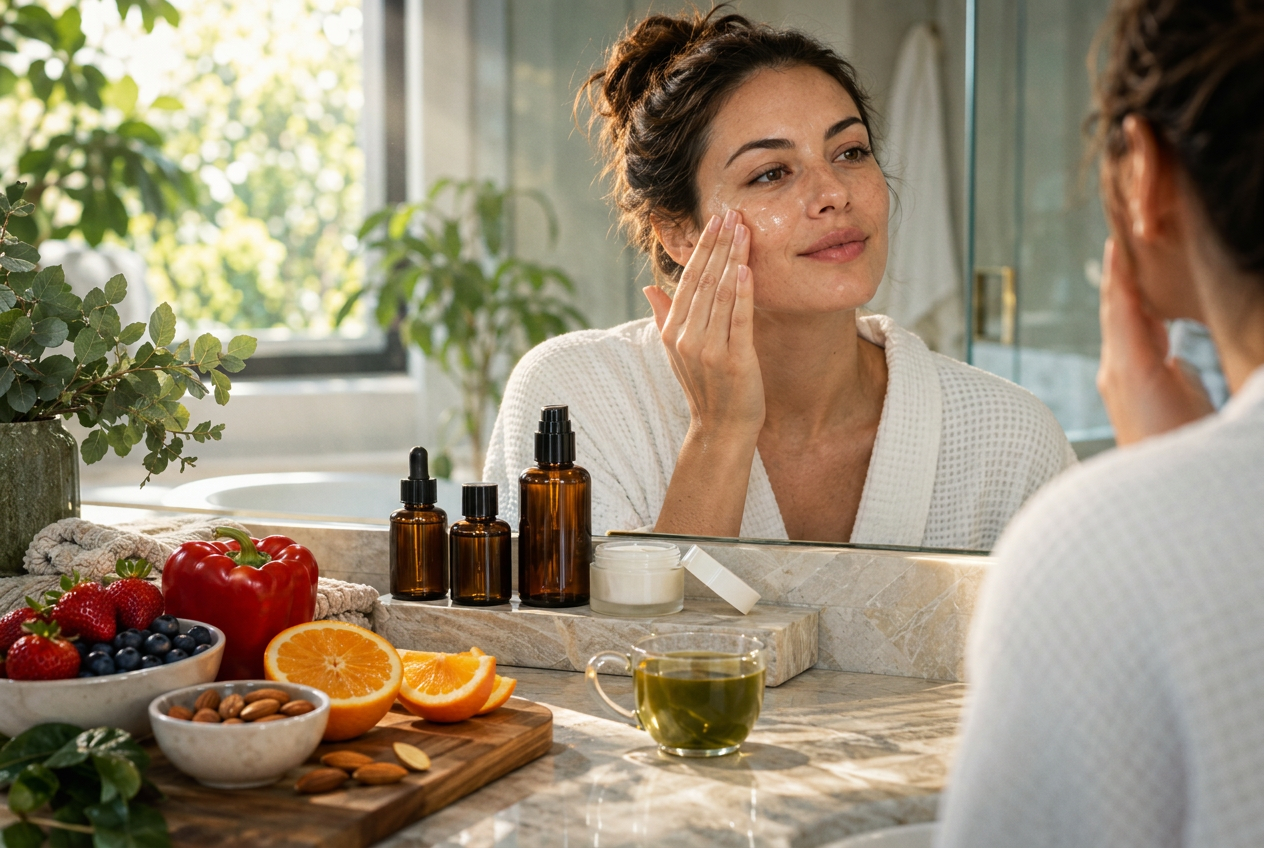
The best antioxidant diet is colorful, varied, and sustainable. No single berry or powder can reproduce the mix of vitamins, carotenoids, polyphenols, minerals, fats, protein, and fiber found across a balanced eating pattern.
| Food group | Examples | Notable compounds |
|---|---|---|
| Vitamin C-rich produce | Bell peppers, kiwi, strawberries, citrus, broccoli | Vitamin C and polyphenols |
| Red and pink produce | Tomatoes, watermelon, pink grapefruit | Lycopene |
| Orange and dark-green produce | Carrots, sweet potatoes, pumpkin, spinach, kale | Beta-carotene, lutein, zeaxanthin |
| Berries and purple plants | Blueberries, blackberries, grapes, red cabbage | Anthocyanins and other polyphenols |
| Nuts and seeds | Almonds, sunflower seeds, hazelnuts | Vitamin E and healthy fats |
| Olive oil and avocado | Extra-virgin olive oil, avocado | Vitamin E and phenolic compounds |
| Cocoa and tea | Unsweetened cocoa, green tea, black tea | Flavanols and catechins |
| Herbs and spices | Rosemary, turmeric, oregano, cinnamon | Diverse phenolic compounds |
| Legumes and whole grains | Beans, lentils, oats, whole grains | Polyphenols, minerals, and fiber |
The NIH lists fruits and vegetables as the best food sources of vitamin C (NIH vitamin C fact sheet). Likewise, nuts, seeds, vegetable oils, and green vegetables provide vitamin E (NIH vitamin E fact sheet).
A 2025 review links balanced dietary patterns and phytochemical-rich foods with mechanisms relevant to skin aging, while also noting that nutrition research contains observational data and emerging interventions rather than instant cosmetic guarantees (Tranchida et al., 2025).
Build a practical skin-supportive plate
Fill roughly half the plate with vegetables and fruit of different colors. Next, add a suitable protein source and a fiber-rich carbohydrate. Include a source of unsaturated fat, such as olive oil, nuts, seeds, avocado, or fatty fish.
This pattern supports the whole body and gives the skin raw materials for normal function. In contrast, repeatedly consuming high amounts of refined sugar may promote glycation, a process that can affect collagen properties over time.
What Are the Best Antioxidant Supplements for Skin?
For most healthy adults, food comes first, and no antioxidant supplement deserves universal recommendation for better skin. Supplements may help when a clinician identifies a deficiency, dietary restriction, absorption problem, or other specific need.
A 2025 systematic review and meta-analysis reported that collagen, flavanols, and some polyphenol supplements showed benefits for measures of skin photoaging. However, the researchers found insufficient evidence for several popular options, including astaxanthin, because studies were limited or inconsistent (Frontiers in Medicine, 2025).
Supplements with some skin-related evidence
Cocoa flavanols and other polyphenols: Some randomized trials report changes in hydration, elasticity, or response to UV exposure. Nevertheless, products and doses differ considerably.
Carotenoid mixtures: Lycopene, lutein, and related compounds may provide modest systemic photoprotective support after weeks of use. They still do not replace sunscreen.
Polypodium leucotomos: This fern extract has evidence for raising the minimal erythema dose in some settings. Even so, it should function as an adjunct, not oral sunscreen.
Glutathione: Oral studies show variable lightening effects and uncertain durability. Topical use has a more localized risk-benefit profile, while intravenous cosmetic use is not recommended (Sarkar et al., 2025).
Astaxanthin: Early studies are interesting, but current systematic evidence does not establish it as the best anti-aging supplement.
Vitamin C: Supplementation makes sense for inadequate intake or a diagnosed need. Most adults can otherwise meet requirements through food.
Vitamin E: Food sources are preferable for routine intake. High-dose supplements can increase bleeding risk and interact with medication.
Why more antioxidant is not always better
Oxidation and reduction form a balanced biological system. Very high doses of isolated antioxidants can behave differently from the same nutrients in food, and they may interfere with medication or normal signaling.
For example, the adult tolerable upper intake level for vitamin C is 2,000 mg per day, and excess can cause diarrhea, nausea, and abdominal cramps (NIH vitamin C fact sheet). High-dose vitamin E can raise bleeding risk (NIH vitamin E fact sheet). Too much selenium can cause hair and nail changes, nausea, and nervous-system symptoms (NIH selenium fact sheet).
In the United States, supplements do not go through the same premarket approval process as prescription drugs. The FDA advises consumers to discuss supplements with healthcare professionals and to recognize potential interactions and contamination risks (FDA dietary supplement guidance).
How to choose a supplement responsibly
- Define the exact reason you want it.
- Check whether food or treatment of a deficiency solves that problem more directly.
- Review medications and health conditions with a pharmacist or clinician.
- Avoid megadoses and proprietary blends that hide ingredient amounts.
- Prefer independent quality testing when available.
- Stop and seek advice if new symptoms appear.
What Is the Best Antioxidant Cream for the Face?
The best antioxidant cream is one that matches your skin type, protects unstable ingredients, and contains enough barrier support to remain comfortable. A cream format works especially well for dry or mature skin because it can combine antioxidants with humectants, emollients, and occlusives.
What to look for on the ingredient list
For dry skin, consider tocopherol, tocopheryl acetate, ubiquinone, niacinamide, or an oil-soluble vitamin C derivative. Ceramides, glycerin, squalane, cholesterol, and petrolatum can make the product more useful even though they are not all antioxidants.
For oily skin, a thick cream may be unnecessary. A lightweight serum or gel followed by a simple moisturizer may feel better. Thus, “best antioxidant cream” sometimes means choosing no antioxidant cream at all and placing the active in a serum.
Cream versus serum
| Feature | Serum | Cream |
|---|---|---|
| Texture | Usually light | Usually richer |
| Best match | Oily, combination, or layered routines | Dry, mature, or barrier-impaired skin |
| Common antioxidants | L-ascorbic acid, ferulic acid, green tea | Vitamin E, CoQ10, niacinamide, oil-soluble vitamin C |
| Main advantage | Efficient delivery with minimal heaviness | Combines treatment with moisturization |
| Main drawback | May sting or feel sticky | May feel heavy or clogging for some users |
Packaging matters. Pumps and tubes generally limit air exposure better than wide-mouth jars, although a stable formula can still work in a jar. Ultimately, the ingredient, vehicle, packaging, and finished-product testing determine quality together.
How to Choose an Antioxidant Product That Actually Works
Check the active form
“Vitamin C” on the front does not tell you whether the formula contains L-ascorbic acid or a derivative. Read the INCI list. Likewise, identify whether vitamin E appears as tocopherol, tocopheryl acetate, or another form.
Look for a plausible concentration
Brands do not always disclose percentages. When they do, treat the number as one clue rather than proof. A stable 10% L-ascorbic acid formula can outperform an oxidized 20% serum, while 5% niacinamide may be more useful than a stinging 20% product.
Evaluate the packaging
Light, heat, oxygen, and water can destabilize some antioxidants. Opaque, air-restrictive packaging is particularly helpful for L-ascorbic acid, retinoids, and certain polyphenols.
Consider the full formula
Alcohol, fragrance, essential oils, preservatives, and solvent systems affect tolerance. Moreover, a product can contain a good antioxidant in a vehicle that does not suit your skin.
Search for finished-product evidence
Ingredient research does not prove that every finished cosmetic works. The best evidence comes from well-designed human studies on the actual formula, ideally with a control group, blinded assessment, meaningful duration, and transparent conflicts of interest.
How to Use Antioxidants in a Skincare Routine
Simple morning routine
- Cleanse gently or rinse with water.
- Apply one antioxidant serum to dry skin.
- Follow with moisturizer if needed.
- Finish with broad-spectrum sunscreen.
Vitamin C usually fits well in the morning because it complements photoprotection. Still, night use remains acceptable if that schedule improves consistency or tolerance.
Simple evening routine
- Remove sunscreen and makeup.
- Cleanse gently.
- Apply a treatment, such as niacinamide or a retinoid, according to tolerance.
- Moisturize.
You do not need antioxidants in every step. One well-formulated product is enough to begin.
Can vitamin C and niacinamide be used together?
Yes, most modern products can be layered safely. Nevertheless, people with reactive skin may prefer vitamin C in the morning and niacinamide at night. Separating them reduces the number of active layers and makes it easier to identify the cause of irritation.
Can vitamin C and retinol be used together?
They can coexist in an overall routine, but using acidic vitamin C in the morning and retinoid at night is often more comfortable. Experienced users may tolerate both at once; beginners gain little from rushing.
Can antioxidants be mixed at home?
Do not blend raw powders into creams or combine products in a separate bottle. Changing pH and preservatives can reduce stability or safety. Layer compatible finished products instead, or choose a formula that the manufacturer designed as a mixture.
Why Antioxidant Mixtures Can Work Better
Skin contains both water- and lipid-rich compartments. Accordingly, combining hydrophilic and lipophilic antioxidants may broaden coverage.
The clearest example pairs water-soluble vitamin C with lipid-soluble vitamin E. Ferulic acid can further stabilize the formula and add antioxidant activity. Research on the specific 15% vitamin C, 1% vitamin E, and 0.5% ferulic acid combination found greater stability and photoprotective activity than vitamins C and E alone under study conditions (Lin et al., 2005).
However, more ingredients can also mean more irritation and more opportunities for instability. A long ingredient list is not automatically superior. Ideally, choose combinations with compatible chemistry and evidence on the finished formula.
Useful pairings
- Vitamin C + vitamin E + ferulic acid for daytime antioxidant support
- Niacinamide + green tea for sensitive or redness-prone skin
- Vitamin E + CoQ10 for dry or mature skin
- Vitamin C + sunscreen for complementary morning protection
- Niacinamide + azelaic acid for uneven tone and blemish-prone skin
Pairings that require caution
- Low-pH vitamin C + strong exfoliating acids may increase irritation.
- Multiple botanical extracts may increase allergy risk.
- Retinoid + acidic serum + exfoliant in one routine may overwhelm the barrier.
- Benzoyl peroxide can oxidize some molecules and often works better in a separate routine from easily oxidized antioxidants.
Antioxidant Delivery Systems: Do Liposomes and Nanocarriers Matter?
An antioxidant must remain stable, leave the vehicle, enter the relevant skin layer, and retain biological activity. Consequently, delivery can matter as much as the ingredient name.
Researchers have explored liposomes, niosomes, nanoemulsions, solid lipid nanoparticles, nanostructured lipid carriers, polymeric particles, and other encapsulation systems. These technologies may improve solubility, protect unstable molecules, control release, or increase skin deposition. Reviews of cosmetic antioxidant delivery describe promising applications for vitamin C, vitamin E, CoQ10, resveratrol, carotenoids, and plant polyphenols (Montenegro, 2014; Budzianowska et al., 2025).
Still, “nano” is not a guarantee of better visible results. Particle composition, size, charge, dose, stability, and safety all matter. Most importantly, a company should test the finished product rather than borrow prestige from a delivery-system buzzword.
When advanced delivery is most useful
Encapsulation is especially relevant when an ingredient degrades quickly, dissolves poorly, or struggles to reach its target layer. Resveratrol and some carotenoids fit this description. L-ascorbic acid presents different challenges because it is unstable and water-soluble, while oil-soluble derivatives need conversion inside the skin.
Consumers do not need to decode every delivery technology. Instead, look for protective packaging, a credible manufacturer, clear directions, and human testing of the finished formula.
How Topical Antioxidants Relate to Oxidative Stress and Photodamage
Sunlight can increase reactive species in skin. These molecules activate signaling pathways that increase inflammation and matrix metalloproteinases, enzymes involved in collagen breakdown. Pollution and cigarette smoke may add to this burden.
Topical antioxidants work best as prevention or support, not as a rescue that erases all damage after exposure. Apply them consistently, protect the formula from degradation, and pair them with sunscreen and protective behavior.
The skin also needs some oxidative signaling for normal function. Therefore, the goal is balance rather than eliminating every reactive molecule. A broad dermatology review warns against assuming that indefinite, high-dose antioxidant use is automatically beneficial (Addor, 2017).
What Do Koreans Use Against Wrinkles?
Korean skincare does not rely on one secret antioxidant. Instead, many routines emphasize daily sunscreen, hydration, barrier support, gentle layering, and consistent use. Products may feature niacinamide, green tea, ginseng, fermented extracts, propolis, vitamin C, centella asiatica, peptides, retinal, retinol, and adenosine.
Common Korean skincare ingredients for mature skin
Niacinamide: supports the barrier and improves uneven tone, redness, and fine lines.
Ginseng: contains ginsenosides and other antioxidant compounds, although finished-product evidence varies.
Green tea: supplies catechins and often appears in soothing toners, serums, and creams.
Centella asiatica: supports soothing and barrier-focused routines, especially when irritation limits stronger actives.
Fermented extracts: may improve ingredient availability or sensory qualities, but “fermented” does not automatically mean clinically superior.
Retinoids: retinal and retinol increasingly appear in Korean products and have more direct wrinkle evidence than most botanical antioxidants.
Adenosine and peptides: these ingredients commonly target fine lines, although results depend on the formula and peptide.
The most transferable Korean skincare lesson is not a ten-step count. It is the habit of protecting the barrier and using tolerable products consistently. A four-step routine with cleanser, antioxidant, moisturizer, and sunscreen can be more effective than a complicated routine that causes irritation.
What Reddit Gets Right and Wrong About Antioxidants for Skin
Reddit can reveal texture, pilling, packaging failures, oxidation, and how a product behaves across different climates. Those reports help answer practical questions that trials rarely cover.
However, popularity does not establish efficacy. A viral serum may suit a particular community, while negative reviews may reflect counterfeits, incompatible layering, or unrealistic expectations.
Useful lessons from skincare communities
- Introduce one active at a time.
- Take baseline photos under the same lighting.
- Watch the color and smell of unstable vitamin C products.
- Buy from authorized sellers to reduce counterfeit risk.
- Stop using a product that repeatedly burns or causes a rash.
- Give a tolerable routine enough time before judging subtle results.
Claims that deserve skepticism
- “This ingredient is thousands of times stronger, so it must work better on skin.”
- “A tingling sensation proves the serum is active.”
- “Natural products cannot cause allergies.”
- “Oral sunscreen replaces topical sunscreen.”
- “Everyone needs 20% niacinamide.”
- “A dark-brown vitamin C serum still works exactly as intended.”
Use community discussion to evaluate user experience. Use controlled studies and qualified clinical guidance to evaluate medical or biological claims.
Side Effects and Safety
Irritation
L-ascorbic acid can sting because effective formulas often use a low pH. Ferulic acid, azelaic acid, and high-percentage niacinamide may also irritate. Begin every other day if you are sensitive.
Allergic contact dermatitis
Any cosmetic can cause an allergy. Vitamin E and certain vitamin C derivatives have documented case reports of contact dermatitis (Foti et al., 2022). Itching, swelling, blistering, or a persistent spreading rash requires discontinuation and medical evaluation.
Oxidized products
Oxidation may reduce activity and create irritating degradation products. Store products as directed, keep caps closed, and avoid leaving them in a hot car or sunny bathroom window.
Supplements and interactions
Vitamin E may increase bleeding risk with anticoagulant or antiplatelet medication. High-dose vitamin C can cause gastrointestinal symptoms and may be unsuitable for some people with iron-overload or kidney-related concerns. Selenium becomes toxic above safe intake ranges. Therefore, discuss regular high-dose supplementation with a clinician or pharmacist.
Patch testing
Apply a small amount to a limited area once daily for several days before using it over the whole face. This informal test cannot rule out every allergy, yet it can reveal obvious irritation. For suspected allergic contact dermatitis, a dermatologist can perform standardized patch testing.
How Long Do Antioxidants Take to Work?
Antioxidant activity begins before visible improvement appears. Brightness or hydration may look better within several weeks, while fine lines and uneven pigmentation commonly require eight to twelve weeks or longer.
Results also depend on what caused the concern. A vitamin C serum cannot overcome repeated unprotected sun exposure, and niacinamide cannot correct every form of pigmentation. Take photos in consistent lighting once a month rather than inspecting the mirror several times a day.
If a product causes persistent irritation, waiting longer is not the answer. Stop, simplify the routine, and consider professional advice.
A Step-by-Step Routine for Every Experience Level
Beginner routine
Morning: gentle cleanse, 2% to 5% niacinamide, moisturizer, sunscreen.
Evening: gentle cleanse and moisturizer.
After four to six comfortable weeks, consider replacing the morning niacinamide with vitamin C or alternating them.
Intermediate anti-aging routine
Morning: cleanse, vitamin C serum, moisturizer, sunscreen.
Evening: cleanse, retinoid on selected nights, niacinamide or moisturizer on recovery nights.
Increase frequency only when the skin remains comfortable.
Sensitive-skin routine
Morning: rinse or gentle cleanse, green tea or low-strength niacinamide, fragrance-free moisturizer, sunscreen.
Evening: gentle cleanse and barrier moisturizer.
Avoid adding exfoliating acid, retinoid, and acidic vitamin C during the same week.
Dry or mature-skin routine
Morning: creamy cleanse or rinse, vitamin C or niacinamide, ceramide moisturizer with vitamin E or CoQ10, sunscreen.
Evening: gentle cleanse, retinoid as tolerated, rich moisturizer.
How to Find the Best Antioxidants for Skin Without Wasting Money
Choosing the best antioxidants for skin becomes easier when you define one priority instead of shopping by hype. First, decide whether your main concern is dullness, pigmentation, sensitivity, dryness, redness, oiliness, or fine lines. Next, select one antioxidant with evidence that matches that concern. Then, check whether the vehicle suits your skin type. Afterward, examine the package for protection from light and air when the active is unstable.
For example, someone with resilient skin and uneven tone may start with 10% L-ascorbic acid. By contrast, a person whose face burns after acidic products may begin with 4% or 5% niacinamide. Meanwhile, dry mature skin may benefit from a cream that combines niacinamide with vitamin E or CoQ10. Similarly, an oily complexion may prefer a light green tea or niacinamide serum.
Although front-label percentages look scientific, they rarely tell the whole story. In fact, pH, solvents, packaging, and manufacturing quality can change performance. Moreover, derivatives need to penetrate and convert into a biologically useful form. Therefore, a higher percentage of a derivative cannot be compared directly with the same percentage of L-ascorbic acid. Likewise, two products that both claim 15% vitamin C may differ in stability and tolerance.
Initially, buy the smallest practical size of an unfamiliar antioxidant. Consequently, you can evaluate tolerance before committing to a large bottle. Nevertheless, give a comfortable product enough time to produce a gradual result. Generally, eight to twelve weeks offers a more useful trial than a few days. However, stop immediately when swelling, blistering, or severe burning occurs.
In addition, keep the rest of the routine steady during the test. Otherwise, you may blame the wrong product for a breakout or improvement. For consistency, take photos in the same room, at the same time of day, and without makeup. Furthermore, record changes in comfort, dryness, redness, and pigmentation rather than judging only “glow.” As a result, your decision will rely on repeatable observations instead of memory.
When comparing prices, calculate cost per ounce or milliliter. Still, do not choose solely by unit price because unstable serum that oxidizes quickly offers poor value. Instead, consider how long the bottle remains fresh after opening. Additionally, check whether the brand publishes a period-after-opening symbol or storage directions. Ultimately, a smaller opaque bottle may be a better purchase than a large transparent one.
Before ordering, review the complete ingredient list for known sensitivities. For instance, fragrance and essential oils may matter more to reactive skin than the featured antioxidant. On the other hand, glycerin, ceramides, and squalane may improve tolerance. Accordingly, the best antioxidant formula supports the barrier instead of forcing you to repair repeated irritation.
If you already use a retinoid, add a morning antioxidant rather than crowding the evening routine. Alternatively, keep niacinamide on non-retinoid nights. Even so, avoid changing several steps simultaneously. Because consistency drives results, the simplest workable schedule usually wins.
Finally, remember that cosmetics address appearance and support normal skin function. Therefore, seek a dermatologist when discoloration changes quickly, a rash persists, or over-the-counter products repeatedly fail. In short, informed selection saves more money than chasing each newly marketed “miracle” antioxidant.
Frequently Asked Questions About the Best Antioxidants for Skin
What is the single best antioxidant for skin?
Vitamin C is the best overall choice for many people because it combines antioxidant activity, collagen support, and brightening. Nevertheless, niacinamide is often better for sensitive skin.
What is the most powerful antioxidant for the face?
No universal laboratory ranking predicts real facial results. In practical skincare, a stable, tolerable vitamin C formula has the strongest all-around case.
What are the big three antioxidants?
Vitamin C, vitamin E, and ferulic acid form the best-known topical trio. Their complementary chemistry can improve stability and broaden antioxidant action.
What is the best anti-aging antioxidant?
Vitamin C leads among antioxidants, although sunscreen and retinoids generally play larger roles in a complete wrinkle-prevention routine.
What antioxidant is best for skin brightening?
Vitamin C is the first choice for most people. Niacinamide or azelaic acid may work better when acidic vitamin C irritates the skin.
Which antioxidant is best for sensitive skin?
Low-to-moderate strength niacinamide is a practical starting point. Green tea and stable vitamin C derivatives are other options.
Is an antioxidant serum or cream better?
Serums suit lightweight layering and often carry L-ascorbic acid. Creams suit dry skin and often carry vitamin E, CoQ10, niacinamide, or oil-soluble vitamin C derivatives. The best format is the one that preserves the active and fits your skin.
Can I use antioxidants every day?
Yes, many antioxidant products suit daily use. Still, introduce them gradually and follow the label. Reduce frequency if irritation develops.
Should antioxidants be used in the morning or at night?
Morning use pairs naturally with sunscreen and daily environmental exposure. Night use is also valid, especially for resveratrol, CoQ10, or products that fit better beside your evening routine.
Do antioxidant supplements improve skin?
Some polyphenol and carotenoid preparations show modest benefits, but results vary and evidence remains limited. Food, sunscreen, and topical care usually offer a better starting point.
Can food replace antioxidant skincare?
A nutritious diet supports the entire body, including skin, but it does not deliver a targeted topical concentration to one dark spot or wrinkle. Food and skincare serve related but different roles.
Are natural antioxidants better than synthetic ones?
Not automatically. Purity, molecular form, concentration, stability, and formulation matter more than whether the original source was a plant or laboratory process.
Do expensive antioxidant products work better?
Price does not prove efficacy. Stable packaging, a plausible formula, tolerability, and finished-product testing offer more useful clues.
Can antioxidants repair sun damage?
They may improve visible signs and support defensive pathways, but they cannot reverse every structural change. Prevention with sunscreen remains essential.
How can I tell whether vitamin C has oxidized?
L-ascorbic acid serum that becomes dark orange or brown has likely oxidized substantially. A mild color depends on the formula, so compare it with the brand’s original description and storage instructions.
What should I stop using if irritation begins?
Pause the newest active first, then use a gentle cleanser, moisturizer, and sunscreen. Seek care for swelling, blistering, severe pain, or a persistent rash.
Final Verdict
The best antioxidants for skin are not the ingredients with the loudest strength claims. They are stable, appropriately formulated, compatible with your skin, and used consistently beside sunscreen and a healthy routine.
Vitamin C is the best overall topical antioxidant for many people. Niacinamide is the best versatile option for sensitive or acne-prone skin, while vitamin E and CoQ10 fit dry or mature skin especially well. Ferulic acid earns its place as a valuable partner to vitamins C and E. Meanwhile, green tea, resveratrol, carotenoids, azelaic acid, and selected botanical extracts can address more specific preferences.
For nutrition, prioritize a varied pattern rich in colorful plants, nuts, seeds, whole foods, and healthy fats. Consider supplements only for a clear reason, because higher doses do not guarantee better skin and can create risks.
Finally, keep the routine simple enough to follow. One suitable antioxidant, a moisturizer, and daily broad-spectrum sunscreen will usually offer more value than a crowded shelf of unstable or irritating products.
Editorial Sources and Further Reading
- Addor FAS. Antioxidants in dermatology. Anais Brasileiros de Dermatologia, 2017.
- Budzianowska A, et al. Antioxidants to Defend Healthy and Youthful Skin. Applied Sciences, 2025.
- Tranchida N, et al. Potential Role of Dietary Antioxidants During Skin Aging. Food Science & Nutrition, 2025.
- Lin FH, et al. Ferulic Acid Stabilizes a Solution of Vitamins C and E. Journal of Investigative Dermatology, 2005.
- Fitzpatrick RE, Rostan EF. Topical Vitamin C and Photodamage. Dermatologic Surgery, 2002.
- Bissett DL, et al. Topical Niacinamide in Aging Facial Skin. International Journal of Cosmetic Science, 2004.
- Sarkar R, et al. Glutathione as a Skin-Lightening Agent and in Melasma. International Journal of Dermatology, 2025.
- U.S. National Institutes of Health. Vitamin C fact sheet, vitamin E fact sheet, and selenium fact sheet.
- U.S. Food and Drug Administration. FDA 101: Dietary Supplements.