Lip Balm Testers Are A Terrible Idea!
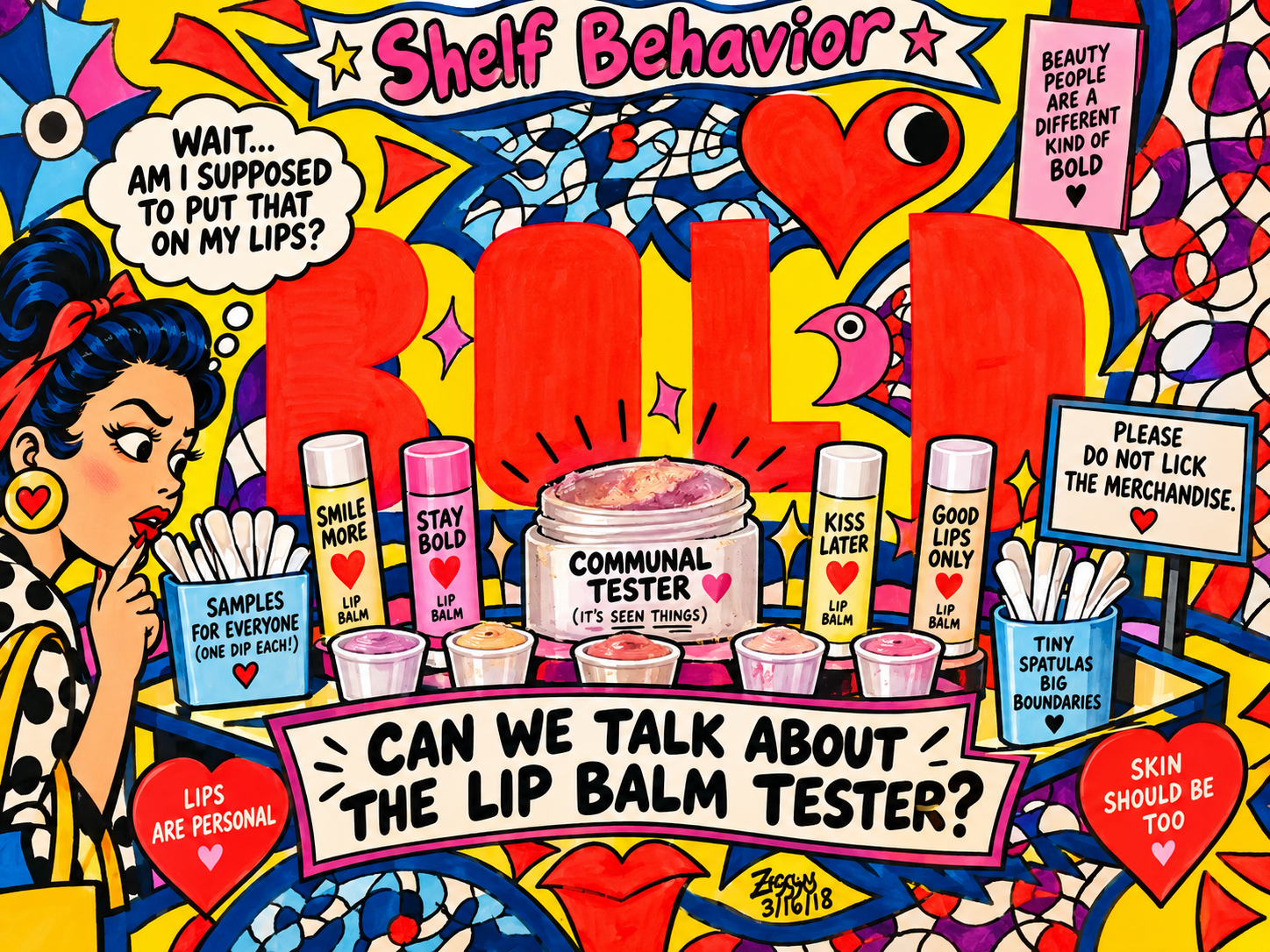
Can We Talk About Lip Balm Testers?
Can we gossip about lip balm testers for a minute? Because I keep encountering one beauty-store situation that raises considerably more questions than a tiny tube of balm should reasonably produce. There is the tester. There are my lips. There are apparently no instructions. Am I supposed to put a communal lip balm directly on my mouth? Surely not. Should I touch the top with my finger? That does not feel particularly appealing either, especially when I have no idea how many other fingers have already visited.
Shared cosmetic testers can pick up microorganisms through contact with skin, hands, or applicators, so avoiding direct contact with a communal lip product is a sensible hygiene precaution. That does not mean touching a tester guarantees that anyone will become ill. However, it does mean the current experience can leave shoppers asking a question retailers should probably answer for us: How exactly are we supposed to test this?
Lip Balm Testers Have an Unusually Personal Problem
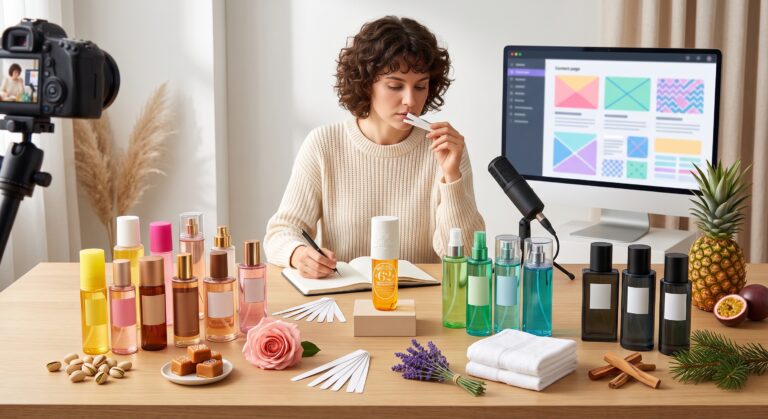
Beauty retail depends heavily on trying before buying. We smell perfume, feel moisturizer, compare foundation, and occasionally emerge from a store with twelve different colors on one forearm.
That makes sense.
However, lip balm testers occupy an unusually intimate category because the product ultimately goes onto the mouth. Directly applying a shared tester to the lips can introduce material from one user’s lips onto the product surface. Likewise, touching the product with an unwashed finger can transfer microorganisms from the hand.
Consequently, a communal lip balm needs a sampling method that clearly separates the customer from the shared product.
Some beauty sampling systems already use disposable applicators, spatulas, tissues, or individually portioned samples. Therefore, the broader concept certainly isn’t revolutionary. The opportunity is simply to make that kind of hygiene-conscious system obvious and consistent for lip products.
For example, stores could provide single-use spatulas beside every balm tester, along with a small card saying:
SCOOP ONCE. APPLY WITH YOUR OWN DISPOSABLE APPLICATOR. PLEASE DON’T DOUBLE-DIP.
Not terribly glamorous.
Very reassuring.
Alternatively, brands could provide tiny single-use sample pods or packets. Another possibility would be a tester package specifically engineered to dispense a small amount without requiring anyone to touch the remaining product.
The key is not merely providing a tester.
It is designing the testing behavior.
Consumer Psychology Has a Problem With the Mystery
From a consumer psychology perspective, uncertainty itself can damage an otherwise enjoyable shopping experience.
A shopper should not have to stand in front of a $24 lip balm conducting a private ethical investigation.
Did someone put this on their mouth?
Did someone touch this?
Am I allowed to touch it?
Why am I suddenly doing epidemiology at Sephora?
When retailers make the intended behavior obvious, they reduce what psychologists and designers often describe more broadly as friction: those small moments of uncertainty or extra effort that interrupt an experience.
Clear instructions also create reassurance.
Consider the psychological difference between seeing an unattended balm tester and seeing a neatly arranged station containing the product, disposable applicators, tissues, and a small waste container.
The formula has not changed.
The sampling environment has.
Yet the second presentation signals that someone has actually thought about what happens between “Try Me” and “Thank you, I’ll take one.”
That matters because beauty retail is partly about trust. Customers are putting products on their skin, hair, face, and lips. Therefore, the testing environment should make appropriate use feel intuitive.
Welcome to the Communal Lip Balm Negotiation
Imagine approaching a lip balm tester.
It looks wonderful.
Strawberry vanilla.
Obviously I need to investigate.
I pick it up.
Then everything stops.
Can I put this directly on my lips?
Absolutely not.
At least, I certainly hope nobody before me thought so.
Can I touch it with my finger?
Also not ideal.
Could I somehow smell the lip balm and make a $22 purchasing decision based entirely on vibes?
Apparently we have reached that stage.
I look around for an applicator.
Nothing.
I look for instructions.
Nothing.
The lip balm and I stare at each other.
Neither of us knows how this relationship is supposed to progress.
Eventually, I put it back.
Congratulations.
We successfully created a tester that I am afraid to test.
Give Lip Balm Testers Their Own Sampling System
The fix could be wonderfully boring.
And I mean that as a compliment.
Put lip balm testers beside clearly visible disposable applicators.
Provide a hygienic way to transfer a small amount of product without direct lip or finger contact.
Add a clearly labeled place to discard used applicators.
Better yet, brands could design dedicated retail testers that dispense individual portions while protecting the remaining product from repeated direct contact.
For some formulas, individually packaged samples may make even more sense.
Retailers could also add one tiny instruction:
Please don’t apply the tester directly to your lips.
Done.
No dramatic technological intervention required.
No artificial intelligence.
No augmented-reality mouth.
No robot lip-balm concierge.
Just tell us how to try the thing.
Ultimately, beauty sampling should encourage curiosity rather than introduce uncertainty. Lip balm may be a tiny product, but it reveals a larger retail-design principle: when stores invite customers to touch or try something, they should also make the safest and most appropriate way to do it obvious.
The beauty industry spends enormous energy designing the product.
Perhaps a little more attention could go toward designing the test.
Because if I’m standing in front of a lip balm wondering how many strangers may already have kissed it, the romance is over.