Has “Obsessed” Lost Its Meaning?
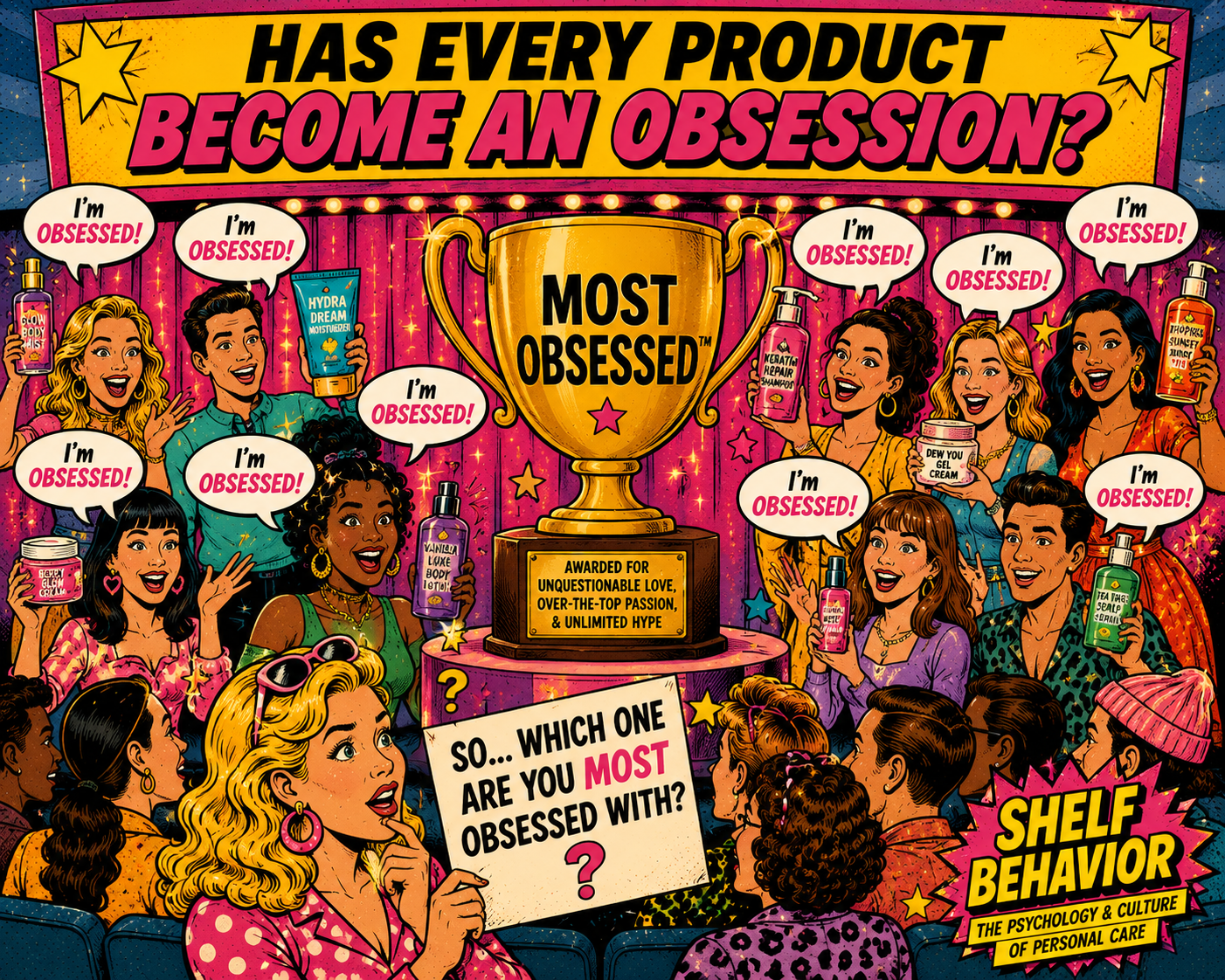
Spend just a few minutes watching beauty influencer videos online, and you’ll probably notice a familiar pattern.
“This body mist? I’m obsessed.”
“This shampoo? I’m obsessed.”
“This lotion? I’m obsessed.”
Before long, it is hard to not start wondering:
Has obsessed become the default way to talk about personal care products?
The Beauty Industry Loves Big Words
The beauty industry thrives on exciting discoveries, and creators genuinely find products they love.
At the same time, social media rewards enthusiasm.
After all, saying you like a perfume probably won’t stop someone from scrolling.
Saying you’re obsessed with it just might.
As a result, creators naturally gravitate toward stronger language.
Over time, though, something interesting happens.
When we hear the same superlatives over and over again, we gradually become desensitized to them.
The Consumer Psychology of “Obsessed”
From a consumer psychology perspective, emotionally charged words shape our expectations before we ever try a product.
Words like obsessed, holy grail, and life-changing immediately tell our brains,
“This isn’t just good. It’s exceptional.”
In other words, they simplify decision-making by signaling that a product deserves our attention.
However, when every product receives the same glowing description, those powerful words begin to lose some of their impact.
If everything is extraordinary…
Eventually, nothing feels quite as extraordinary.
Maybe “Really Good” Deserves More Credit
There’s absolutely nothing wrong with loving a product.
In fact, genuine excitement is one of the reasons beauty content is so enjoyable.
Still, maybe not every lotion has to be life-changing.
Not every body mist has to inspire an obsession.
Sometimes a product can simply be…
really good.
And honestly?
That’s the kind of recommendation I’d probably trust even more.
Follow us here for videos on the psychology & culture of personal care: Shelf Behavior on TikTok and Shelf Behavior on Instagram