Could Beauty Trucks Become the Next Food Trucks?
Why Should Lunch Get All the Wheels?
Beauty trucks could turn personal care shopping into something mobile, social, and surprisingly fun. Food trucks already bring specialized menus directly to offices, neighborhoods, festivals, and public spaces. So why couldn’t a beautifully designed truck arrive with body mists, lotions, skincare, shampoos, soaps, and hair products instead?
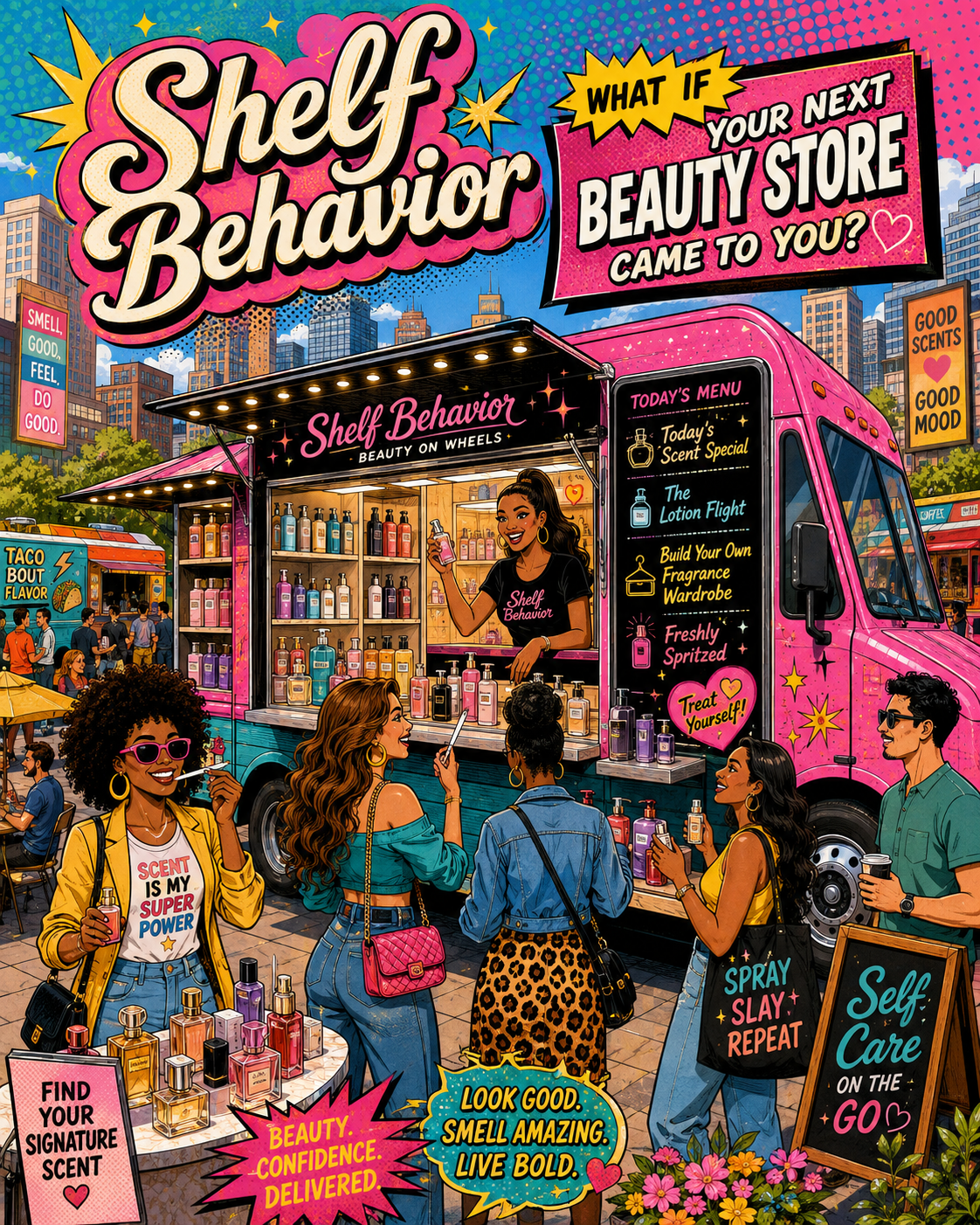
Picture a mobile personal care shop pulling into a downtown plaza at lunchtime. One person orders tacos. Another buys coffee. Meanwhile, you step up to a fragrance window and ask which body mist best captures “productive, but emotionally ready to go home.”
Honestly, that sounds like a very balanced lunch break.
Mobile Beauty Retail Could Make Discovery More Accessible
Beauty brands already use pop-ups, promotional vehicles, and temporary retail experiences to introduce products. However, those activations often support a launch, event, or marketing campaign. Beauty trucks could take the same basic idea and turn it into a consistent retail format.
Instead of waiting for customers to visit a mall or beauty store, a mobile shop could travel to places where people already spend time. For example, beauty trucks could stop near office parks, hotels, college campuses, farmers markets, festivals, apartment communities, or upscale grocery stores.
The truck would not need to carry every product ever created. In fact, a smaller assortment could become one of its strengths. Each vehicle might focus on a carefully selected group of fragrances, body care products, hair products, or emerging brands.
Moreover, retailers could rotate the collection by season or theme. One week might feature warm gourmand scents. Another could highlight independent hair care brands or products designed for sensitive skin.
As a result, the beauty truck would feel more like a traveling discovery experience than a crowded store on wheels.
Consumer Psychology Loves Novelty With a Schedule
From a consumer psychology perspective, beauty trucks could combine several appealing ideas.
First, novelty attracts attention. A colorful personal care truck parked beside several food trucks would immediately stand out. People may approach simply because they have never seen one before.
Second, a limited selection can reduce decision fatigue. Traditional beauty stores offer tremendous variety, which many shoppers enjoy. However, a curated truck could make discovery feel easier by presenting fewer, more purposeful choices.
The mobile format could also create anticipation. Customers might follow a truck’s weekly route online, much as they follow favorite food vendors. Therefore, the arrival itself becomes an event.
At the same time, retailers should avoid using artificial scarcity or excessive urgency. The goal should involve enjoyment and convenience, not convincing shoppers that society will collapse unless they purchase a vanilla body mist before the truck leaves at 3:00.
Most importantly, the experience could feel social. Shoppers could smell fragrances together, compare textures, ask questions, and watch demonstrations. Online shopping offers convenience, but a mobile store could add human interaction without requiring a full traditional storefront.
How Beauty Trucks Could Work in Real Life
A successful beauty truck would need more than attractive shelves and a very enthusiastic horn.
Retailers could begin with a clearly defined concept. One truck might specialize in fragrance and body care, while another focuses on hair care or skincare. A broader truck could feature a rotating collection of brands connected by a theme.
Digital tools could make the experience even smoother. Customers might check the route through an app, reserve a consultation, preview the day’s assortment, or order online for pickup at the truck.
Brands could also partner with local businesses. A beauty truck might visit a hotel during a weekend event, appear beside a café for a fragrance-and-coffee collaboration, or park outside an art gallery with products selected to complement an exhibition.
The truck itself would become part retail space, part billboard, and part community gathering place.
I’ll Have the Body Mist With a Side of Lotion
Imagine approaching a beauty truck called The Rolling Routine.
The menu reads:
Today’s Special: Citrus body mist with a bergamot hand cream
Lotion Flight: Three textures, no commitment
Fragrance Combo: One daytime scent and one scent for pretending you have evening plans
Hair Care Special: Shampoo, conditioner, and emotional support
You ask the beauty expert what pairs well with the sandwich you just bought from the neighboring truck.
She recommends a warm vanilla mist.
Naturally, you leave with two.
Five minutes later, someone asks what you had for lunch.
You reply, “A grilled cheese and a complete fragrance wardrobe.”
Beauty Retail Does Not Always Need a Permanent Address
Beauty trucks would not replace traditional stores, online shopping, or beauty counters. Instead, they could add another way for consumers to experience personal care.
The model could help smaller brands reach new customers without immediately opening permanent locations. Meanwhile, established retailers could test neighborhoods, introduce new categories, and create memorable events.
Most importantly, mobile beauty retail could bring discovery into everyday life. A shopper would not need to plan an entire beauty trip. The experience could simply arrive nearby.
Food trucks taught us that an excellent retail concept does not always need four walls.
Perhaps personal care just needs four wheels—and enough parking space for the body mist.
If you enjoyed this, you might also like Why I Love Sephora’s Quiet Hours.
Follow us here for videos on the psychology & culture of personal care: Shelf Behavior on TikTok and Shelf Behavior on Instagram