Culture in Beauty Branding: More Than a Motif
Culture Should Influence More Than the Packaging
Culture in beauty branding can make a personal care company feel distinctive, meaningful, and rooted in a real point of view. However, culture should contribute more than a pattern on a box or a colorful tote bag released during launch week.
The most interesting brands can draw from local art, language, landscapes, rituals, humor, materials, design traditions, and everyday life. As a result, the culture shapes the brand’s entire world rather than decorating its outer surface.
That distinction matters. A bottle can wear a cultural motif. A brand, however, can build an ongoing relationship with the people and places that inspired it.
Beauty Brands Can Turn Place Into Perspective
Personal care brands already use stories to help consumers understand products. Some emphasize clinical research. Others focus on wellness, luxury, nature, or playful self-expression.
Culture can add another layer because it gives the brand a perspective.
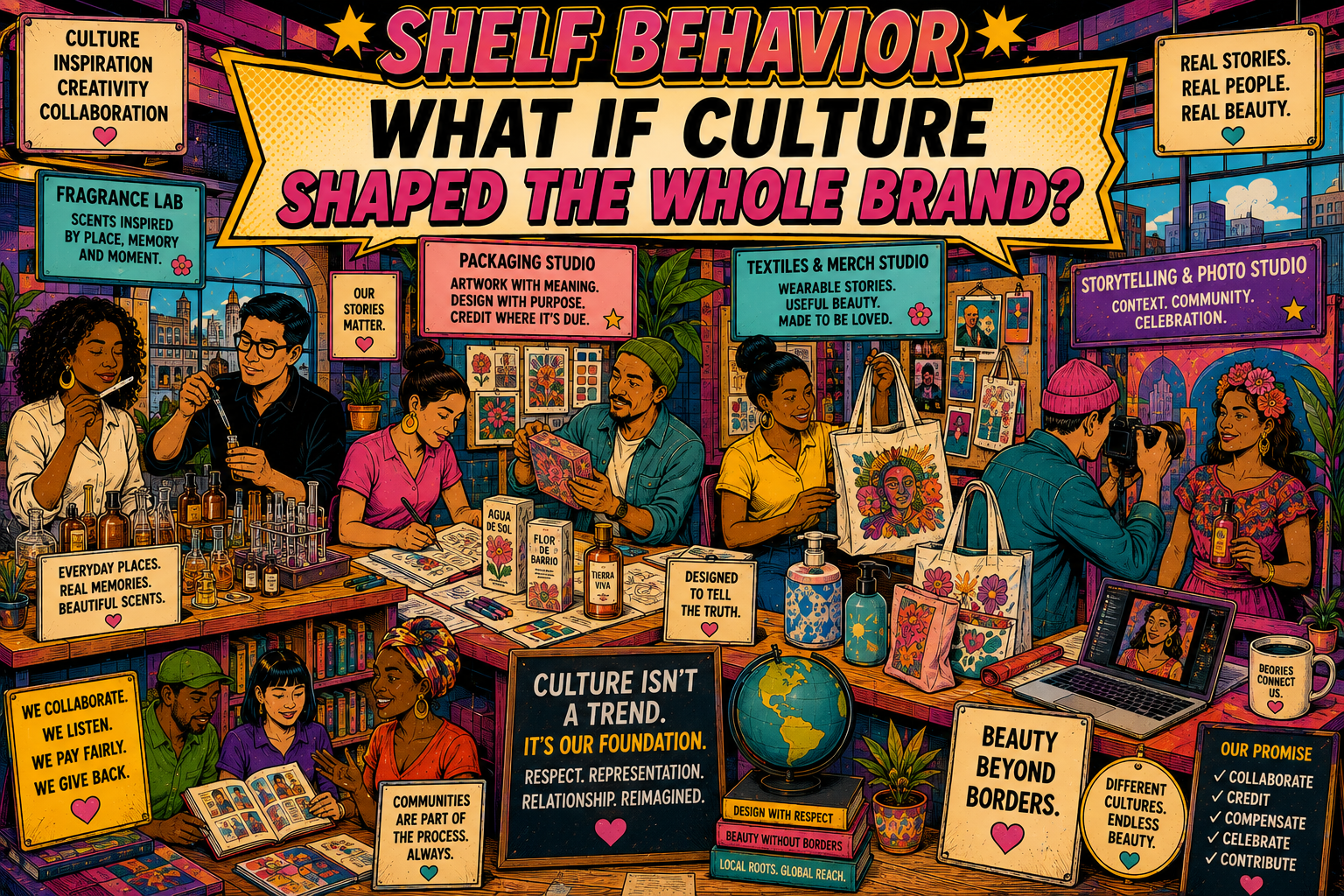
For example, a company might work with local illustrators on packaging and compensate them clearly. It could collaborate with musicians on store experiences, photographers on campaigns, or craftspeople on refillable containers. In addition, product names could draw from local language, humor, geography, or familiar routines when those references fit naturally.
Retail spaces could also contribute. Instead of creating a generic luxury store that could exist anywhere, a brand might use materials, artwork, music, and hospitality that connect the space to its home.
Merchandise offers another opportunity. Tote bags, scarves, trays, travel cases, and art prints can extend the brand beyond the bathroom. However, the best merchandise does not simply repeat the logo twenty-seven times. It gives artists room to create something people would choose even without the free body lotion.
Consumer Psychology Responds to Meaning and Specificity
From a consumer psychology perspective, specific stories often feel more memorable than vague claims.
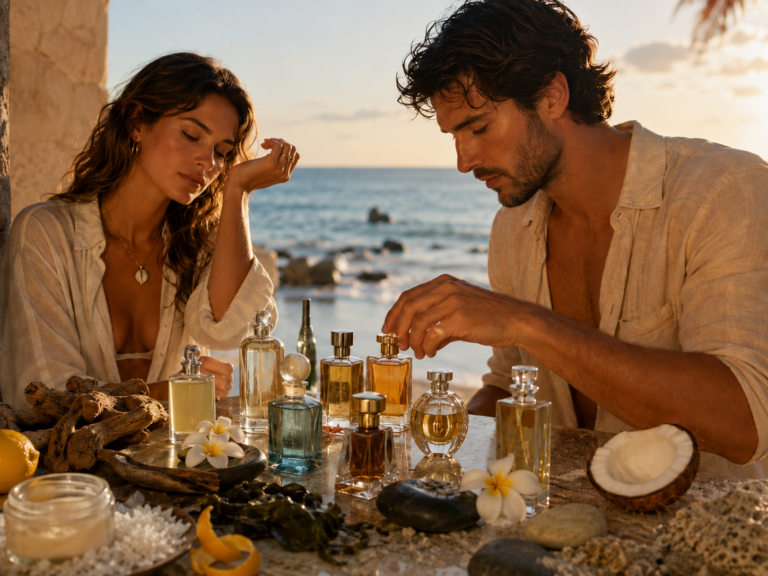
A fragrance described as “inspired by beauty” tells us very little. Meanwhile, a scent connected to a particular market, garden, celebration, street, or family ritual creates a clearer mental picture.
That specificity can strengthen memory. Moreover, consumers may feel more connected to products that carry an understandable point of view.
Culture can also support identity. Someone may choose a product because it reminds them of home. Another customer may enjoy learning about a place or creative tradition they did not know before.
Still, brands should not treat culture as a collection of convenient visual ingredients. Respectful cultural branding requires context, collaboration, credit, and investment. Otherwise, the campaign may look culturally inspired while the culture itself remains mysteriously absent from the meeting.
How Culture in Beauty Branding Could Become More Innovative
Brands could begin by inviting cultural contributors into the process earlier.
An artist should not receive a nearly finished bottle and a request to “make it feel local by Friday.” Instead, artists, historians, fragrance developers, designers, and community members could help shape concepts from the beginning.
Companies could also explain their inspirations more clearly. Product pages, QR codes, store displays, and short videos might introduce the people who created the artwork, selected the materials, or influenced the fragrance story.
Furthermore, brands could create rotating cultural programs rather than one-time campaigns. A permanent artist series, local design residency, or community advisory group would show longer-term commitment.
Events could offer depth too. Imagine a fragrance launch that includes an exhibition, conversation, workshop, and performance connected to the collection’s inspiration. Visitors would still smell the body mist, of course. We are not proposing a conference where nobody gets to spritz anything.
Finally, the brand could reinvest locally through commissions, apprenticeships, grants, sourcing partnerships, or creative education. In that model, culture generates value for the people who help create the story—not only for the company telling it.
I Came for the Lotion and Stayed for the Exhibition
Imagine entering a beauty store to test a new body lotion.
First, you notice packaging created by a local illustrator. Then you watch a short video about the neighborhood that inspired the fragrance. Nearby, a textile designer demonstrates how the limited-edition tote bag was made.
Twenty minutes later, you have purchased the lotion, the tote, an art print, and a book about the region’s design history.
Your bathroom routine has somehow become continuing education.
More importantly, the products feel connected to people, ideas, and places. The store did not simply announce that culture matters.
It showed you how.
The Strongest Cultural Stories Run Through the Whole Brand
Culture in beauty branding can create richer products, stronger identities, and more memorable experiences. However, brands gain the most when culture influences the entire process.
It can shape product development, naming, packaging, retail, merchandise, collaborations, and community investment. Consequently, the cultural story feels authentic because customers encounter it everywhere—not only in the campaign photographs.
Beauty already turns everyday routines into expressions of taste and identity.
Culture can make those expressions more specific, more human, and far more interesting.
After all, the goal should not involve making every beauty brand look global.
It should involve allowing more brands to feel unmistakably from somewhere.